
Context matters, too. A NASA study on aerospace components found a 15.5% average cleaning-efficiency gain from ultrasonic-enhanced solvent cleaning. In the same work, aqueous ultrasonic cleaning underperformed a simple solvent rinse. The result depends on soil and chemistry, not on the transducer alone.
This guide covers how transducers work, which factors drive selection, and how to validate your choice.
Key Takeaways
- A transducer performs as part of a system: generator, tank, liquid, and load all matter.
- Frequency suits a soil and material; it isn't a "stronger or better" ranking.
- Placement, bonding, and electrical matching count as much as catalog frequency.
- Test under real chemistry, loading, temperature, and duty cycle before buying.
What Is an Ultrasonic Transducer for Cleaning?
An ultrasonic cleaning transducer takes a high-frequency electrical signal and produces mechanical vibration in the tank. That vibration creates pressure swings in the solution. Millions of microscopic bubbles form, grow, and implode, and the implosions do the cleaning.
Types of Ultrasonic Cleaning Transducers
- Bonded tank transducers: elements attach to the tank wall or a vibration plate, and the tank structure radiates into the bath.
- Immersible assemblies: sealed stainless-steel modules installed in an existing tank, usually on the bottom or side. Some can be top-mounted facing down.
- Integrated systems: transducers built into benchtop or industrial cleaners, bottom-mounted, side-mounted, or both.
Core Components
A working assembly commonly includes a piezoelectric element, front and back masses, electrodes, preload hardware, electrical connections, and a mechanical interface to the tank or housing. Designs vary. A bonded design may use a ceramic disk alone or bonded to a metal disk, while American Piezo notes that high-power stacks add masses, shims, and a preload bolt.
The piezoelectric element vibrates and the radiating face passes energy into the liquid. Materials, preload, and bonding surface quality affect both efficiency and service life.
You can't judge the transducer alone. The generator, cables, tank wall, mounting, liquid, and part load must work as one matched configuration.

Why It Pays Off
- Reaches crevices and complex geometries
- Cuts manual scrubbing
- Cleans multiple parts at once
- Delivers repeatable cycles
What to Consider When Choosing the Best Ultrasonic Cleaning Transducer
Needs differ by industry: automotive repair, machine shops, restoration, medical and lab reprocessing, marine service, 3D printing, and heavy industrial maintenance all load tanks differently. Use the factors below to tie specifications to results such as cycle time, throughput, rework, labor, part protection, and equipment life.
Application, Soil Type, and Part Material
Grease, carbon, oils, oxides, soot, resin residue, and polishing compounds need different intensity, chemistry, and time. Heavy carbon often calls for heat and a more aggressive setup, while polished soft metals do not.
KPIs affected:
- Soil removal
- Reject rate
- Cycle time
- Chemical consumption
Frequency and Cleaning Intensity
Lower frequencies produce larger bubbles and more aggressive cleaning. Higher frequencies are gentler. Most cleaners run roughly 25 to 120 kHz, and 38 to 40 kHz covers most commercial and industrial work.
Frequency isn't the whole story. In a 2026 foil-erosion study, raising frequency from 35 to 68 kHz cut aluminum-foil mass loss by about 60% under fixed conditions.

That figure measures cavitation erosion, not cleaning. Power, liquid properties, temperature, and loading also shift the outcome, so run test cleanings before you commit.
Tank Volume, Loading, and Transducer Placement
Bath volume, tank shape, basket design, part density, and shadowing all shape acoustic coverage. Transducers placed on the bottom, sides, or both spread energy differently. Spacing them along the tank length evens out the field.
Poor coverage creates dead zones, uneven cleaning, and inconsistent batches. Be cautious with watts-per-gallon figures, since no universal target fits every tank size and load.
Generator Compatibility and Electrical Matching
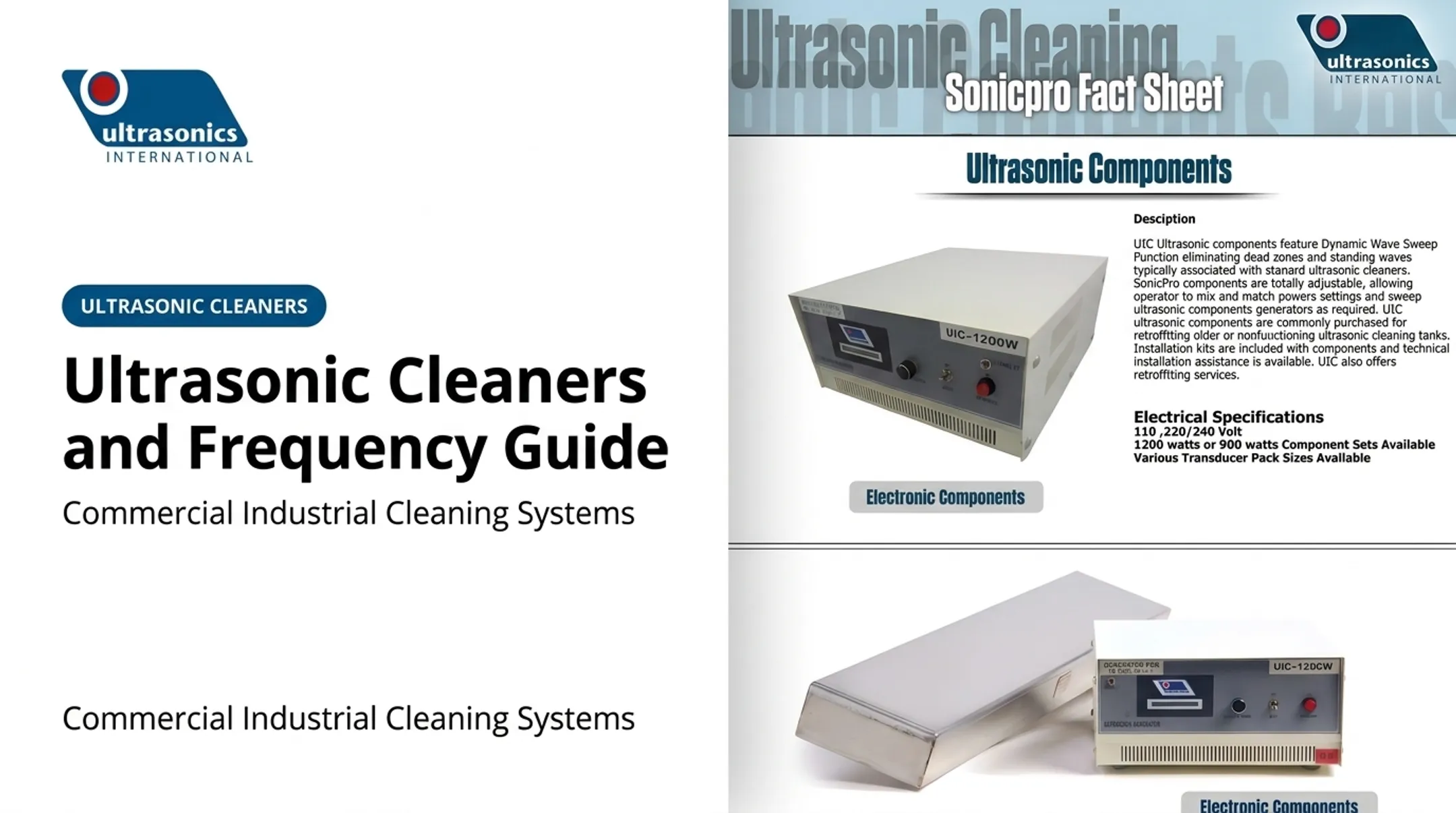
Resonant frequency, impedance, capacitance, power rating, wiring, and controls must all line up with the generator. Get measured specifications for your actual transducer batch rather than trusting nominal frequency.
Sweep circuitry helps. A 30 kHz transducer driven between 29 and 31 kHz reduces standing waves and hot spots. Auto-follow holds the center frequency as load or water level changes.

Mounting, Bonding, and Construction
- Adhesive choice, surface preparation, and bond-line control affect energy transfer
- Tank-wall thickness balances radiation and erosion resistance (industrial: 11–14 gauge; heavy-duty: 11–12)
- Stainless construction resists chemicals and thermal cycling
Weak bonds mean leaks, downtime, and repair cost. Keep baskets and parts off the transducer pack; etching or scratching can't be repaired and eventually forces replacement.
Duty Cycle, Environment, and Validation
Plan for the full operating environment:
- Continuous versus intermittent duty
- Bath temperature and liquid level
- Dry-running risk and chemical compatibility
- Ventilation and maintenance access
Manufacturers warn against running some units dry, which can damage transducers.
Validate with a loaded tank. Measure:
- Cleaning results
- Temperature behavior
- Power stability
- Durability over time
An aluminum-foil test shows cavitation patterns, but it doesn't prove cleaning outcomes, so pair it with real parts.

How Ultrasonics International Corp. Can Help
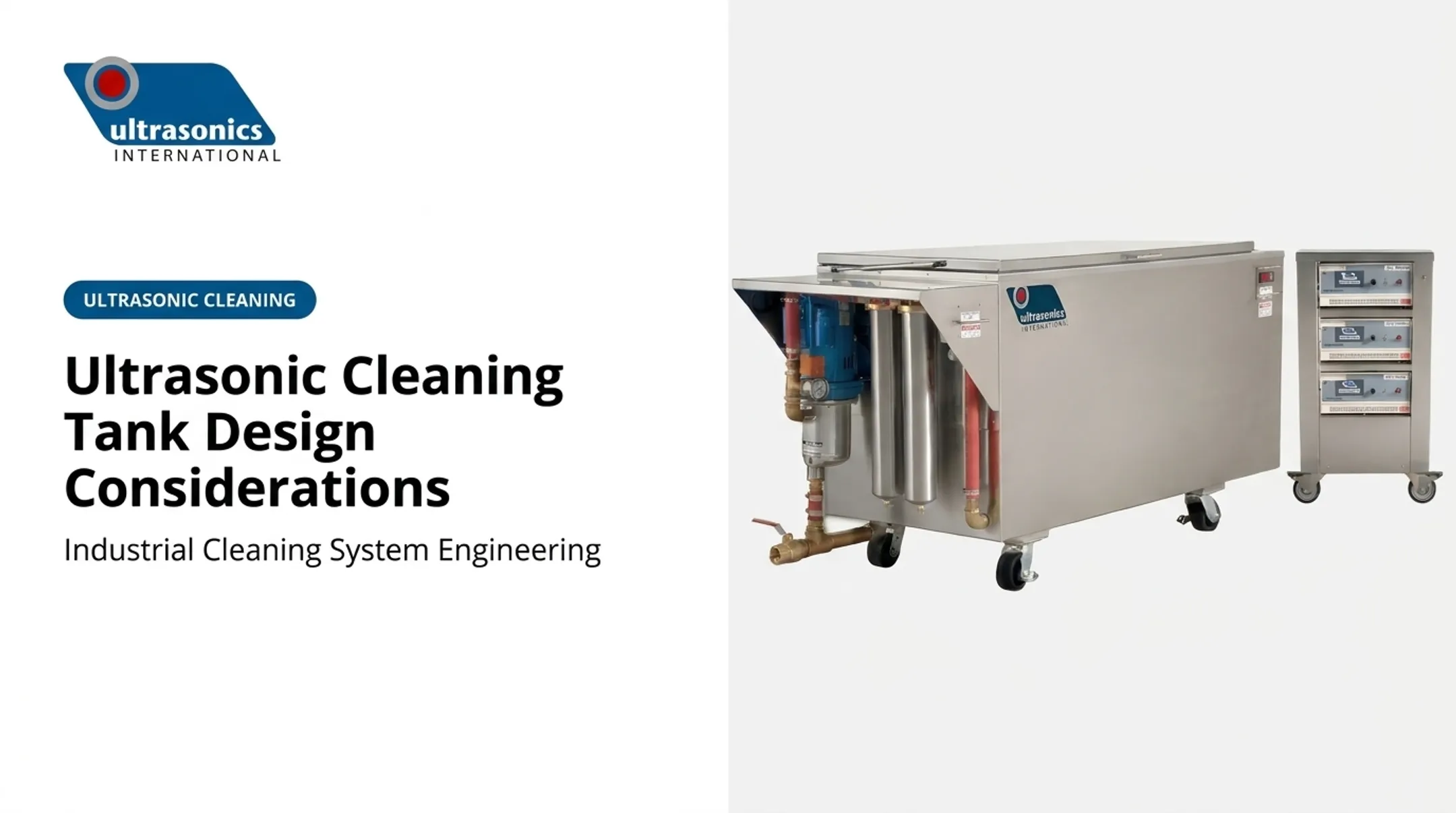
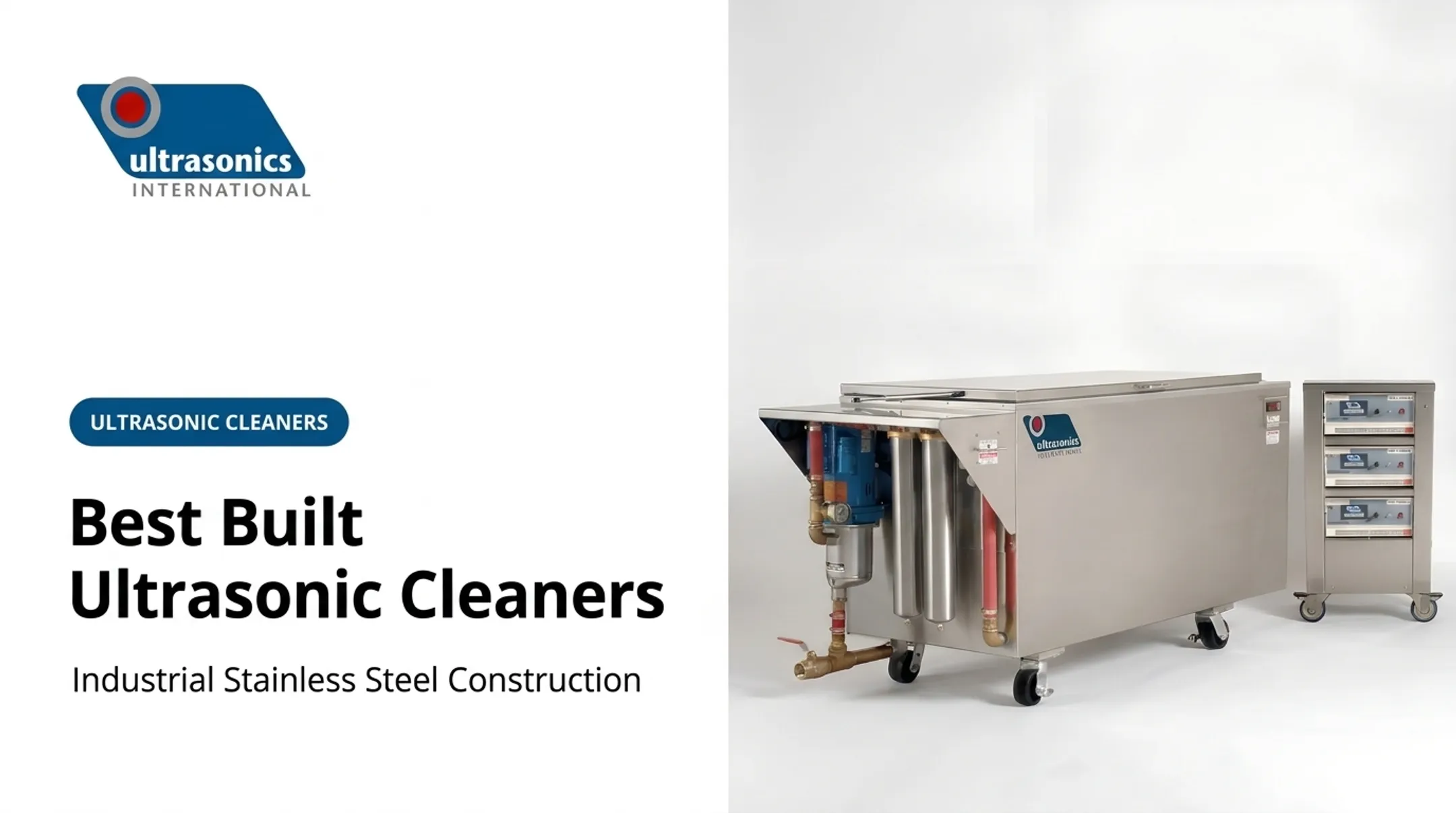
Ultrasonics International Corp. has manufactured USA-made ultrasonic cleaning equipment since 1992. It supplies industrial and restoration customers with systems ranging from benchtop units to heavy-duty parts cleaners.
The company matches tank and transducer configurations to part dimensions, contamination, sensitivity, throughput, and existing tank limits. Options include custom machinery, support modules, and tank retrofit solutions.

Notable strengths include:
- Manufacturing at its Ferndale, Washington plant
- 100% stainless-steel construction
- Wave Sweep Technology
- Installation assistance and ongoing support
- Quality Assurance Institute oversight, with third-party plant inspections twice annually
Conclusion
Choose the transducer configuration that fits your parts, soil, chemistry, tank, generator, volume, and durability needs. The most powerful, highest-frequency, or cheapest option is rarely the best fit on its own.
Assess the whole system and test under realistic loading before committing to production equipment.
Selection is not a one-time decision. As parts, soils, and chemistry change, periodically review:
- Cleaning results
- Cycle time
- Equipment condition
- Operating costs
Frequently Asked Questions
How do I select a probe in ultrasonic testing?
Choose testing probes based on material, thickness, geometry, attenuation, temperature, resolution, penetration, and coupling. That process differs from selecting a cleaning transducer.
What are the different types of ultrasonic transducers?
Cleaning transducers include bonded tank and immersible units. Other families include testing probes (dual-element and delay-line), flow-measurement transducers, and application-specific designs. Testing probes can't substitute for cleaning transducers.
What frequency transducer is best for ultrasonic cleaning?
No single frequency wins. The answer depends on soil, material, geometry, sensitivity, chemistry, tank, and required intensity. Application testing settles it.
How do I match an ultrasonic transducer to a generator?
Confirm frequency, impedance, capacitance, power, wiring, and resonant behavior with both manufacturers' specifications. Then validate under the intended load.
Can one ultrasonic transducer clean every type of part?
Rarely. Heavy carbon, delicate components, complex cavities, and large parts each favor different setups. Balance cleaning intensity against part protection.
What information should I provide when requesting a recommendation?
Share part dimensions and materials, soil type, batch size, and tank volume. Include chemistry, temperature, cleaning-time target, duty cycle, generator details, existing tank constraints, and desired throughput.