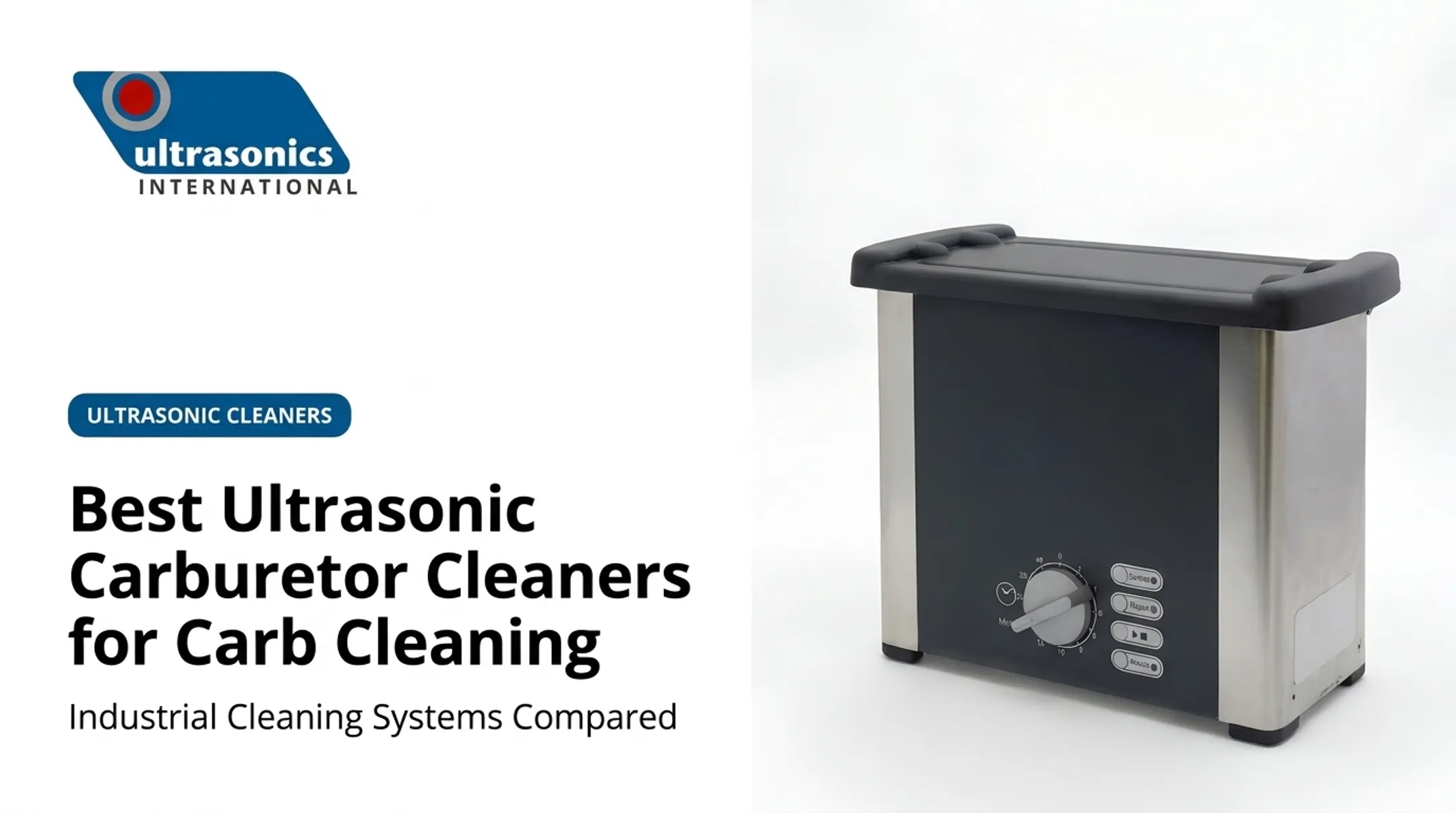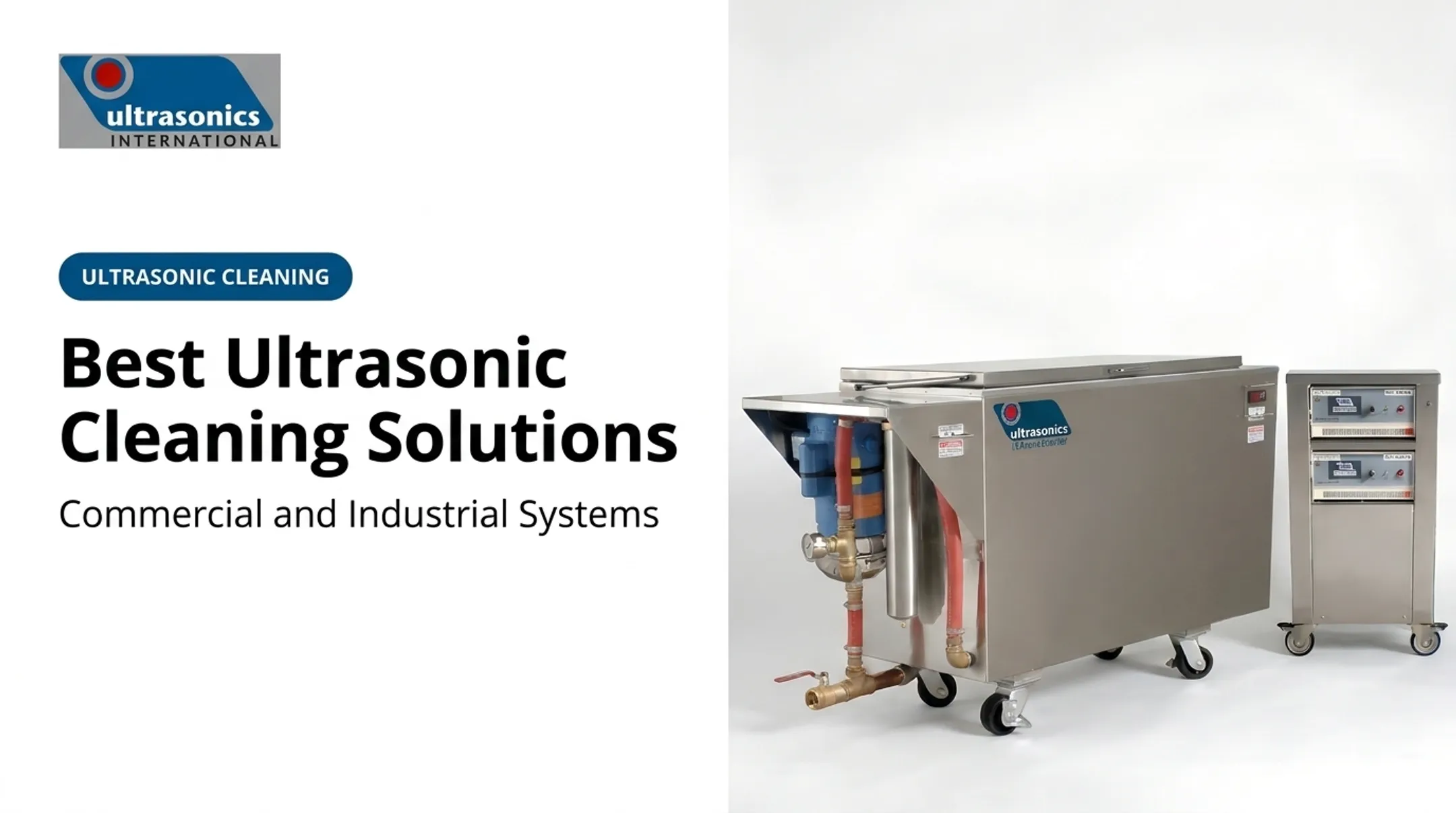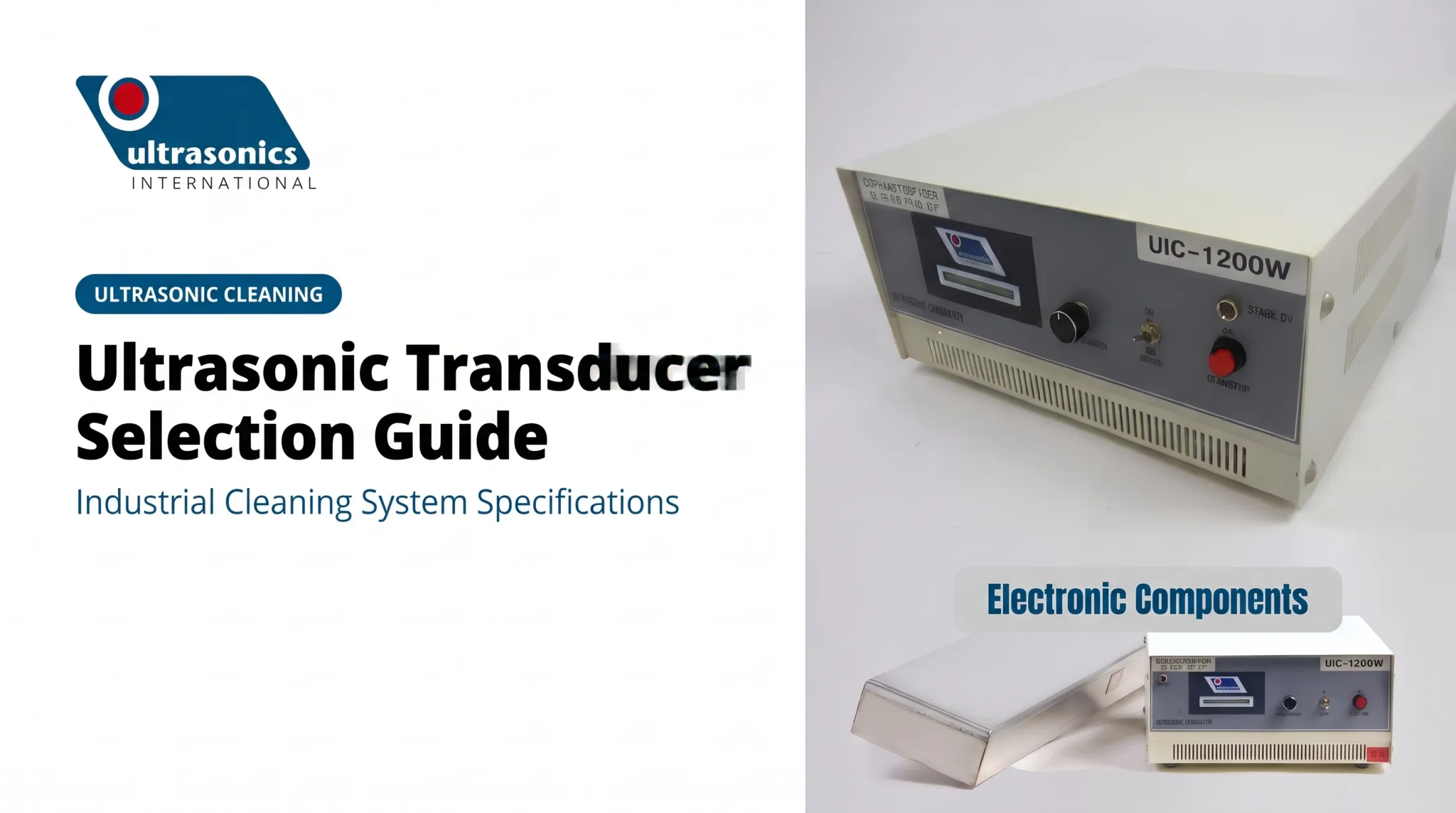

Ultrasonic cleaning cuts that scrubbing. It reaches blind holes and crevices by hand-free cavitation, which matters in manufacturing, repair, restoration, marine service, and lab reprocessing.
This guide compares five manufacturers serving the U.S. market: Ultrasonics International, L&R, Omegasonics, Crest, and UP Corp. It also explains how to judge construction, capacity, chemistry fit, serviceability, and long-term value. No source we reviewed offers independent, cross-brand testing, so treat this as a shortlist, not a verdict.
Key Takeaways
- The best-built cleaner fits your parts, soils, and throughput; power alone doesn't decide it.
- Compare usable basket space, frequency, heating, filtration, and chemistry compatibility.
- Stainless construction, retrofit options, and service access matter over a multi-year life.
- Confirm specs, warranty terms, and test results with the manufacturer before buying.
Overview of Best-Built Ultrasonic Cleaners in the U.S. Market
An ultrasonic cleaner passes high-frequency sound through liquid. Alternating pressure cycles form microscopic bubbles that implode. This cavitation scrubs surfaces, including recesses and channels hands can't reach.
The CDC describes ultrasonic soil removal through cavitation in aqueous solutions, and notes that cleaning must precede disinfection or sterilization of medical instruments.
The U.S. market spans a wide range:
- Benchtop units for repair parts, instruments, and 3D-printed components
- Large single tanks of 100+ gallons
- Multi-stage wash, rinse, and dry systems
- Custom machinery and retrofit assemblies
Reported results are customer-specific, not universal. Eaton Aerospace reported saving at least 20 labor hours weekly with an Omegasonics system, and a marine shop owner estimated 50% less cleaning time on carburetors.

Both are manufacturer-hosted testimonials. They show potential, not a benchmark.
The five manufacturers below were chosen for application range, construction documentation, support, and customization.
Best-Built Ultrasonic Cleaner Manufacturers in the U.S.
This is a comparison, not a claim that one machine wins everywhere. Details below come from manufacturer materials, so confirm current specs and warranty terms in writing.
Ultrasonics International Corp.
Established in 1992, Ultrasonics International Corp. (the Sonic Pro and Fireline brands) builds cleaners at its Ferndale, Washington plant. Its range runs from benchtop units to heavy-duty industrial systems.
What stands out:
- 100% stainless-steel construction and unibody fabrication
- Wave Sweep Technology, which the company says eliminates dead zones and standing waves
- Custom machinery, tank retrofits, and generator and transducer components with installation kits
- QAI-regulated manufacturing with third-party plant inspections twice a year
- Examples: the PC4800 (48″ × 24″ tank, optional filtration, removable rinse insert) and BT-1400 (25 gallons, 14-gauge inner tanks)
| Factor | Details |
|---|---|
| Range and fit | Benchtop to industrial; repair, restoration, machining, 3D printing |
| Construction | Stainless steel, unibody |
| Technology | Wave Sweep generators |
| Customization | Custom machines, retrofits, components |
| Location | Ferndale, WA plant |
| Gap | Request written warranty terms; product pages do not list them |
L&R Ultrasonics
L&R was founded in 1930 and moved into dental, lab, and medical cleaning by 1960. It lists Quantrex, SweepZone, industrial, SCBA, and firearms systems.
L&R's standout points are credentials and documentation. A published NQA certificate (ISO 9001:2015, US10769) places manufacturing and repair in Kearny, New Jersey, and runs through November 13, 2026. That shows a quality management system, not product performance. L&R also offers sample-based Cleaning Evaluations and OEM engineering.
| Factor | Details |
|---|---|
| Range | Quantrex runs 0.5 to 6.5 gallons; larger families exist |
| Industries | Industrial, scientific, military, dental, medical |
| Support | Chemistry solutions, Cleaning Evaluations |
| Warranty | Quantrex only: 2.5 years whole unit, 5 years housing, 10 years tank-to-transducer bond |
| Check | Confirm certificate renewal and warranty by product family |
Omegasonics
Operating since 1996 from Simi Valley, California, Omegasonics claims U.S. manufacture of all products. It offers standard tanks of 3 to 208 gallons, PowerLift machines, custom systems, and restoration units, plus automated wash, rinse, and dry processes.
| Factor | Details |
|---|---|
| Range | 3 to 208 gallons standard; larger custom tanks |
| Fit | Aerospace, defense, electronics, medical, restoration, firefighting |
| Chemistry | Detergent calculator; OmegaFinish not recommended for aluminum |
| Warranty | 5 years tanks/frames and transducers; 2 years generators, pumps, heaters, controls |
| Exclusions | Cavitation erosion, misuse, chemistry corrosive to 304 stainless |
Crest Ultrasonics
Crest dates to 1961 and manufactures in Trenton, New Jersey, with additional production in Penang, Malaysia. It offers small stainless tanks through automated modular lines, multiple-frequency and sweep technologies, and custom detergents. Target industries include medical devices, semiconductors, optics, aerospace, and metal fabrication.
| Factor | Details |
|---|---|
| Systems | Standard through custom production lines |
| Chemistry | Standard and custom formulations |
| Caution | Published ISO statements conflict (9001:2015 vs. 9001:2008) |
| Ask | Where your quoted system is built and which certificate applies |
Ultrasonic Power Corp. (UP Corp)
Founded in 1972 in Freeport, Illinois, UP Corp says design, manufacture, and support happen at one U.S. site. Its categories include benchtop, portable console, custom, and integrated wash/rinse/dry systems, with custom capacity up to 2,000 gallons.
| Factor | Details |
|---|---|
| Technology | Simultaneous Multi-Frequency; Vibra-bar options at 25, 40, 68, 170 kHz |
| Retrofit | Immersible transducers; generators can power non-UPC modules |
| Support | Sample testing, operator training, replacement parts |
| Warranty | 10 years bond; 5 years generators; 2 years other components |
The 10-year figure covers the bond, not the whole machine.

How We Chose the Best-Built Ultrasonic Cleaners
Rankings rest on manufacturer documentation, specifications, application coverage, warranties, and service availability. Treat marketing claims as claims, not proof. Choosing by tank volume or advertised wattage alone is the most common mistake.
Technical Factors That Matter
- Frequency: ASTM guidance warns that 20 to 25 kHz can damage soft metals like aluminum and silver. Roughly 38 to 40 kHz suits most commercial work.
- Loaded basket: Parts and baskets shouldn't rest on the tank bottom, and heavy baskets reduce effectiveness.
- Temperature and degassing: Hotter isn't automatically better, and fresh solution needs degassing.
- Distribution: An aluminum-foil test shows general intensity and coverage, but not part cleanliness.
- Solution life: Dissolved solids impair cavitation, so filtration and bath changes matter.
An AAMI-published study found that 3 of 4 cavitation indicators could pass without true cavitation. Write acceptance criteria around actual parts.
Materials and Chemistry
The strongest detergent or highest power can damage a part. Check these before buying:
- Aluminum and silver: avoid low frequencies, acidic cleaners, and concentrated alkalines
- Plating and coatings: delicate finishes can fail
- Electronics: displays, microphones, speakers, and sealed parts need assessment
- Plastics and glued assemblies: heat and chemistry can alter them
- Gemstones: some stones, settings, and adhesives are vulnerable
- The tank itself: unauthorized chemistry can corrode 304 stainless
Ownership Costs
Confirm transducer access, replacement parts, installation help, training, warranty exclusions, and retrofit potential before you buy.
Each quote should cover electricity, handling labor, detergent, filtration, bath replacement, and downtime. No verified cross-brand ownership-cost benchmark exists, so request those figures per quote.
For difficult or high-value parts, run a sample test before purchase. Separate manufacturer claims from test results and documented case studies.

Conclusion
The best-built cleaner delivers repeatable results on your parts, runs safely, stays maintainable, and leaves room to grow. Compare total ownership value: chemistry, labor, throughput, maintenance, downtime, parts, installation, and support, not purchase price alone.
If you run an industrial, restoration, repair, marine, or manufacturing operation, Ultrasonics International Corp. can talk through application requirements, sizing, custom machinery, and retrofits. Call 800.500.2544 or email sales@sonicpro.com.
Frequently Asked Questions
Which ultrasonic cleaner is the best?
It depends on your parts, soils, tank size, throughput, chemistry, controls, and support needs. Application fit matters more than brand reputation.
What is the most powerful ultrasonic cleaner available?
"Powerful" can mean ultrasonic output, tank size, frequency setup, or capacity. More power isn't automatically safer or more effective, and excess can cause cavitation erosion.
What size ultrasonic cleaner do I need?
Measure your largest part and loaded basket, then allow clearance and immersion depth. Factor in load weight, batch volume, workspace, and expected growth.
How do I choose frequency and heating options?
Evaluate frequency, temperature, time, chemistry, and part sensitivity together. Use manufacturer specifications and sample testing for exact settings.
Are ultrasonic cleaners safe for all parts?
No. Compatibility varies by material, finish, assembly, and solution. Check manufacturer guidance and test valuable or sensitive parts first.
How should an industrial ultrasonic cleaner be maintained?
Manage solution, clean tank and baskets, and watch fluid levels. Inspect transducers, wiring, drains, and seals, keep service records, and follow the manufacturer's instructions.