
Introduction: Understanding Ultrasonic Cleaner Sizes
Picking an ultrasonic cleaner by the biggest tank or the highest advertised capacity is a quick way to buy the wrong machine. What matters is whether your largest part, your basket, the solution level, and your daily workload all fit together.
Get it wrong and the costs add up fast. Parts won't submerge fully, baskets get crowded, cycles repeat, solution is wasted, and you may pay for capacity you never use.
This guide walks through the sizing process: measure your largest parts, estimate batch volume, compare usable dimensions, then check frequency, power, heating, and other specifications.
Key Takeaways
- Basket and usable working area decide fit, not gross tank capacity.
- Size for your largest part and typical batch, not your smallest item.
- Benchtop, mid-size, workshop, and heavy-duty units serve different throughput needs.
- Confirm frequency, power, heating, construction, drainage, and chemistry before buying.
How to Choose the Right Ultrasonic Cleaner Size
Measure the Largest Part First
Record length, width, height, projections, handles, openings, and any components that must stay attached during cleaning. Give those full measurements to the manufacturer so the proper tank can be specified.
The largest part should be fully immersed without being forced, tilted awkwardly, or pressed against the tank or basket. Parts and baskets must also stay off the transducers. Contact can etch or scratch transducer packs, and that damage can't be repaired.
Compare Basket Dimensions With Usable Tank Dimensions
Four numbers get confused constantly: external dimensions, nominal volume, internal tank dimensions, and actual basket dimensions. Only the last two tell you what fits.
Elma's Select 30 shows the gap. It lists 2.7 L nominal but 1.6 L working capacity, and its basket interior is 195 x 105 x 50 mm inside a 220 x 120 x 95 mm tank. Elma explains that the service volume must allow for part displacement while keeping everything immersed.
Check the manufacturer's basket length, width, depth, load rating, and bottom clearance. Some models require suspension at least 1/2 inch above the tank floor.
Account for Shape and Orientation
Geometry often beats volume. Carburetors, cylinder heads, marine components, tooling, and lab equipment can be long, deep, or awkward even when their calculated volume is small.
Elma's Select 80 and Select 150 make the point. The Select 150 has more total capacity (14.6 L vs. 9.3 L), but its basket is only 45 mm deep versus 75 mm. A deep part fits the smaller unit and not the larger one.
Blind holes and undercuts can also trap air. Surfaces without liquid contact don't get cleaned, so orientation matters.
Match Capacity to Batch Size and Frequency
- Single parts: size to the part, not the batch.
- Multiple small parts: size the basket to hold the group without stacking.
- Continuous batch work: a larger tank can cut repeat cycles, handling time, and labor.
Estimate how many parts go in per cycle. A cycle can run around 8 minutes, and some jobs need up to three, so a tank that's too small multiplies labor quickly.
Plan for Workspace, Utilities, and Growth
Check bench or floor space, filled operating weight, electrical supply, drainage, ventilation, and loading access. Water is heavy, and a full large tank can overwhelm a bench.
Allow for likely growth in part size or volume. But the largest unit isn't automatically the best choice. Extra tank means extra solution, energy, and handling.

Ultrasonic Cleaner Size Guide by Application
Compact Benchtop Cleaners
Best for parts that fit comfortably in the basket:
- Jewelry and eyewear
- Small tools
- Dental or lab instruments
You get a small footprint, less solution, and easy storage. Verify material compatibility and delicate-part requirements first.
Ultrasonics International's BT Series industrial benchtops step up from this tier. The BT-1400 has an internal tank of 18" x 18" x 18" (25 US gallons), and the BT-1800 measures 24" x 18" x 20" (37 US gallons).
Mid-Size Cleaners for Repair Shops
Common loads include:
- Fuel injectors and carburetor components
- Small engine parts
- 3D-printed parts and maintenance batches
Mid-size units add batch room without an industrial footprint. For reference, Omegasonics' Pro Benchtop holds 14 gallons in a 21 x 15 in tank with 12-1/4 in working depth, and the manufacturer lists soluble-support removal from 3D prints. Confirm basket dimensions before you buy, since not every unit includes one.
Larger Workshop Cleaners
This class covers:
- Cylinder heads and larger engine parts
- Marine components and tooling
- Grouped small parts run as a batch
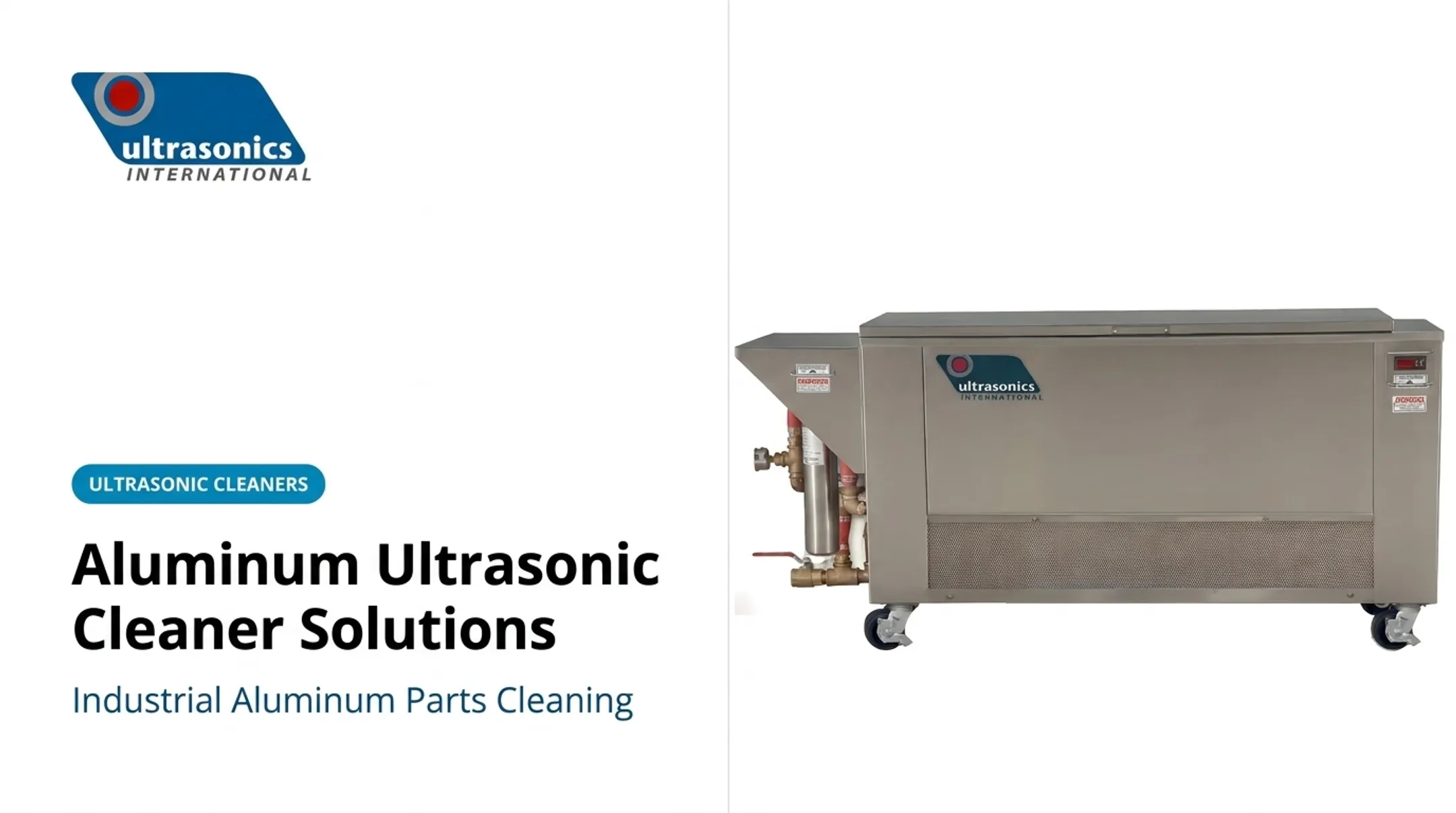
The Omegasonics OMG-5028, for example, lists 33 gallons (about 30 working gallons) and a 20 x 15 x 6 in basket. Ultrasonics International's PC 2400 (44" x 18" x 20", 65 US gallons) and PC 4800 (48" x 24" x 20", 98 US gallons) sit here. ExxonMobil's Alaska operations use both.
Compare internal dimensions, basket loading, heating, drainage, and solution management rather than a nominal gallon rating.
Heavy-Duty Systems
Machine shops, manufacturers, oil and gas maintenance teams, industrial repair operations, and restoration facilities face bigger, repeated workloads. They often need:
- Larger tanks or multiple stages
- Lifting help and filtration
- Custom baskets or process integration
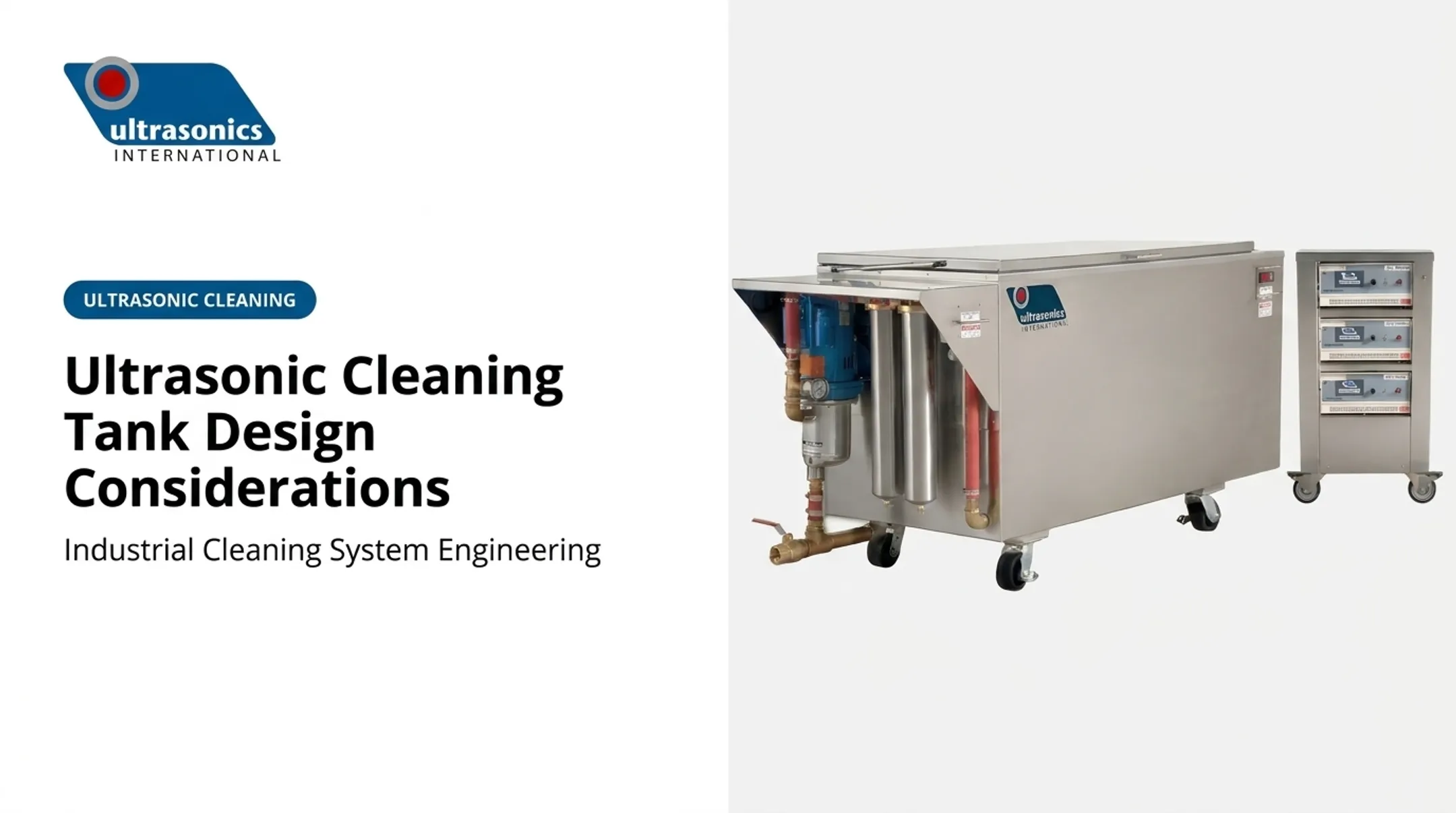
For long items, the 8000-B has separate wash and rinse tanks, each 96" x 8" x 17", built for pipes, cable, shafts, and wire. At the extreme end, UPC's 500-gallon system runs on 480 V three-phase power, which shows how utilities become part of the sizing decision.

When Custom Equipment or a Retrofit Makes More Sense
Consider custom work for unusual shapes, large assemblies, strict throughput targets, existing tanks, or specialized chemistry. A catalog benchtop may simply not fit.
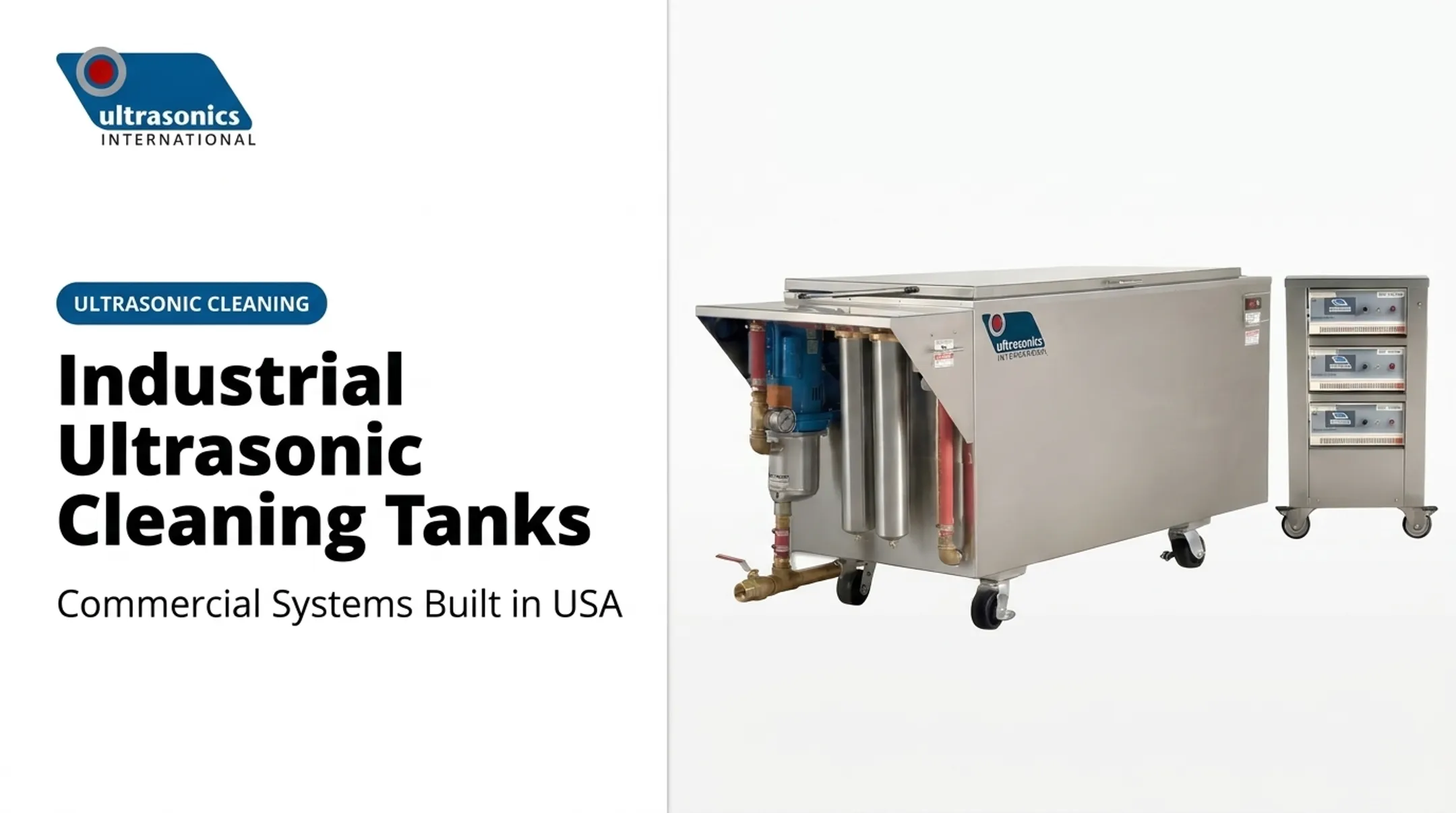
Ultrasonics International Corp. offers units from benchtop to heavy-duty, plus custom machinery, tank retrofits, support modules, and technical installation assistance. In most situations, components can be self-installed with company support. Request application-specific sizing guidance rather than guessing at a model.
Capacity Is Not the Only Specification That Matters
Frequency
Lower frequency makes larger, more vigorous bubbles. Higher frequency makes smaller, gentler ones. Elma's guidance points to 25 kHz for heavy soil, 37-45 kHz for the vast majority of jobs, and 80 kHz for delicate surfaces. Choose by contaminant, material, and finish.
Power
Judge power against tank volume, loading, soil severity, and cycle time. Don't compare wattage alone. Ultrasonic power and heater wattage are rated separately, and peak differs from average.
The PC 2400 pairs 2,400 watts RMS with 4,800 peak. More power isn't better for every part, since excess can erode soft metals.
Heating, Degassing, and Timers
Heat loosens oils, grease, and carbon. Check your chemistry's limits, though: some cleaners lose effectiveness above 140°F, while caustic ones run hotter.
Fresh liquid contains air that hurts cleaning, so it needs degassing. Wave Sweep, used in Ultrasonics International equipment, speeds degassing, so those cleaners don't need a separate degas mode. Adjustable timers help shops repeat settings reliably.
Construction, Basket, Drainage, and Access
Compare stainless grade, basket design, drain location, lids, controls, and serviceability. The BT-1400 uses 304 stainless, a 1-inch brass ball-valve drain, a stainless rack, and an insulated lid. Ultrasonics International builds with 100% stainless steel and unibody fabrication.
Chemistry and Operating Requirements
Tank size sets solution volume and operating cost, but the chemistry must suit the material and soil. Follow the label on fill marks, dilution (Liquinox, for example, specifies a 1-2% solution), temperature limits, ventilation, and protective gear.

Never use flammable solvents in a standard unit. Classify spent solution before disposal, since it can become hazardous waste.
Common Sizing Mistakes and Operating Considerations
The most common error is buying by advertised liters or external dimensions without checking the basket and usable envelope.
Avoid these habits:
- Overcrowding or stacking parts
- Blocking solution circulation
- Letting parts touch the tank bottom
- Running the unit dry, which causes failure
Fill only to the manufacturer's operating level, and allow for displacement when you lower the basket. Fluctuating water levels can also change results.
During initial trials, unattended cycles free technicians for other work, as Engine Builder notes. Use that time to log part dimensions, chemistry, temperature, frequency, cycle time, and loading arrangement so you can validate the size before a larger purchase.
Conclusion: Match Ultrasonic Cleaner Size to the Work
The right size depends on more than tank capacity. Weigh these factors together:
- Largest part and basket dimensions
- Part geometry and batch volume
- Frequency of use and workspace limits
- Expected future workload
Capacity alone will not give you the full answer.
If you have unusual dimensions, high volume, an existing tank, or a specialized process, contact Ultrasonics International Corp. for sizing guidance, custom machinery, retrofits, or installation support. Equipment is USA-made at the Ferndale, Washington plant.
- Phone: 800.500.2544
- Email: sales@sonicpro.com
- Mail: PO Box 13536, Scottsdale, AZ 85267
Frequently Asked Questions
How many Hz for an ultrasonic cleaner?
It depends on material, contaminant, and surface sensitivity. Most jobs fall in the 37-45 kHz range, with lower frequencies for heavy soil and higher for delicate parts. Check manufacturer guidance.
Are ultrasonic cleaners really worth it?
They pay off with complex geometry, batch work, and repeatable results, because they reduce manual scrubbing and labor. Value depends on workload, solution costs, and maintenance.
How much water do you put in an ultrasonic cleaner?
Fill to the manufacturer's operating level with the recommended water-and-cleaner mix, leaving room for parts and displacement. Don't overfill or run the unit dry.
What size ultrasonic cleaner do I need for a carburetor?
Measure the carburetor and compare it with usable basket and tank dimensions. Factor in parts per cycle and solution compatibility.
Is a larger ultrasonic cleaner always better?
No. Larger tanks suit big parts and high throughput but need more space, solution, energy, and handling. Match the cleaner to your actual parts and workflow.