
Introduction
An ultrasonic cleaner doesn't strip every soil with plain water or one universal detergent. Cavitation does the mechanical work, but the chemistry decides whether soil lifts, dissolves, suspends, and rinses away.
For US repair shops, machine shops, restoration contractors, labs, and instrument reprocessing departments, the wrong solution wastes cycle time, leaves residue, promotes corrosion, or damages the part.
This guide compares alkaline, caustic, acidic, enzymatic, and low-residue solutions by application. It also covers material compatibility, rinsing, safety, and how to test before you commit to production.
Key Takeaways
- The best solution depends on soil, material, finish, and downstream process, not the strongest formula.
- Mild alkaline detergents are a sound starting point; caustics suit heavy soils on tolerant metals.
- Acidic and enzymatic products need close review of the SDS and instructions.
- Distilled or deionized water helps rinsing but rarely replaces detergent.
- Test on representative parts before approving any chemistry.
Overview of Ultrasonic Cleaning Solutions in the US Industrial and Commercial Market
An ultrasonic cleaning solution is the liquid chemistry in the bath that supports cavitation and interacts with the soil. It is separate from the tank, transducers, heater, basket, and controls.
What the Chemistry Does
Cleaning agents lower surface tension, help degas the bath, and allow aggressive cavitation. Specific components do different jobs:
- Surfactants wet surfaces, emulsify, and disperse soil.
- Builders and pH modifiers buffer the bath, soften water, and supply alkalinity.
- Chelating agents bind metal ions and keep detergency up in hard water.
- Corrosion inhibitors reduce attack on the substrate, though an inhibitor added to a rinse leaves residue.
- Enzymes target specific soils: proteases for proteins, lipases for fats, amylases for starches.
Where It Gets Used
Common applications include:
- Automotive and small-engine repair (carburetors, cylinder heads, injectors)
- Machining and manufacturing degreasing
- 3D printing resin and support removal
- Smoke and soot restoration
- Instrument cleaning
- Marine engine service
- Heavy industrial maintenance
ExxonMobil's Alaska operations, for example, run large PC-series tanks on rigging and drilling assemblies before inspection.

Regulation also pushes users away from solvents. EPA's December 2024 TCE rule prohibits most uses of trichloroethylene, with longer phaseouts for some. That adds pressure to substitute, though it doesn't prove every shop has switched to aqueous cleaning.
The categories below are compared by strongest use, limits, and compatibility checks. No single formula fits every part.
Best Ultrasonic Cleaning Solutions by Application
Each category below is weighed on soil removal, material compatibility, rinsing needs, residue and corrosion risk, worker safety, equipment compatibility, and repeatability.
General-Purpose Alkaline Solutions
Moderately alkaline, water-based detergents are the broadest starting point for light-to-moderate oil, grease, dirt, machining residue, and coolant on compatible metal, glass, plastic, or ceramic parts.
Formulation matters more than the word "alkaline." Alconox lists pH 9.5 at 1%, used at 1-2%. Elma tec clean A1 is about pH 10.6 as concentrate, used at 3-10 vol% and 40-80 °C. Confirm each function against the label and SDS.
- Best for: routine maintenance, automotive components, machine-shop parts, and mixed loads with known soil and materials.
- Check before use: aluminum, zinc, magnesium, copper, brass, coatings, elastomers, and plastics against the specific formulation and temperature.
- Limitation: too weak for baked-on carbon, heavy wax, thick grease, rust, or scale. Don't "strengthen" it by guessing at concentration.
Heavy-Duty Alkaline or Caustic Solutions
These target heavy grease, carbon, wax, and bonded industrial soils on materials that tolerate the chemistry. Elma clean 112 is pH 12.6 at 2%, used at 3-5% with a separate surfactant booster at 40-90 °C. Aluminum is excluded, and magnesium and plastics need testing.
Exceptions exist. Elma tec clean A5 lists gray cast iron and zinc die castings among its applications. That's a formulation-specific allowance, not proof zinc tolerates any caustic bath.
- Best for: suitable steel, stainless, cast iron, and approved substrates in engine, tooling, and production work.
- Check before use: concentration, temperature, ventilation, PPE, waste handling, and whether tank, seals, baskets, and pumps are rated for it.
- Limitation: not a default for mixed-material loads or delicate parts. Aqueous doesn't mean harmless; both products carry corrosive skin and eye hazards.
Acidic, Descaling, and Oxide-Removal Solutions
Acidic or inhibited acidic products attack scale, rust, oxides, and inorganic deposits that alkaline degreasers miss. Removing the deposit and protecting the base metal are separate goals, so inhibitors, exposure time, and concentration matter.
Citranox, for instance, is pH 2.5 as supplied, used at 1-2%. Its maker calls for prompt rinsing on copper, bronze, aluminum, and zinc, and recommends corrosion testing.
- Best for: approved stainless, steel, brass, and nickel needing scale or oxide removal, per the formulation's documented use.
- Check before use: attack on base material, finish changes, effects on welds or coatings, and any need for neutralization, rinsing, or drying.
- Limitation: avoid household acids or improvised mixes on valuable parts unless equipment and chemical makers approve.
Passivation is its own requirement. ASTM A967 covers treatments that promote passive film on clean stainless, and acidic cleaning alone doesn't demonstrate compliance.
Enzymatic Solutions
Enzymatic formulations target proteins and biological soils in medical, dental, laboratory, and research settings, where degreasers are the wrong match. The CDC states these cleaners are not disinfectants, and ultrasound alone doesn't significantly inactivate bacteria. Required disinfection or sterilization still follows.
Operating conditions matter. Alconox's Tergazyme guidance says to keep ultrasonic use at 55 °C or below and use the solution within 8 hours to avoid enzyme degradation. It's also pH 9.5, so enzymatic doesn't mean neutral.
- Best for: protein and tissue on approved stainless, titanium, glass, and compatible plastics.
- Check before use: reprocessing instructions, facility requirements, rinse standards, and compatibility with joints, adhesives, and coatings.
- Limitation: not automatically effective on heavy carbon, scale, rust, or petroleum grease.
Low-Residue Aqueous Solutions and Distilled or DI Water
Distilled or DI water prevents mineral spotting, since dissolved tap-water minerals stay behind when water evaporates. It suits final rinses and precision work where residue could interfere with inspection, coating, or electrical performance.
Water alone has limited power on oil, grease, carbon, and protein. Alkaline chemistry provides emulsification, so water purity isn't a substitute. A neutral option such as Luminox (pH 7.0 as supplied, used at 1-2%) still calls for thorough rinsing and purified water for critical final rinses.
- Best for: final rinses, optics and precision parts where water compatibility is established.
- Check before use: flash rust, oxidation, trapped moisture, and drying method. Alconox notes hardened tool steel can flash-rust after rinsing.
- Limitation: DI isn't automatically safer for every metal, electronic part, or coating.

How We Chose the Best Ultrasonic Cleaning Solutions
The evaluation matches soil, material, and process rather than brand familiarity or chemical strength. A common mistake is picking a detergent before identifying the contamination and substrate.
Match Chemistry to Contaminant
Separate the soil type before you pick a detergent:
- Oils and grease
- Carbon, soot, and resin
- Wax, flux, and proteins
- Rust, scale, and oxides
- General dirt
Support each match with supplier documentation or testing. For 3D prints, one manufacturer notes alkaline detergents can remove some resins, but chemistry must still fit the material.
Verify Material and Finish Compatibility
Read the SDS and technical data sheet for pH range, temperature limits, concentration, and material warnings. Check compatibility for:
- Metals: aluminum, magnesium, zinc, copper, brass, stainless
- Sensitive surfaces: plastics, rubber, coatings, optics, electronics
Evaluate the Whole Process
Liquid is only one variable. Frequency, power, temperature, cycle time, load arrangement, and basket design all change results:
- ASTM G131 warns that 20-25 kHz can damage soft aluminum and silver.
- Excessive temperature can reduce cavitation effectiveness.
- Fresh liquid should be degassed before cleaning.
- Parts belong in baskets or trays, never on the tank bottom.
- Solid flat basket surfaces can absorb sound and weaken cavitation.
- Baskets must keep parts off the transducers; contact can etch parts permanently.
Control Rinsing, Drying, and Redeposition
Rinse and dry steps decide whether soil redeposits after a clean bath:
- Remove spent chemistry and suspended soil
- Use a compatible rinse to limit spotting and corrosion
- Dry crevices thoroughly
- Replace contaminated solution on schedule
Detergent-free baths have high surface tension, which makes rinsing harder in tight geometries.
Review Safety and Environment
- OSHA requires accessible SDSs, training, and a written program where applicable.
- Flammable chemicals don't belong in standard aqueous tanks. Solvent cleaning needs purpose-built equipment.
- Spent baths at pH 2 or below, or 12.5 or above, can meet EPA's corrosivity characteristic, and neutralizing doesn't address every waste concern.
- VOC rules are local. South Coast AQMD Rule 1171 applies in that district, not nationwide.
Test Before Production
Run actual or comparable parts before you lock in a chemistry. Document soil removal, appearance, dimensional or functional impact, rinse quality, drying, and repeatability.
ASTM G122 calls for final evaluation on real products and processes. The water-break test (ASTM F22) gives a quick go/no-go check for hydrophobic films.

Conclusion
The best ultrasonic cleaning solution removes the target soil thoroughly while protecting the part, the equipment, the workers, and the next process step. More aggressive isn't better. Compare chemistry by contaminant, substrate, finish, rinse needs, and safety documentation, not generic recipes or household mixtures.
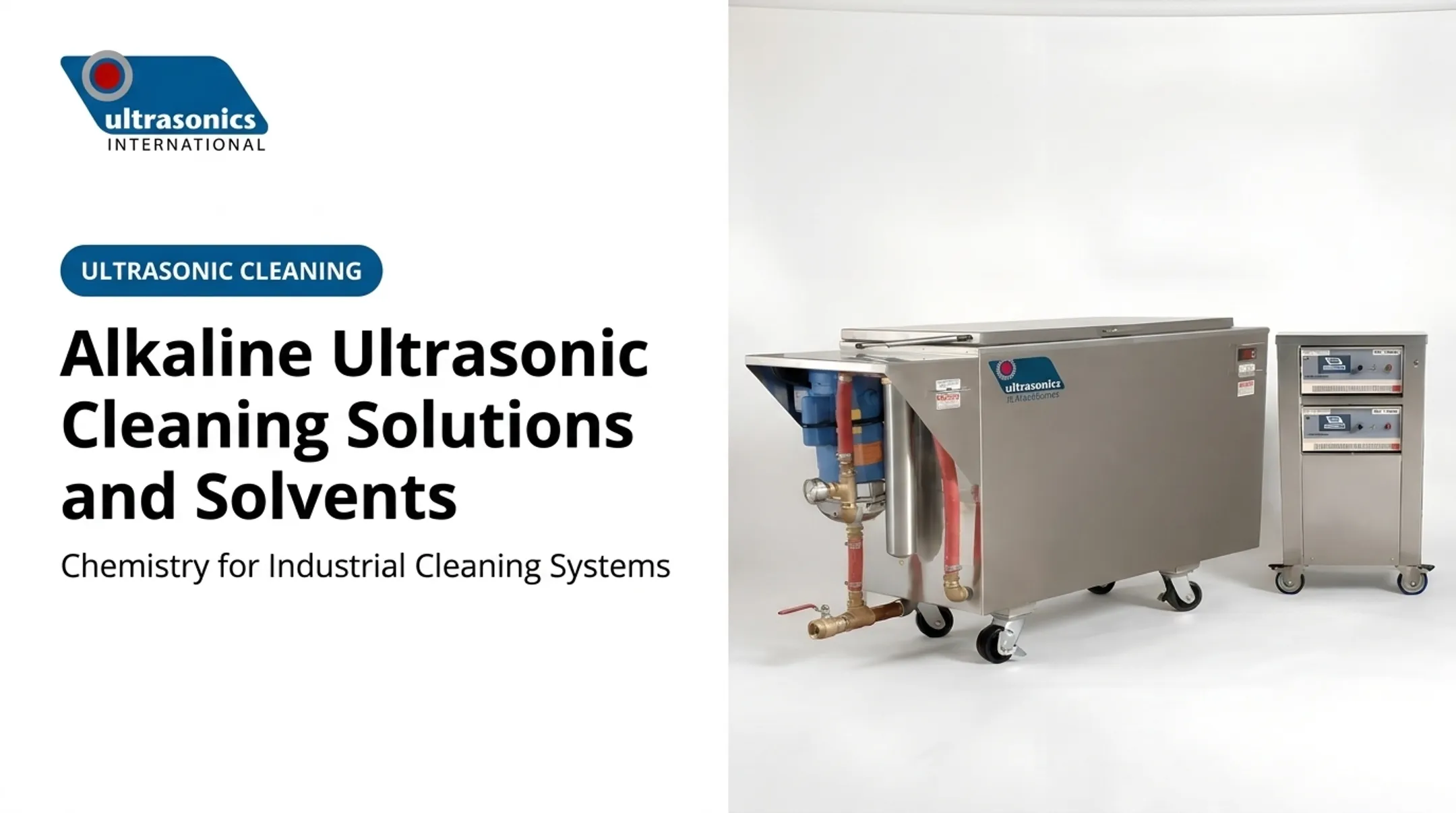
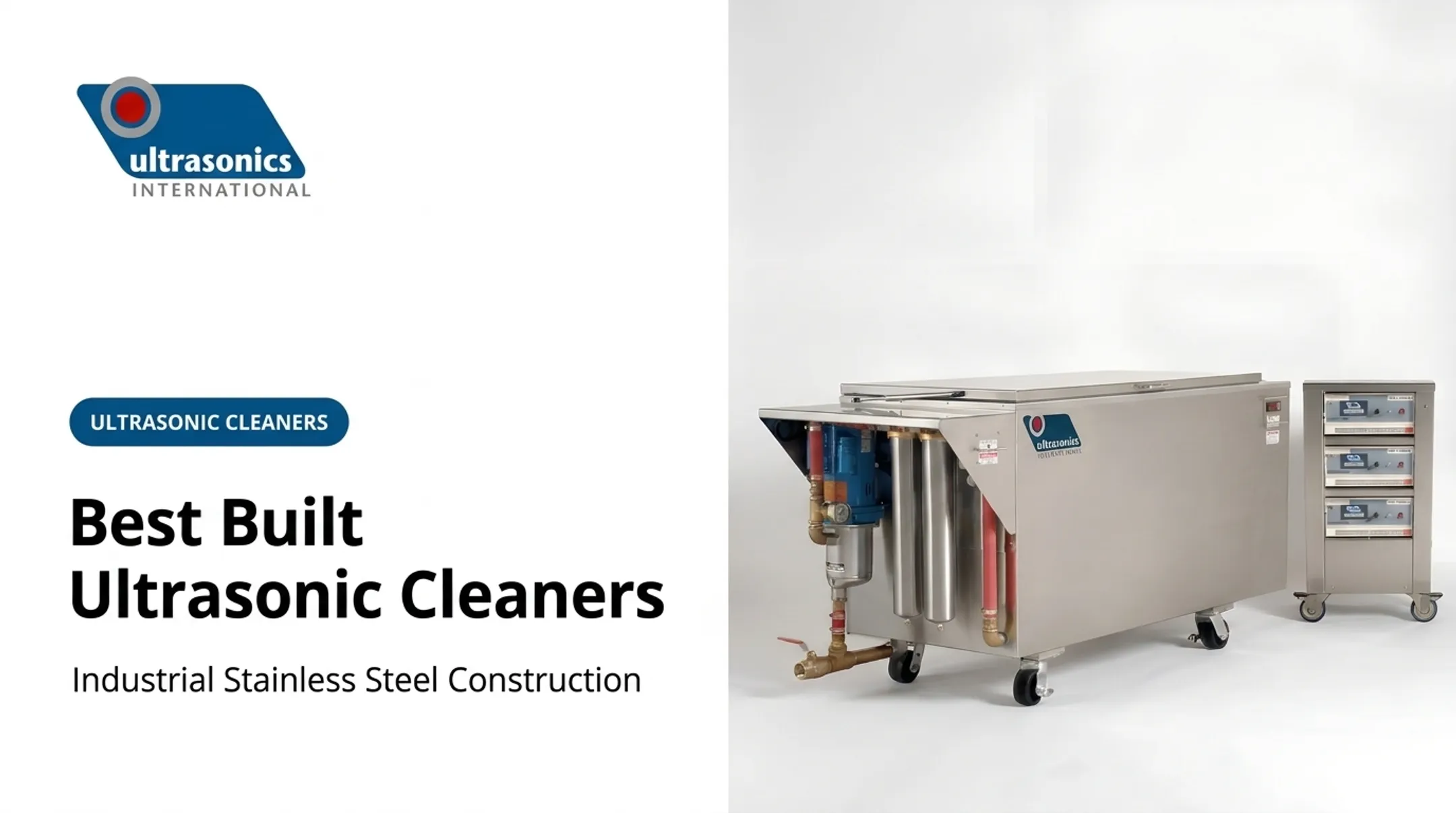
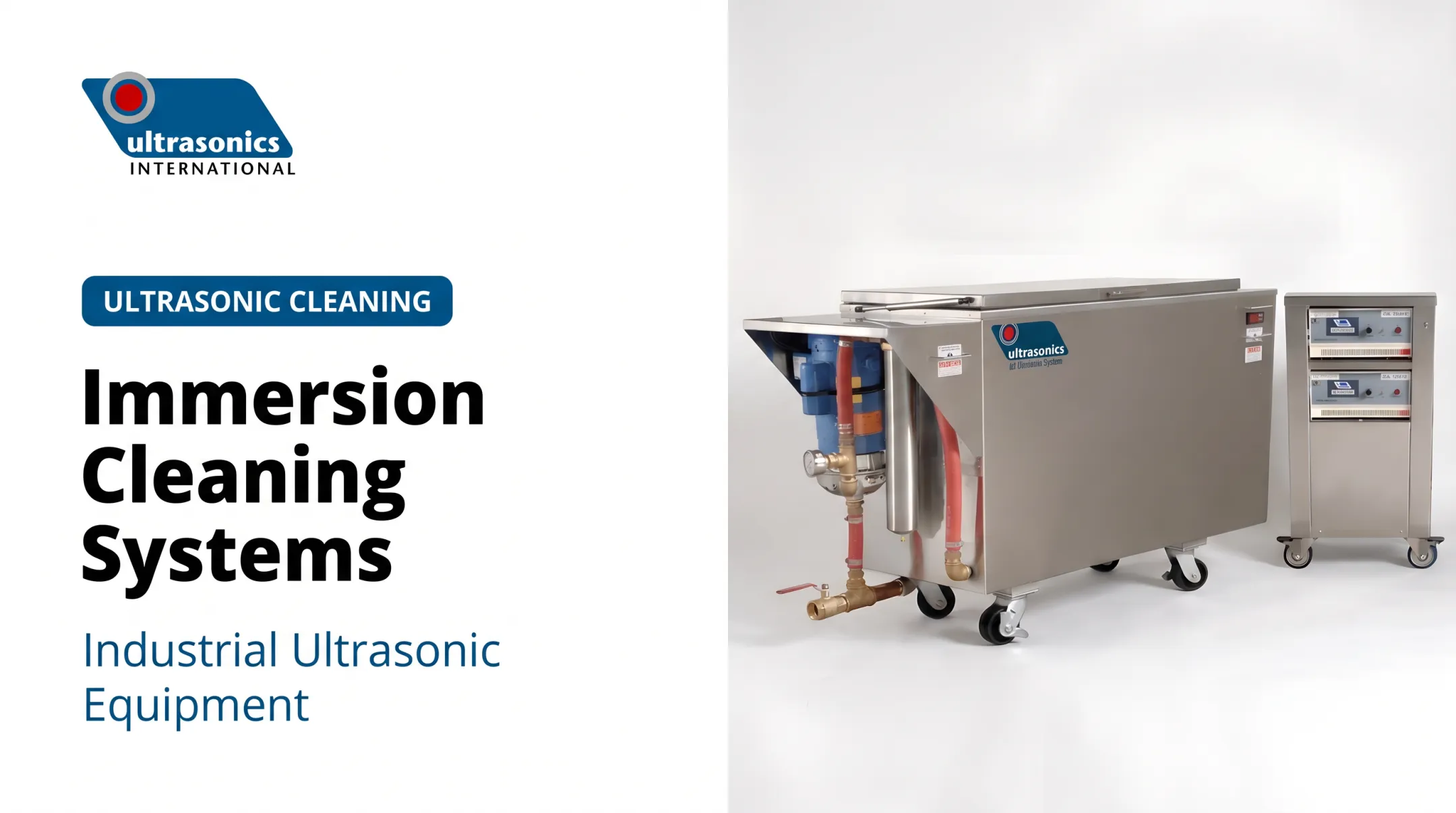
If you're still choosing equipment, Ultrasonics International Corp. manufactures USA-made ultrasonic cleaning systems, custom machinery, retrofit solutions, and support equipment at its Ferndale, Washington plant. Tank configuration should match your cleaning requirements.
To discuss sizing, custom tanks, retrofits, or application-specific needs, call 800.500.2544 or email sales@sonicpro.com.
Frequently Asked Questions
What is the best cleaning solution for an ultrasonic cleaner?
It depends on the contaminant and material. A mild alkaline detergent is a common starting point for compatible general-purpose parts. Check the SDS and manufacturer compatibility guidance first.
Can I clean gold in an ultrasonic cleaner?
Solid, sound gold may be fine, but settings, stones, plating, repairs, and fractures matter. GIA warns against ultrasonic treatment for fracture-filled and many organic stones. Check with the manufacturer or a jeweler.
Should I use distilled water in an ultrasonic cleaner?
Distilled water reduces mineral deposits and spotting, especially as a final rinse. It won't remove oils or grease without an approved detergent.
What is an ultrasonic bath used for?
It uses cavitation to clean parts and instruments, including crevices, holes, threads, and complex shapes. Typical uses include repair, machining, laboratory, restoration, and maintenance work.
Can I use dish soap in an ultrasonic cleaner?
Not by default. Household soap may leave residue, lacks material-protecting additives, and may not suit your equipment. Use a purpose-formulated ultrasonic detergent unless the cleaner's manufacturer approves another.
What ultrasonic solution is best for removing grease from metal parts?
An approved alkaline or heavy-duty degreaser is often right, depending on the metal, grease, finish, temperature, concentration, and rinse. Avoid caustic chemistry on sensitive metals without documented compatibility.