
Introduction
Cavitation does the scrubbing in an ultrasonic tank. The solution decides how well oils, grease, carbon, and particles let go and stay suspended. Pick the wrong chemistry and you get dull parts, pitted aluminum, or a bath that needs dumping early.
The strongest cleaner is rarely the best one. Product pH alone ranges from 8.5 as supplied to 13 at a 1% dilution, according to vendor documents. The right choice depends on the soil, the substrate, the finish, and the tank.
This guide covers alkaline formulations, solvent alternatives, material compatibility, safe operating practices, and selection criteria for industrial and commercial work.
Key Takeaways
- Alkaline solutions suit oils, grease, and carbon, but strength and additives change material risk.
- Match chemistry to both soil and substrate, and read the SDS and technical data sheet first.
- Keep flammable liquids out of heated tanks, and test unfamiliar processes on a sample part.
- Rinsing, drying, bath maintenance, and disposal are part of the process.
What Are Alkaline Ultrasonic Cleaning Solutions?
What makes a cleaning solution alkaline?
Anything above pH 7 is alkaline. Cleaning products add builders, surfactants, emulsifiers, corrosion inhibitors, and chelating agents to that base. Builders react with dissolved ions that interfere with cleaning, and chelants keep metal ions soluble in hard water.
There is no standard line between "mild" and "high-caustic," so compare products on the same basis. Common products illustrate the spread:
| Product | Reported pH | Ultrasonic dilution |
|---|---|---|
| Liquinox | 8.5 as supplied | 1-2% |
| Alconox powder | 9.5 at 1% | 1-2% |
| Elma tec clean A4 | About 13, concentrate | 2-5 vol% |
| Keylajet | 13 at 1% | 1-10% |
Higher alkalinity can raise cleaning power. It also raises the risk to soft metals, coatings, and skin.
How alkaline chemistry works with cavitation
Ultrasonic waves create microscopic bubbles that grow and collapse. The collapse agitates the liquid and reaches threads, channels, and crevices a brush can't. A bubble imploding near a hard surface can form a jet traveling up to about 250 mph.
The chemistry does its own part. Alkaline detergents emulsify or suspend oils and grease, while surfactants lower surface tension so the solution wets complex geometry. Cavitation also sweeps away saturated solution and brings fresh chemistry to the soil.

Aqueous alkaline cleaners versus true solvents
Most industrial alkaline ultrasonic cleaners are water-based detergents, not petroleum or alcohol solvents. That matters for flammability, ventilation, residue, and waste. Cavitation is more intense in water-based solutions than in organic solvents, so use a water-based detergent whenever possible.
People use "solvent" loosely for anything that dissolves soil. Operators should still separate aqueous solutions from volatile, combustible systems before choosing equipment or procedures. Older solvents such as 1,1,1-trichloroethane and freon were largely phased out under the Montreal Protocol.
How to Choose Between Alkaline Solutions and Other Ultrasonic Cleaning Solvents
Start with the contaminant
Identify the main soil first: oil, grease, carbon, machining coolant, wax, rust, scale, protein, resin, ink, smoke, or a mix. Alkaline cleaners target organic soils. Oxidation, proteins, and delicate residues often call for something else.
Compare the main chemistry categories
| Chemistry | Typical ultrasonic use |
|---|---|
| Alkaline | Oils and grease |
| Acidic | Rust, oxides, minerals, scale |
| Enzymatic | Proteinaceous soils such as blood and tissue |
| Neutral | Alkaline-sensitive materials and soft metals |
| Solvent | Resin-specific protocols, such as IPA for printed silicone |
When soils differ chemically, two stages beat one compromise formula. Degrease first, then rinse or finish with a specialized step. Blackstone-NEY explains that rinsing removes cleaning chemistry and loosened contaminants, and ultrasonic rinsing improves that removal.
Consider additives and process requirements
Two products with the same pH can behave very differently. Surfactants, inhibitors, water conditioners, defoamers, and rinse aids all change performance and compatibility. Silicone-oil antifoams, for example, can reduce detergency and deposit on parts.
Before use, review the label, SDS, technical data sheet, dilution, operating temperature, storage requirements, and disposal instructions.
Equipment and process fit
Tank size, loading, frequency, heating, filtration, rinsing, drying, and throughput all limit which chemistry is practical. Common frequencies run from 25 to 100 kHz. A caustic/water solution often cleans best near 82°C (180°F), but always stay within your tank's and product's stated limits.

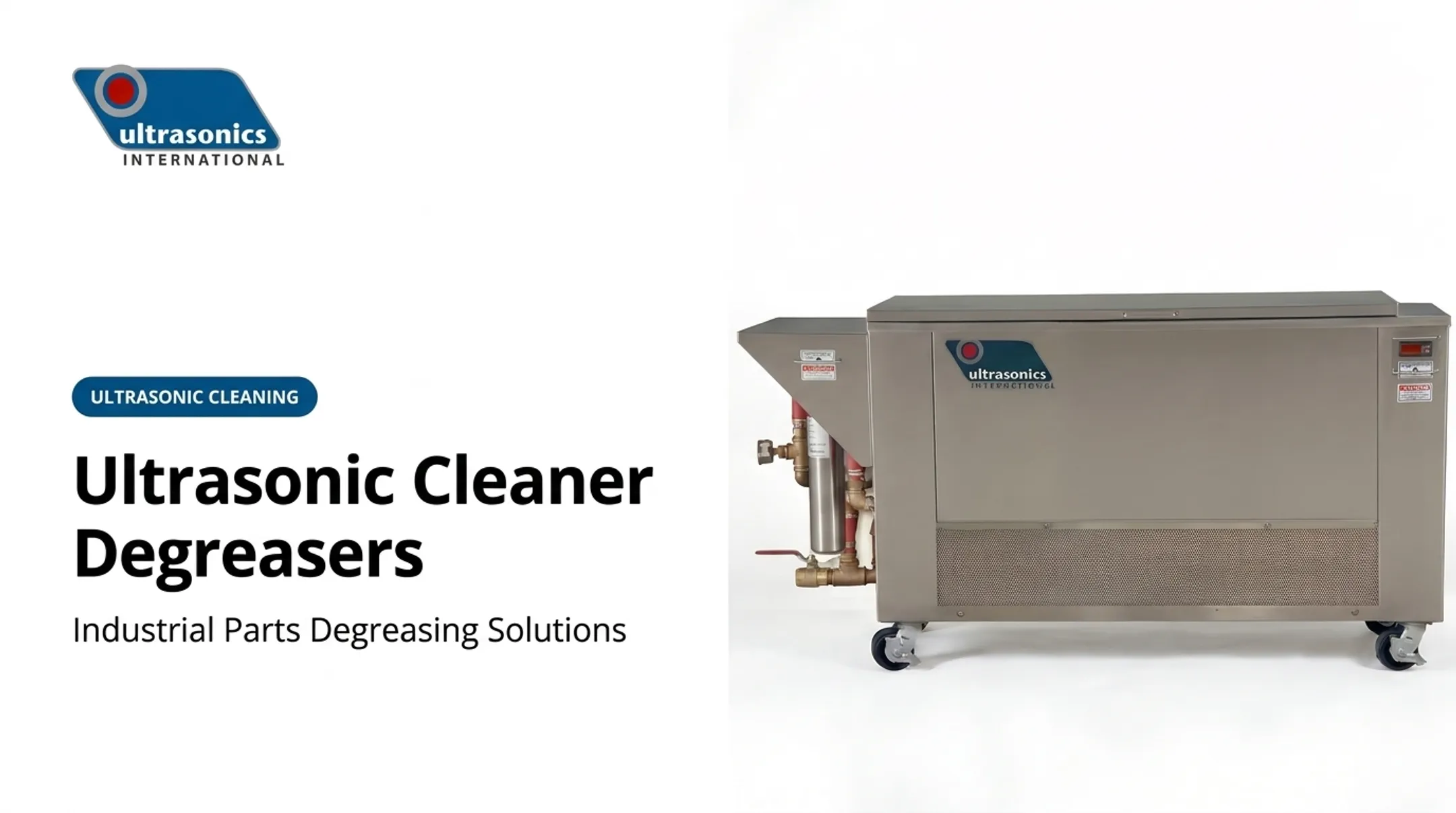
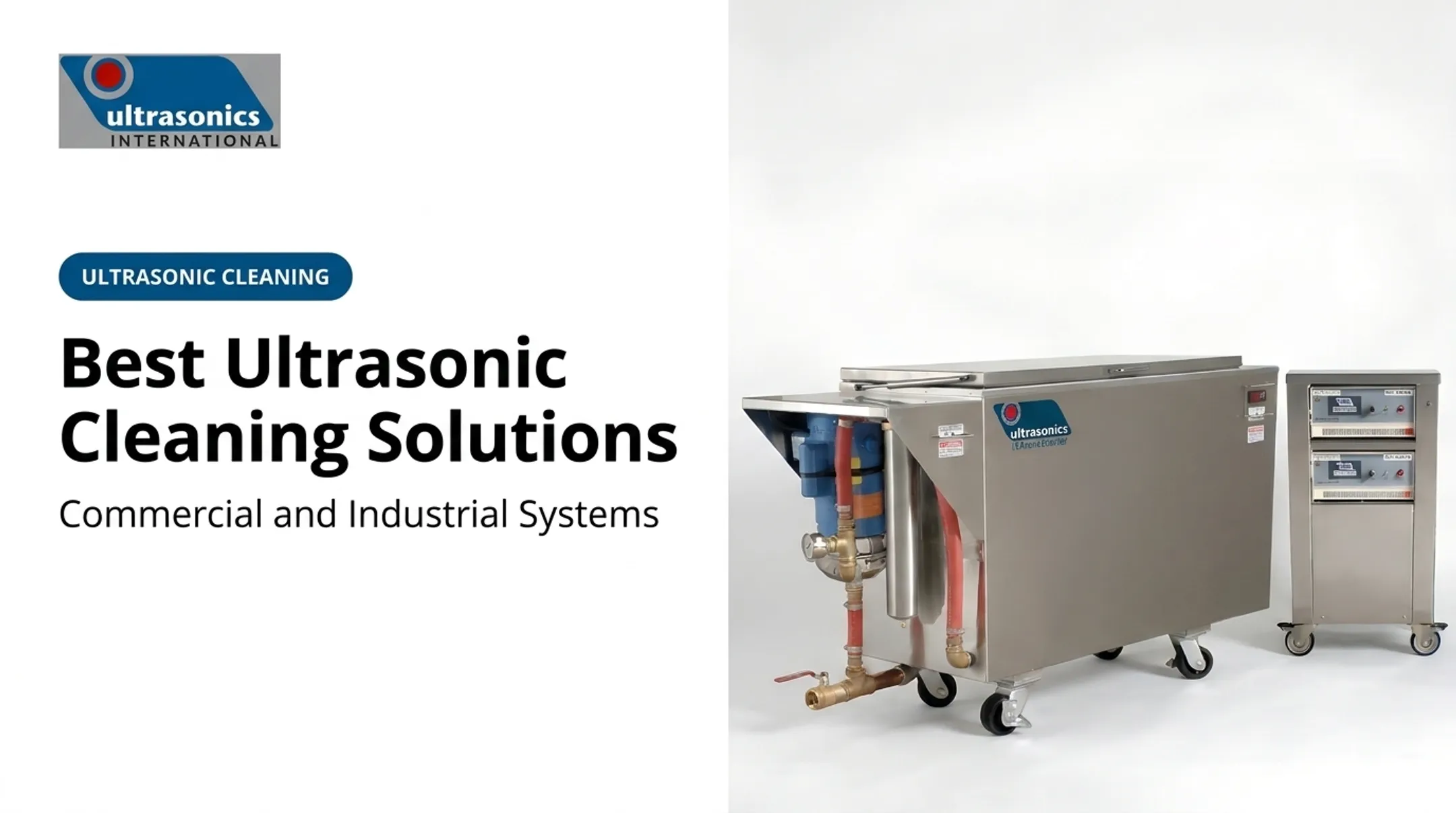
Ultrasonics International Corp. builds USA-made systems from benchtop units to heavy-duty tanks, including custom machinery and retrofits for existing tanks. The PC4800, for example, holds 100 US gallons and offers high heat, optional filtration, and a removable stainless insert tank for rinsing or indirect cleaning. If you have difficult part sizes, high volumes, or an existing tank, call 800.500.2544.
How to Match an Alkaline Cleaner to the Contaminant and Material
Ferrous metals and stainless steel
Moderate alkaline solutions are common for steel, cast iron, and stainless parts with grease, oil, carbon, and machining residue. Keylajet lists steels and stainless as suitable substrates, and Crest describes one formulation as mildly inhibited against flash rust.
Flash rust is still the risk. Rinse promptly, dry quickly, and use an approved corrosion-inhibiting step where needed.
Aluminum, magnesium, zinc, and other reactive metals
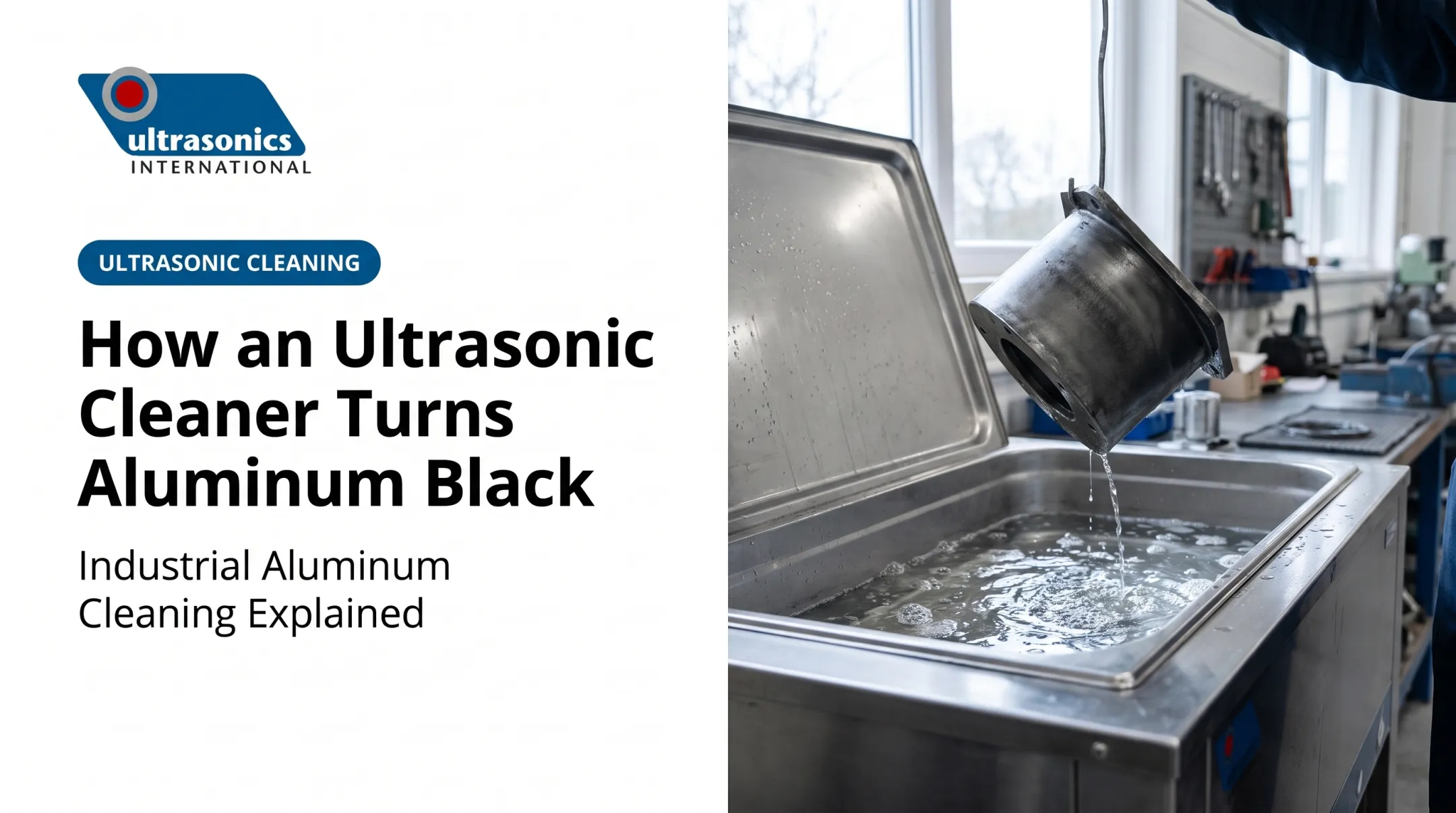
Unsuitable strength, additives, temperature, or cycle time can pit, discolor, or corrode these metals. Keylajet explicitly excludes copper, aluminum, zinc, and magnesium. Liquinox permits soft metals with prompt rinsing and advises corrosion testing.
Use only formulations documented for the substrate, and try a coupon or noncritical part first.
Copper, brass, plated parts, and finishes
Copper alloys, plating, anodizing, polished surfaces, and paint can tarnish, change color, or strip. Citranox permits copper and bronze with prompt rinsing and testing, but that is not a blanket approval. Crest warns ultrasonic cleaning can damage anodized aluminum.
Inspect the base material and the finish. A cleaner fine for bare steel may ruin a plated assembly.
Plastics, rubber, seals, and electronics
Heat, prolonged exposure, and chemical absorption can harm plastics, elastomers, adhesives, labels, and insulated components. Elma clean 210 specifies stress-crack-resistant plastics and compatibility checks.
Where possible, remove metal parts from mixed assemblies and clean them separately.
Validate before production cleaning
- Identify the soil type and how it bonds to the surface.
- Select a cleaner documented for that soil and substrate.
- Inspect the part for existing damage or sensitive finishes.
- Run a small test on a coupon or noncritical part.
- Check for residue, discoloration, or surface change.
- Rinse thoroughly and dry promptly.
- Record the dilution, temperature, time, and results that worked.

ASTM G122 supports evaluating cleaning effectiveness and compatibility on representative coupons, then on actual products. The ASTM F22 water-break test is a quick, nonquantitative check for hydrophobic films.
Where Alkaline Ultrasonic Solutions Are Commonly Used
- Automotive, motorcycle, marine, and small-engine: Carburetors, injectors, and cylinder heads shed fuel residue, grease, and carbon. Confirm compatibility with aluminum, coatings, and seals first.
- Machine shops and manufacturers: Machining oils, cutting fluids, and chips come off between steps. Consistent dilution, loading, inspection, and bath monitoring keep results repeatable.
- Restoration: Smoke and soot removal from contents is a standard use.
- 3D printing: Support material and resin residue need chemistry matched to the material. For Formlabs Silicone 40A, keep IPA in a separate container in a water bath; never pour IPA into the tank.
- Medical and laboratory: Follow validated reprocessing procedures. The CDC treats ultrasonic cleaning as mechanical cleaning before disinfection or sterilization, not as sterilization itself.
How to Use Alkaline Solutions Safely and Effectively
Prepare the bath correctly
Use the specified water quality, dilution, fill level, and temperature. Don't guess concentration by appearance. Blackstone-NEY warns that deionized water can corrode or discolor many metals.
Degas a fresh bath, as Branson's manual directs. Use supported baskets, keep parts off the tank bottom, and load so parts don't block cavitation.
Control temperature, time, and exposure
Heat helps cleaning, but excess temperature, concentration, or time can accelerate corrosion and damage coatings, seals, and plastics. Limits vary: Branson specifies a 60°C (140°F) heater maximum, while Elma A4's chemistry recommends 50-80°C (122-176°F).
Start with conservative documented settings, inspect during validation, and change one variable at a time.
Follow chemical, worker-safety, and waste procedures
Caustic products can cause skin irritation and serious eye damage. Keylajet's 2024 SDS classifies the product for skin corrosion and eye damage.
- Keep SDSs accessible and containers labeled, as OSHA's Hazard Communication standard requires.
- Wear gloves and goggles, ventilate, and keep spill supplies nearby.
- Never mix cleaning chemicals, since dangerous gases can result.
- Treat aqueous waste separately: under RCRA, a pH of 12.5 or higher can make it hazardous waste, and sewer discharge has its own limits.
Don't put flammable solvents, peroxide, bleach, or household chemicals in a tank unless the equipment and chemical makers approve it. Branson's manual prohibits alcohol, gasoline, bleach, and combustible liquids, because heated, energized tanks can ignite vapors.
Peroxide decomposes exothermically when heat, high pH, or metal contamination are present.
After cleaning, rinse, dry, protect against corrosion where required, and inspect for residue. Replace visibly degraded solution, and filter or change the bath when dissolved solids build up.
Frequently Asked Questions
What is the best fluid to use in an ultrasonic cleaner?
It depends on the contaminant, material, finish, and machine. Use a manufacturer-approved ultrasonic cleaning solution, not an improvised chemical. Plain water cavitates, but it wets surfaces and lifts soil less effectively.
Can I use peroxide in my ultrasonic cleaner?
Only if the cleaner and chemical documentation both approve it. Heat, high pH, and metal contamination can trigger rapid decomposition, so check concentration, compatibility, and ventilation.
Is an ultrasonic cleaner safe?
Yes, with the correct solution, PPE, ventilation, loading, and temperature. Flammable liquids, unsuitable chemicals, and incompatible parts create hazards.
What are examples of alkaline cleaners?
Categories include moderate aqueous detergents, carbonate- or silicate-based cleaners, and stronger caustic formulations. Common ingredients include sodium carbonate, disodium metasilicate, and sodium hydroxide. Always confirm composition on the SDS.
How do I dilute an alkaline ultrasonic cleaning solution?
Follow the label or technical data sheet. Measure concentrate accurately, use the recommended water quality, and don't raise concentration without validation.
Can alkaline ultrasonic cleaners be used on aluminum parts?
Some formulations are aluminum-compatible, while others cause pitting or discoloration. Choose an aluminum-safe product, test a small part, and control concentration, temperature, and exposure time.