
Introduction
Deposits inside pipes cost money long before a line fails. Scale and sludge restrict flow, raise pressure, cut heat transfer, harbor contamination, and force unplanned shutdowns.
A Department of Energy brief lists reduced capacity, low process yields, frequent cleaning shutdowns, and extra maintenance as consequences of fouling.
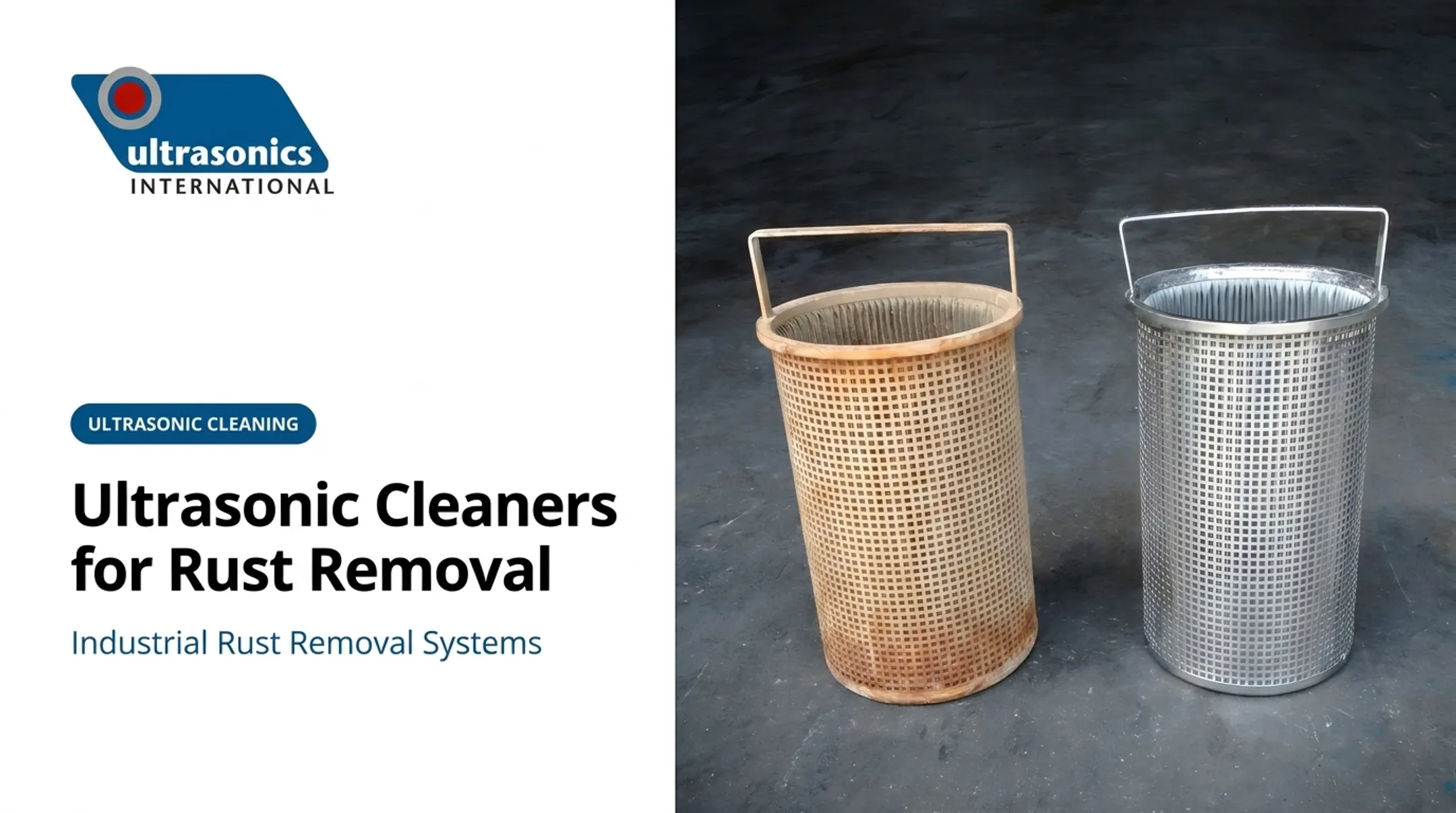
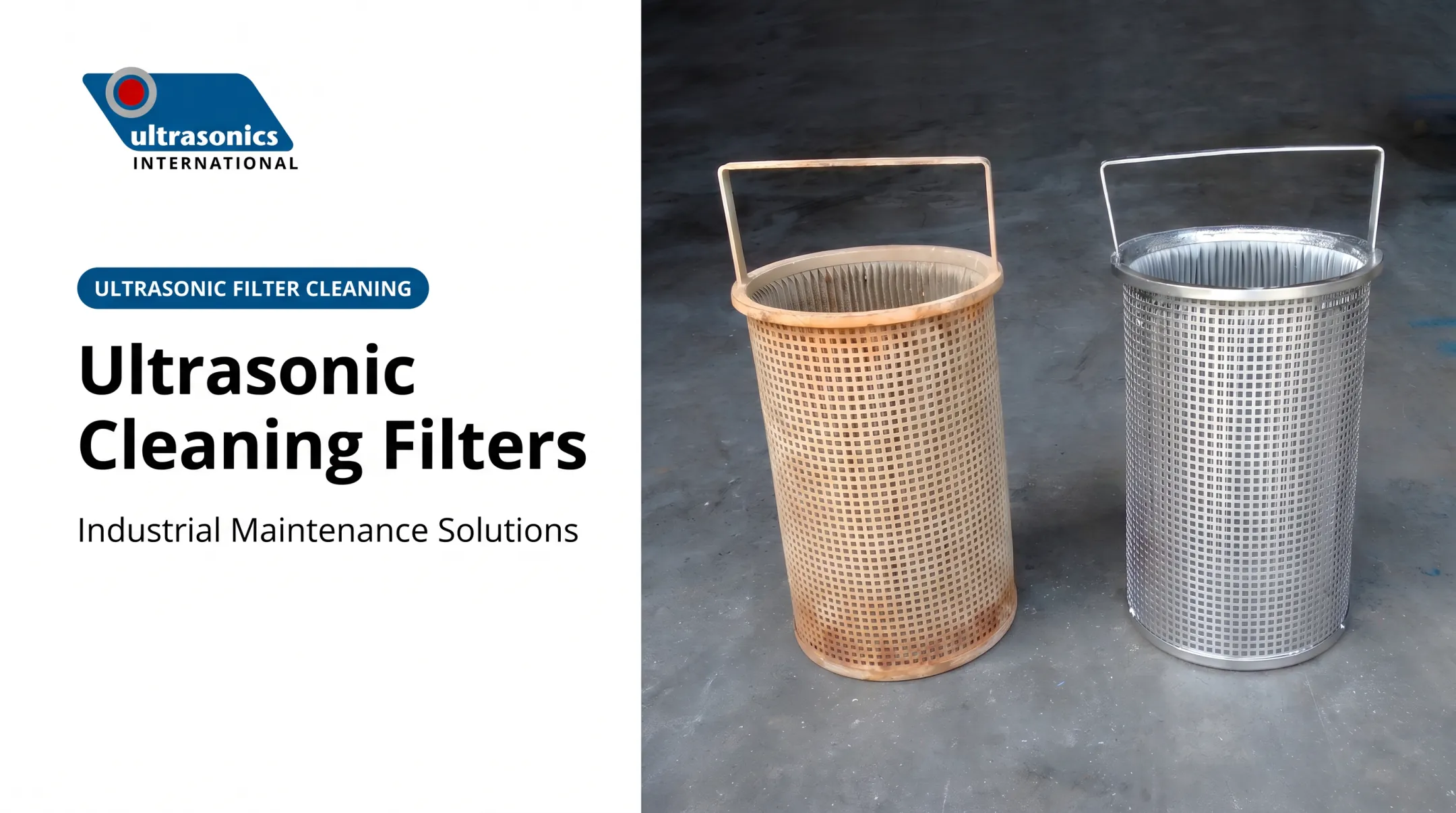
Ultrasonic pipe cleaning is a liquid-based process that targets this fouling. High-frequency vibrations create cavitation that loosens contamination from internal and external surfaces.
The real decision is which setup fits your piping: an offline ultrasonic bath for removable sections, an in-situ arrangement for fixed lines, or an external system that discourages fouling during operation.
Key Takeaways
- Ultrasonics reach bends, bores, and crevices that brushes miss, but results depend on residue, material, and access.
- Removable pipes go in a tank. Fixed piping needs flow cells, probes, or external vibration.
- Match chemistry, frequency, power, temperature, and cycle time to the job.
- Test on real pipe and real residue before buying.
How Ultrasonic Cleaning for Pipes Works
What cavitation does inside a pipe
A generator sends high-frequency electrical energy to transducers. Piezoelectric transducers change shape under electric current and send vibration into the cleaning liquid.
That vibration creates alternating pressure waves. Microscopic bubbles form, grow, and collapse. Near a hard surface, each collapse produces a tiny liquid jet that helps lift soil away.
Cleaning needs no line of sight, so small apertures, blind holes, and crevices still get cleaned.
Cavitation is not abrasive blasting. It works through liquid movement, not propelled grit. That also means the liquid must actually touch the contaminated area.
Reaching bends, joints, and internal surfaces
Elbows, joints, and narrow passages clean well when the pipe can be filled and immersed. Trapped air is the usual enemy.
Fixed pipe is harder. Access, diameter, wall thickness, flow conditions, and blockage all affect the result. In a 2006 pipe experiment, cleaning removed deposits except at vibration nodes, and thicker deposits reduced removal. Validate coverage, not just transducer operation.

Variables that control cleaning performance
- Frequency: Lower frequencies produce larger bubbles and more aggressive action for coarse soil; higher frequencies suit delicate or polished surfaces.
- Temperature: Water cavitates best near 160°F; caustic solutions clean best near 180°F.
- Degassing: Fresh liquid holds air that weakens cavitation. Wave sweep speeds degassing.
- Sweep: Varying the frequency slightly (for example, 29 to 31 kHz on a 30 kHz transducer) eliminates standing waves and hot spots.
- Chemistry and cycle time: Both must suit the soil and the metal.
Document a repeatable recipe: soil type, pipe material, solution concentration, temperature, loading arrangement, and required finish.
Cleaning versus fouling prevention
Active cleaning removes existing deposits. External vibration systems work differently: transducers mounted on a structure, such as an exchanger tube sheet, are intended to keep deposits from settling during operation. Documentation for Orange Cleantech's system cites named installations without controlled removal percentages.
Prevention suits some process pipes and heat exchangers. A heavily blocked line still needs isolation, inspection, and a dedicated cleaning procedure.
What Ultrasonic Cleaning Can Remove
Common pipe contaminants
Mineral scale, lime scale, oil and grease, carbon, sludge, biological residue, metal oxides, machining debris, coolant, polymers, and process residue all show up in pipe work. Chemistry depends on whether the soil is organic, inorganic, particulate, or chemically bonded.
| Contaminant | Typical chemistry |
|---|---|
| Scale, oxides | Acidic detergent |
| Oil, grease, coolant | Mild alkaline detergent |
| Proteins, fats | Enzymatic detergent, kept below 130°F |
| Baked carbon, heavy grease | Often needs spray washing or a combined process |
For most applications, a gentle water-based detergent is enough. Overly concentrated chemicals can make a solution too aggressive.
Industry and application examples
- Machine shops: Repeatable degreasing and chip/coolant removal between machining steps.
- Oil and gas: Large rigging, drilling assemblies, and mechanical components cleaned before inspection and reassembly. ExxonMobil's Alaska operations use PC2400 and PC4800 units for this.
- Marine: Corroded, salted, carboned engine components and heat exchangers.
- Food processing: Residue buildup in small nozzles and orifices.
- Removable manufacturing sections: Sections removed from the line and cleaned in-tank between production runs.
When ultrasonic cleaning may need support
Ultrasonic cleaning may need backup steps when you face:
- Thick blockage or hardened deposits
- Damaged surfaces or inaccessible sections
- Regulated contamination
Those cases may call for pre-cleaning, circulation, filtration, chemical treatment, or inspection first. When the residue, alloy, coating, or elastomer is uncertain, run a small-scale trial.
Pipe Cleaning Methods and Equipment
Offline ultrasonic baths for removable pipes
The workflow is straightforward:
- Drain and isolate the section.
- Place it in a basket or fixture.
- Ensure liquid contacts internal and external surfaces.
- Run the validated cycle.
- Rinse, inspect, and dry.
Size the tank around the longest pipe, its diameter, openings, orientation, drainage, and loading density. Tilt curved or multi-branch parts so air escapes and liquid fills every passage.
In-situ cleaning for fixed piping
Flow cells, internal emitters, or inserted probes can deliver energy to fixed lines. A 2024 production-tubing study used a 26 kHz rod and reported 75% calcium carbonate removal in one hour with enhanced flow. Those were simulated-tubing conditions, not field guarantees.
Before you proceed, evaluate:
- Geometry, wall thickness, and material
- Fluid compatibility and pressure isolation
- Access points and flow direction
- How loosened debris will leave the line
In-situ work requires engineering and validation. It does not replace opening, inspecting, or repairing a pipe.
External vibration systems for fouling control
Externally attached transducers on suitable metal pipes, vessels, or heat exchangers discourage deposits during operation. This is distinct from a bath and works better for prevention than for clearing a severe blockage.

Equipment features and system integration
Major components include:
- Generator and transducers
- Tank or flow cell with fixtures
- Heater, filtration, and controls
- Rinse and drying stages
Timers, programmable controls, sweep functions, and process records improve repeatability in production.
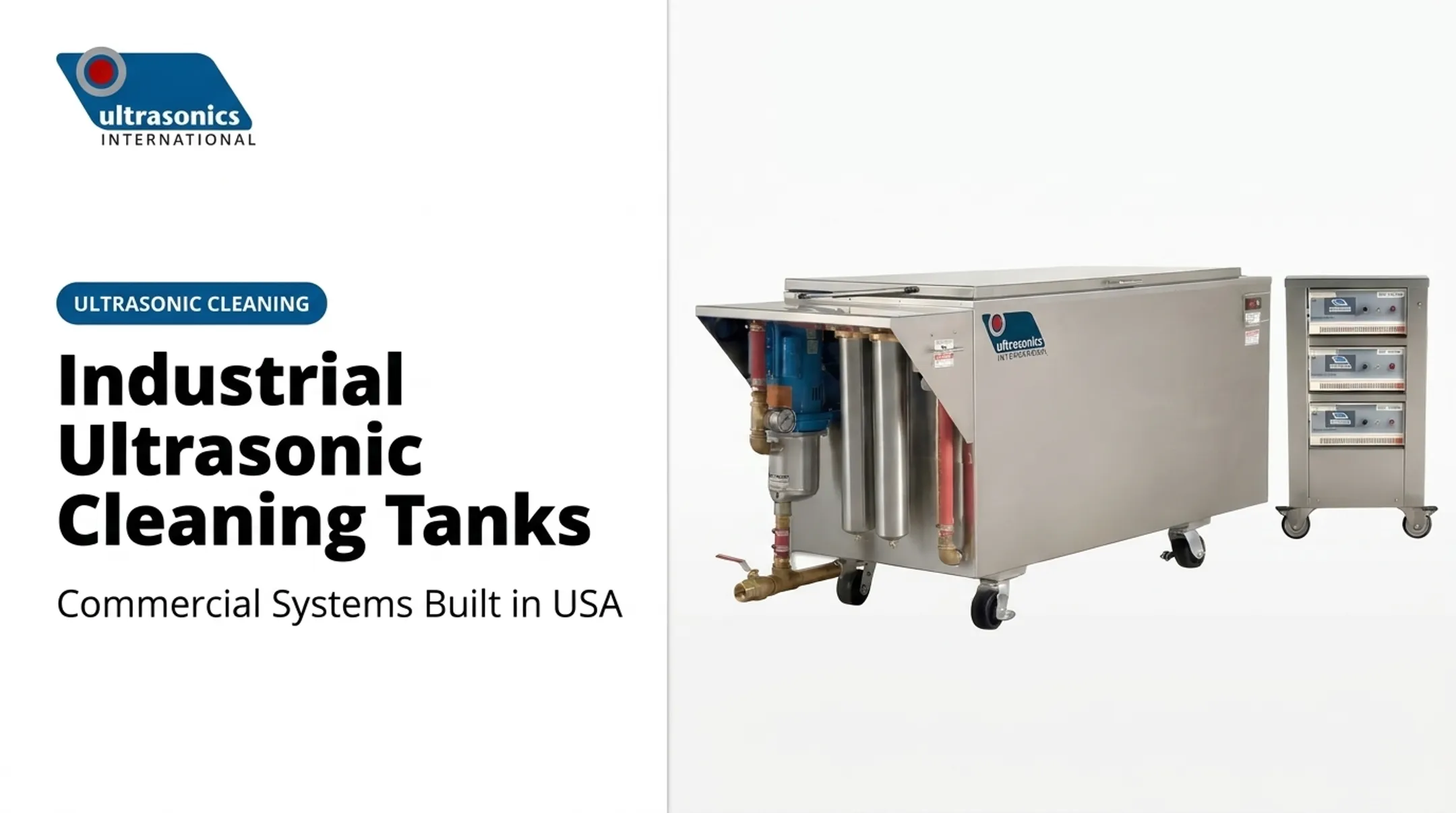
Ultrasonics International Corp. builds systems from benchtop units to heavy-duty industrial equipment. Its 6000-B and 8000-B dual-tank linear cleaners are designed for long, narrow items such as pipes.
The 8000-B wash and rinse tanks each measure 96" × 8" × 17" in 304 stainless steel, with Dynamic Wave Sweep Control and Power Intensity Control. The company also offers custom machinery, tank retrofits, and adjustable generators and transducers.
Benefits, Limitations, and Safety Considerations
Operational and maintenance benefits
A well-designed process cuts manual scrubbing, cleans multiple parts per cycle, and reaches contamination that is hard to reach. That improves repeatability, parts consistency, and maintenance planning without aggressive mechanical contact.
Savings claims need proof. Braskem's field study reported roughly 20 m³/day of effluent for ultrasonic rinsing versus 200 m³/day for hydroblasting, per Schulz and Kieser. That was a Brazilian exchanger campaign, so test your own application.
Comparison with conventional pipe-cleaning methods
| Method | Strength | Limit |
|---|---|---|
| Ultrasonic bath | Complex geometry, no scrubbing | Part must fit and fill |
| Brushing, mechanical tools | Direct tube access | Labor, tight spots |
| High-pressure water | Tenacious deposits | Wastewater, safety zones |
| Chemical circulation | No disassembly | Chemistry-dependent |
| Pigging | Hard scale in long runs | Geometry can trap pigs |
| Abrasive grit | Internal scale | Tube-end access |
Ultrasonics often complement these methods. Severe obstruction or a separate inspection or repair step may still need another approach.
Surface compatibility and process limitations
Ultrasonic cleaning is generally non-abrasive, but the wrong frequency, power, temperature, or chemistry can harm coatings, soft plastics, elastomers, soldered joints, and seals. ASTM G131 flags aluminum and silver damage at 20 to 25 kHz.
Test stainless steel, copper, aluminum, plastics, coatings, welds, and mixed-material assemblies before routine use. Cleaning is not sterilization. The CDC notes ultrasound alone does not significantly inactivate bacteria.
Safety, isolation, and waste handling
- Apply lockout/tagout to pressurized, heated, chemical, electrical, or contaminated systems under OSHA 1910.147.
- Use gloves and ventilation, keep safety data sheets accessible, and never reach into an operating bath.
- Expect heated liquids, electrical hazards, lifting loads, and audible noise from subharmonics.
- Never run flammable solvents directly in the tank.
- Spent solution can become hazardous waste through accumulated metals. Do not send it to a sewer or septic system without permission.
Document rinse quality, borescope or visual inspection, residue removal, and any industry-specific validation.
How to Choose and Implement an Ultrasonic Pipe-Cleaning System
Start with an application assessment
Document the application before you compare equipment:
- Pipe dimensions, material, and wall thickness
- Internal geometry and removable or fixed status
- Contamination type and cleanliness target
- Production volume, utilities, and allowable downtime
Also settle the largest component, throughput, loading method, liquid volume, and internal access.
Validate the process before purchasing
Run a controlled trial with representative pipe, actual residue, proposed chemistry, and the intended loading or flow arrangement. Measure:
- Visual and borescope inspection
- Residue testing and rinse quality
- Flow or pressure comparison
- Surface-finish checks
- Cycle repeatability and waste requirements
Common frequencies run 25 to 100 kHz, so test cleanings help settle frequency and watts per gallon. Look for a relevant case study or technical test instead of relying on generic performance percentages.

Choose a supplier with technical support
Prioritize suppliers that offer:
- Application engineering and installation guidance
- Retrofit capability and operator training
- Spare parts and maintenance support
- A documented cleaning procedure
Ultrasonics International Corp. is one USA-made option. Its equipment is built at a Ferndale, Washington plant in 100% stainless steel with Wave Sweep Technology. Manufacturing is overseen by QAI with third-party plant inspections twice annually. It also offers custom systems and retrofit solutions.
Before specifying a system, talk with a manufacturer about your pipe dimensions, contaminants, materials, and throughput. Ultrasonics International can be reached at 800.500.2544 or sales@sonicpro.com.
Frequently Asked Questions
Does ultrasonic cleaning actually work?
Yes, when liquid, chemistry, energy, access, and cycle time match the contamination. Results vary with geometry and residue, so test first.
What liquid do you use in an ultrasonic cleaner?
Most applications use a gentle, compatible water-based detergent chosen for the contaminant and pipe material. Avoid unapproved flammable or corrosive liquids.
Can ultrasonic cleaning be used on pipes without removing them?
Sometimes. In-situ flow cells or probes and external fouling-prevention systems exist, but they differ from tank cleaning. Fixed systems need engineering evaluation.
What types of deposits can ultrasonic cleaning remove from pipes?
Scale, oil, grease, sludge, oxides, biological residue, machining debris, and process deposits. Heavily bonded or obstructive contamination may need additional treatment.
Is ultrasonic cleaning safe for different pipe materials?
It depends on alloy, plastic, coating, seals, chemistry, temperature, power, and exposure time. Test representative samples before routine use.
How do I choose the right ultrasonic cleaner for pipe cleaning?
Evaluate pipe size, removable or fixed installation, contaminant, material, throughput, cleanliness target, and utilities. Ask whether you need custom or retrofit equipment.