
Introduction: Can You Use Distilled Water in an Ultrasonic Cleaner?
Yes. Distilled water works in an ultrasonic cleaner, and it's often the better pick when white spots, residue, and scale matter. It isn't required for every job, though.
The water carries the sound waves. The cleaning chemistry removes the grease, carbon, rust, or organic residue. Mixing those two roles up is the most common mistake.
This guide covers distilled versus tap water, when distilled earns its cost, how to run the bath safely, when to add a cleaning solution, and how to keep the bath in good shape.
Key Takeaways
- Distilled water cuts mineral residue but doesn't replace the right cleaning solution.
- Tap water suits some routine jobs; distilled suits residue-sensitive parts and hard-water areas.
- Follow your manual for water type, fill level, temperature, and cycle time.
- Use the basket, degas fresh solution, rinse and dry parts, and never use flammables.
Why Water Choice Matters in Ultrasonic Cleaning
An ultrasonic bath uses liquid to carry sound energy. That energy forms microscopic bubbles that collapse against surfaces. Elma's manual describes the resulting liquid jets removing contamination from grooves and bores.

Water purity is only one variable. Results also depend on:
- Cleaning chemistry and contaminant type
- Part material and how the load is arranged
- Temperature, frequency, and cycle time
What distilled water does well
Its low mineral content reduces white spots, scale, and residue as the bath evaporates or parts dry. Hard water leaves calcium and magnesium behind, and heating it deposits calcium carbonate. Omegasonics documents white spotting and weaker detergent performance from minerals.
Scale can also build up around heating elements in the tank. Descale per the manual. Don't expect a promised lifespan gain unless the manufacturer states one.
What it can't do
Distilled water may loosen light dirt. It won't degrease, remove rust, break down proteins, or disinfect. Those jobs need chemistry.
Distilled Water vs. Tap Water: Which Should You Choose?
Neither is universally right. Manufacturers disagree: Elma lists distilled water among its approved fluids, while Bransonic specifies warm tap water plus cleaner.
| Factor | Tap water | Distilled water |
|---|---|---|
| Minerals | Varies by location | Left behind during distillation |
| Spotting and scale | Higher risk | Lower risk |
| Cost | Cheapest | Higher; distillation takes energy and time |
| Best for | Routine, low-sensitivity jobs | Residue-sensitive, frequent-use work |
When tap water is reasonable
Tap works for occasional cleaning, rugged parts, or when the manufacturer permits it. Check your local hardness first. The USGS scale classifies anything above 180 mg/L (as calcium carbonate) as very hard.
Also consider how the parts will be dried, since leftover minerals show up as spots.
When distilled is the better choice
- Jewelry and optics
- Precision components and lab glassware
- Frequent-use systems
- Parts where deposits would interfere with later processing
Distilled, deionized, and reverse osmosis
These aren't interchangeable:
- Distillation boils water and leaves solids behind
- Deionization swaps ions and doesn't remove particulates or bacteria
- Reverse osmosis uses a membrane
Blackstone-NEY also cautions that high-purity DI can corrode stainless steel. Check your equipment requirements.
A common myth
Distilled water doesn't automatically cavitate harder. One 2021 study compared degassed and non-degassed tap water. Gas content changed results depending on the contaminant, and distillation and degassing are different processes. Choose distilled for residue control and equipment care, not for extra power.
How to Use Distilled Water in an Ultrasonic Cleaner
Prepare the bath
- Read the manual and fill with distilled water only to the marked level. Remember that lowering a basket raises the level.
- Add the recommended cleaning concentrate at the stated dilution.
- Put parts in the basket, never on the tank bottom. Contact with transducers can etch them permanently.
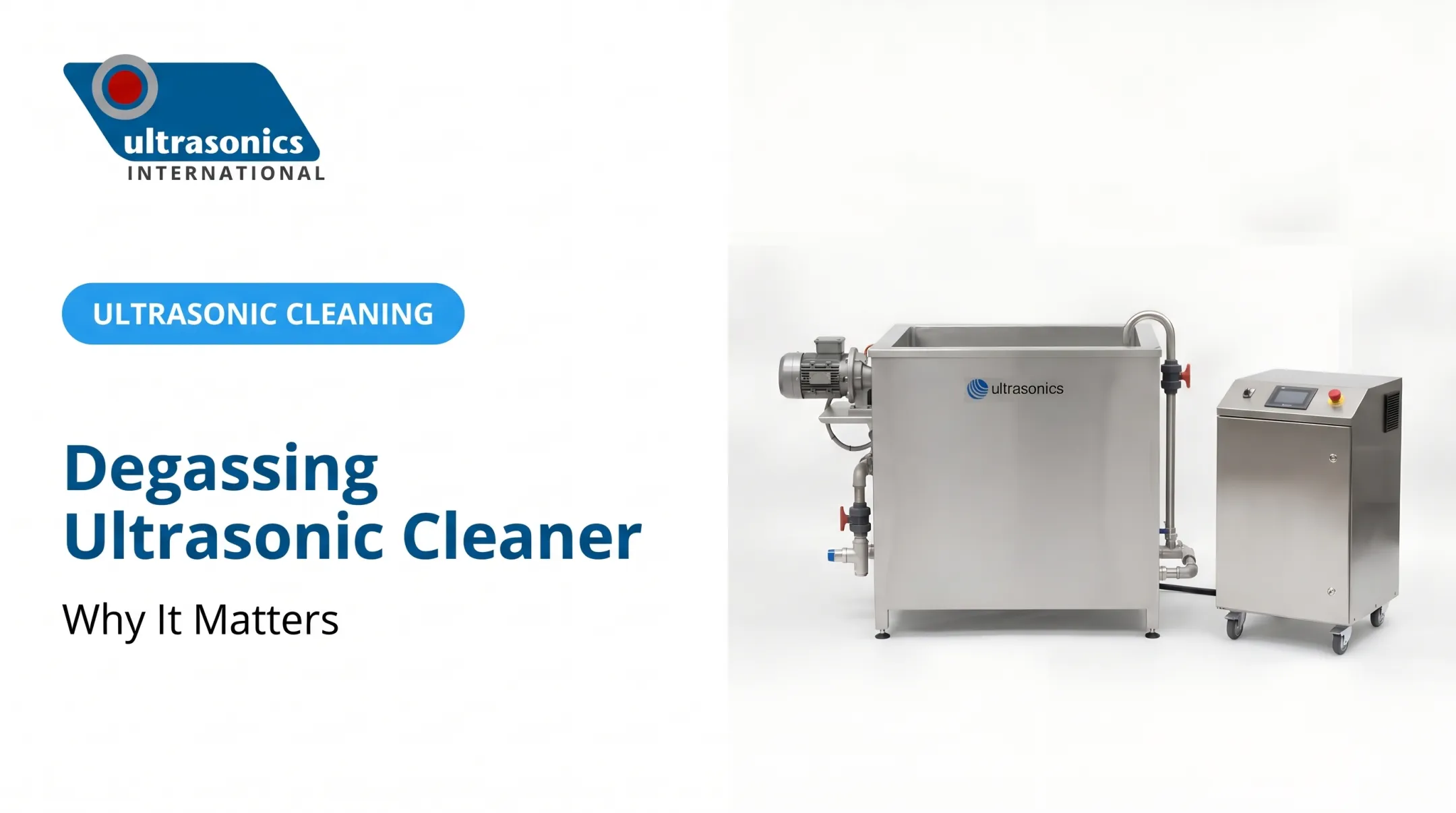
- Degas fresh solution. Dissolved gas reduces cavitation. Branson's procedure runs 5 to 10 minutes. Units with wave sweep accelerate degassing.

Never put hands in a running bath. Wear hearing protection if the manual calls for it.
Load and run the cycle
- Separate parts and avoid overloading so pieces don't shield each other.
- Expose contaminated surfaces to the bath.
- Start conservative on delicate or unfamiliar items.
- Follow the manual for time and heat. One Omegasonics model suggests 120 to 160°F and 3 to 5 minutes for small parts. That's model-specific, not universal.
Check that the item can take ultrasonic cleaning at all. Be careful with:
- Electronics, glued joints, and coatings
- Porous materials such as wood, ivory, and leather
- Opals, pearls, emeralds, and turquoise
- Sealed or fluid-filled components
Rinse, dry, and refresh
Rinse after cleaning. A final distilled-water rinse helps prevent spots; minerals in tap water stay behind when droplets evaporate. Dry completely before handling, storage, lubrication, or electrical testing.
Replace the bath when it turns cloudy, oily, smelly, or less effective. Elma's guidance is at least daily; Omegasonics says it depends on use. Drain and wipe the tank, inspect baskets and seals, and don't let contaminants accumulate.
When Distilled Water Alone Isn't Enough: Choosing the Cleaning Solution
Match the chemistry to the soil and the material.
- Alkaline: oils, grease, and soot
- Acidic: metal oxides, with base-metal protection depending on the formulation
- Neutral: sensitive materials and light soils
- Enzymatic: proteins
- Solvent-based: specialized work only, and never in equipment not rated for it
Stronger isn't safer. Some alkaline products are wrong for aluminum, and chemistry class alone doesn't prove compatibility. Test first, follow the label and SDS, and use PPE and ventilation as directed.
Equipment for recurring workloads
Once the right chemistry is set, recurring volume work depends on tank and process setup. Factor in:
- Tank size and basket capacity
- Throughput, heating, and filtration
- Automation needs and part sensitivity
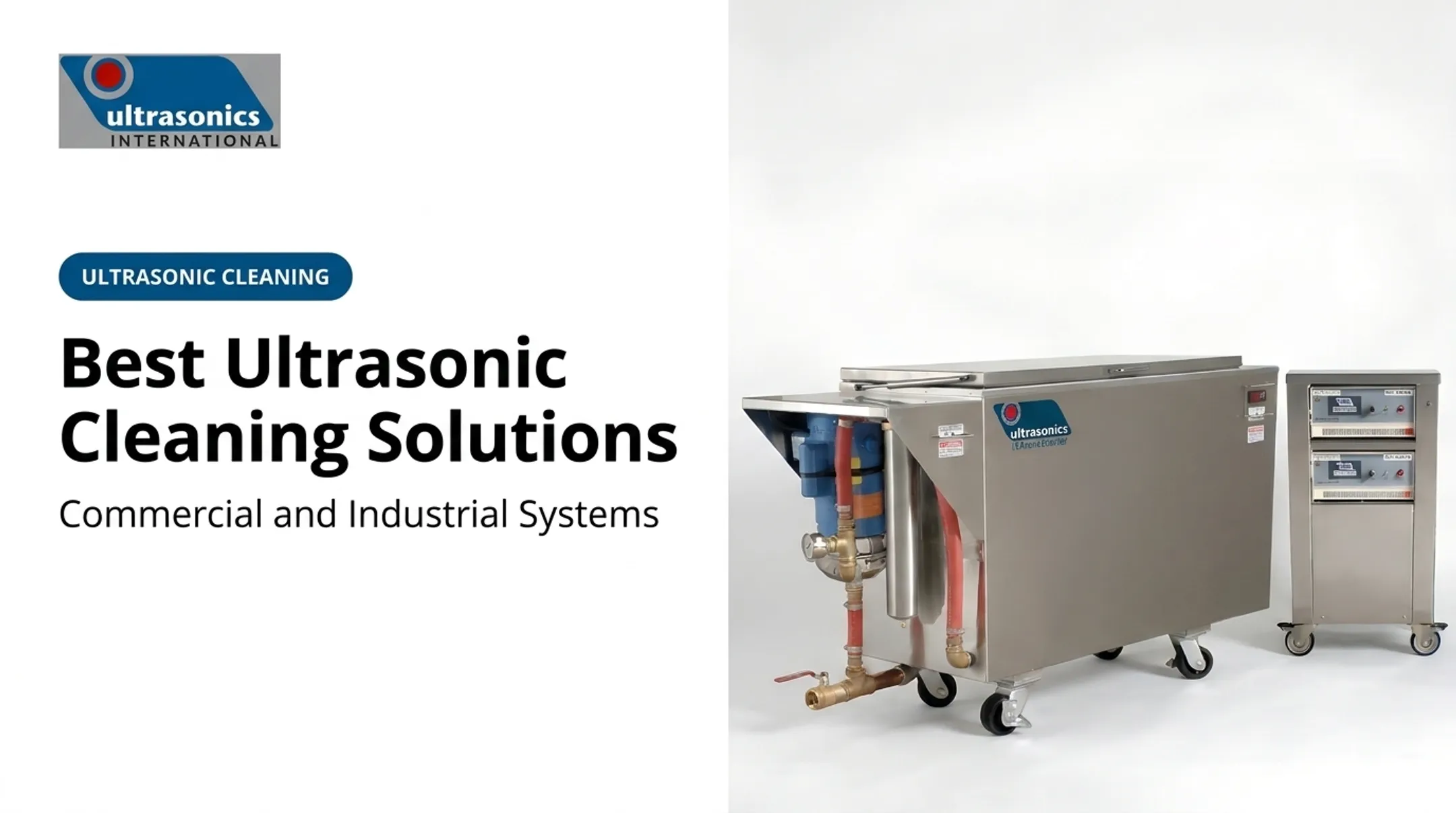
Ultrasonics International Corp. manufactures USA-made systems in Ferndale, Washington, from benchtop units to heavy-duty industrial equipment such as the 100-gallon PC4800. Custom builds, retrofits, installation help, and technical support are available as well.

Conclusion: A Practical Recommendation for Distilled Water
Distilled water is a strong default when you need to minimize residue and scale. Tap water may be fine for routine work if the manufacturer allows it and the parts aren't sensitive.
Your checklist:
- Identify the contaminant and material.
- Choose compatible chemistry.
- Use the right water quality.
- Follow the machine manual.
- Rinse and dry parts.
- Change the bath when contamination reduces performance.
Frequently Asked Questions
What's the best water to use in an ultrasonic cleaner?
Distilled water is often preferred for residue-sensitive or frequent-use work. The manufacturer's instructions and the cleaning task should make the final call.
What is the best liquid to use in an ultrasonic cleaner?
Usually a water-based ultrasonic cleaning solution, with distilled water as the base when low residue matters. Avoid unapproved solvents.
What is an ultrasonic bath used for?
It uses cavitation to loosen dirt, grease, oils, and other contaminants from parts, instruments, and hard-to-reach surfaces.
Can I use tap water in an ultrasonic cleaner?
Often, for routine jobs. Minerals can cause spotting and scale, so check your water hardness and the manual.
How often should I change the water in an ultrasonic cleaner?
Change it when it's dirty, cloudy, oily, smelly, or less effective. The interval depends on workload, solution, and manufacturer guidance.