
This guide covers electronics, PCBs, brazed metal assemblies, and industrial parts. The right flux remover depends on the residue chemistry and the materials you're cleaning. We'll walk through identifying the flux, checking compatibility, picking a method, following safety documentation, and validating cleanliness before you scale up.
Key Takeaways
- Match the remover to the flux chemistry, residue condition, substrate, and cleanliness target.
- "No-clean" depends on the application; it doesn't mean cleaning is never needed.
- Choose chemistry and equipment together.
- Rely on the SDS, small-area testing, full drying, and appropriate cleanliness checks before production.
What Is a Flux Remover?
A flux remover (or defluxer) is a formulated cleaner that dissolves, softens, or lifts flux residue after soldering or brazing. Chemistry does part of the work. Brushing, spraying, immersion, rinsing, or ultrasonic agitation does the rest.
Residue matters because it can cause failures in service. Moisture plus ionic residue can support corrosion and dendrite growth, leading to leakage or shorts. Residue can also lift conformal coatings, according to Chemtronics' electronics guide.
Common residue categories
- Rosin or resin: can be sticky or hard to dissolve after heating.
- No-clean: meant to stay on the board, but often harder to remove. Coating adhesion, incomplete activation, or demanding environments may still call for cleaning.
- Water-soluble: responds to aqueous cleaning, but demands thorough rinsing and drying.
- Brazing flux: typically leaves hard, glass-like deposits, often removed with hot water and agitation.
Flux remover versus degreaser
A degreaser targets grease, oil, and dirt. A flux remover targets flux, though the two can share solvents. Fingerprints, solder balls, oxides, and oils may each need different chemistry, so some assemblies need a validated multi-step process.
How to Choose the Right Flux Remover
Identify the flux and the contamination
Check the solder paste, wire, or brazing flux, along with process records. Then read the supplier's SDS and technical data sheet (TDS). The SDS covers hazards and worker communication under OSHA's hazard communication rules. The TDS covers application methods and compatibility.
Residue history changes the job. Heat can polymerize flux, and aged or baked deposits may need more agitation. Mixed contamination complicates things further. Test unknown residue instead of judging it by appearance.
Check material and component compatibility
Consider PCB laminates, solder masks, metals, plastics, elastomers, connectors, labels, adhesives, conformal coatings, and mounted components. A general "plastic-safe" claim doesn't cover your specific assembly. Techspray's PWR-4 data sheet, for example, excludes ABS and calls for testing the actual assembly.
Run a small-area or sacrificial-part test. Look for:
- Swelling, cracking, or discoloration
- Damaged markings
- Corrosion
- Softened coatings
- Leftover residue
Match chemistry to equipment
Cleaners are built for hand application, spray, immersion, aqueous systems, ultrasonic tanks, or vapor processes. One that works well in one setup can foam, flash, or underperform in another.
Confirm the supplier's recommended settings before you run production:
- Concentration and temperature
- Exposure time and agitation
- Rinsing and drying conditions
Don't borrow settings from another process.

Weigh safety, environmental, and operating factors
Review flammability, VOCs, odor, PPE, ventilation, storage, spill response, and waste handling. US requirements are layered, and each addresses something different:
- OSHA covers worker exposure and hazard communication.
- EPA's TSCA rules restrict solvents such as TCE and PCE.
- RCRA governs spent-solvent waste.
- Local POTW limits govern wastewater.
Approval under one screen doesn't satisfy the others.
Total cost of ownership matters as much as compliance. Price per gallon misleads when you skip these factors:
- Consumption and bath life
- Water and energy use
- Waste treatment
- Labor and drying time
KYZEN ties bath life directly to flux loading.
Define the cleanliness target
Let this decision guide the choices above. Work backward from the next step: conformal coating, bonding, underfill, painting, inspection, or electrical test. Then decide how you'll verify it.
Visual inspection is the baseline. Add ionic, insulation, surface, or coating-adhesion tests when the application demands.
Flux Removal Methods Compared
| Method | Best for | Watch out for |
|---|---|---|
| Manual or benchtop | Rework, repairs, prototypes | Labor, repeatability, spread of residue |
| Aqueous or semi-aqueous | Batch cleaning, water-soluble flux | Rinse quality, drying, wastewater |
| Ultrasonic | Crevices, complex geometry | Sensitive components, settings |
| Vapor or automated solvent | Consistent coverage, fast drying | Emissions, fire, exposure controls |
Manual or benchtop cleaning
Wet the area, gently agitate, wipe or rinse, then dry. It suits spot cleaning and low volume. Aggressive brushing can damage joints, markings, coatings, and soft materials. Swabs and brushes can also spread partly dissolved residue rather than lifting it away.
Aqueous or semi-aqueous cleaning
Soak, spray, wash, rinse, and dry stages suit water-soluble flux and compatible chemistries, especially for repeatable batches. Keep the solution in good condition. Dirty baths can redeposit soils in connectors and under components. Control rinse quality, remove trapped moisture, and plan for wastewater and spent solution.
Ultrasonic cleaning
Cavitation reaches residue in crevices, beneath components, and around complex parts. Collapsing bubbles near a hard surface produce tiny jets that dislodge entrapped soils. Common frequencies run from 25 to 100 kHz. Run test cleanings to settle on frequency and watts per gallon.

Chemistry approval is not component approval. Analog Devices advises against ultrasonic cleaning for MEMS devices. Murata warns that board resonance can crack ceramic capacitors or break solder joints. Hollow resonators carry vibration-damage risk. Get component-maker guidance, then run a controlled trial.
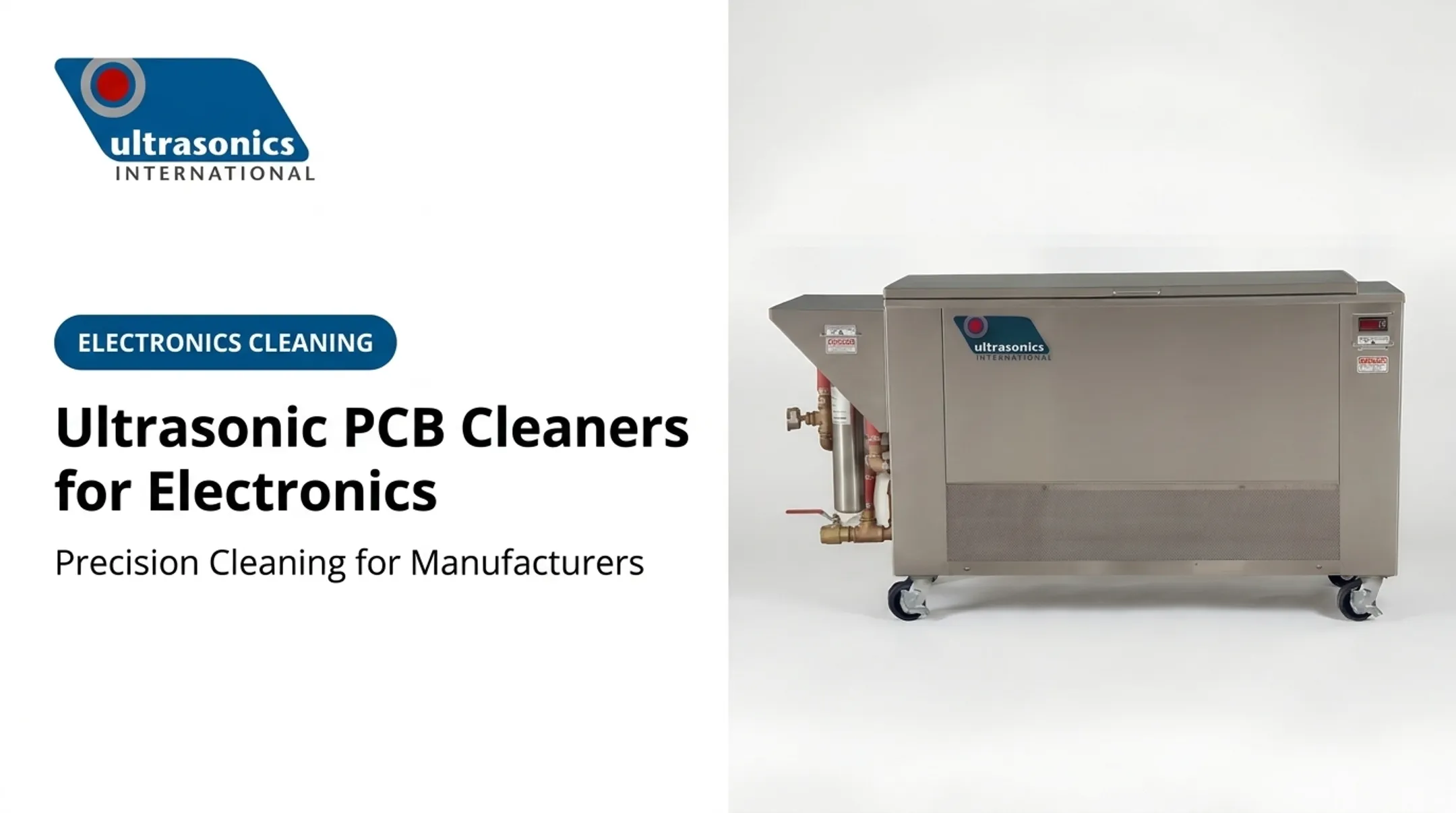
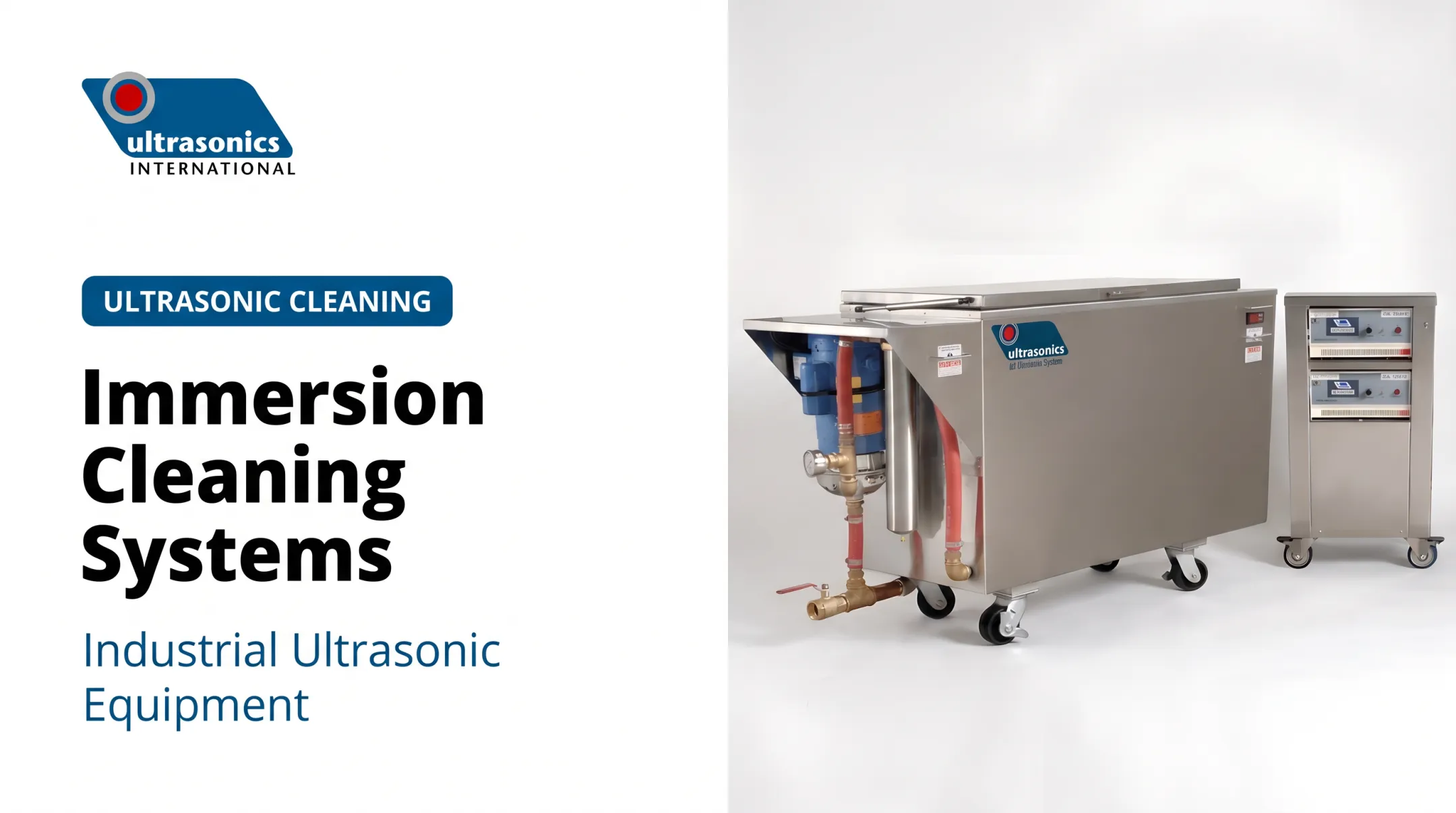
Ultrasonics International Corp. builds USA-made benchtop, heavy-duty, custom, and retrofit ultrasonic systems in Ferndale, Washington. Examples include the 25-gallon BT-1400 and the 135-gallon APC4800. These suit repeatable batch or industrial cleaning, but chemistry and part compatibility still need separate validation.
Vapor or automated solvent cleaning
Boiling, condensation, and distilled-fluid rinsing give consistent coverage, and parts emerge dry. That requires a matched solvent and machine, plus emissions, exposure, and fire controls. Halogenated-solvent machines can fall under 40 CFR Subpart T.
Choosing by application
Match the method to your constraints:
- Part size and geometry
- Residue type and required cleanliness
- Volume and labor
- Component sensitivity
- Drying and waste handling
- Total operating cost
The most aggressive method is rarely the right one.
A Safe, Repeatable Flux-Removal Process
Document the part and residue
Record these details before you start:
- Flux type, substrate, and components
- Contamination sources, geometry, and volume
- Downstream process and existing defects
Take photos or magnified images as a baseline, and mark spots where residue may hide.
Prepare the workspace and parts
- Remove power and disconnect onboard batteries.
- Set up ESD controls and ventilation.
- Protect connectors and moisture-sensitive areas.
- Review the SDS, wear specified PPE, and control ignition sources.
- Keep cleaned parts apart from dirty ones.
Product hazards vary. Techspray's E-Line SDS, for instance, lists an extremely flammable liquid and vapor, but that doesn't describe every remover.
Run a compatibility and process trial
Test the chemistry and method on a representative or sacrificial part under the supplier's conditions. Define these process settings:
- Concentration and temperature
- Exposure time and agitation
- Fixture layout, rinse, and drying
There's no universal recipe.
Clean, rinse, and dry
Keep residue dissolved or suspended, and rinse it off. Dissolved flux doesn't evaporate, so Chemtronics' process guide stresses flushing it from the board.
Dry completely around connectors, cavities, leads, and low-clearance joints. Use approved air movement or low-temperature drying, not uncontrolled heat.
Inspect, validate, and standardize
Inspect under good lighting and magnification. Then add any tests the application justifies. ROSE, ion chromatography, and SIR measure different things, and IPC's ROSE method notes that ROSE doesn't predict reliability.
Document and lock in the process:
- Acceptance criteria and settings
- Bath-change rules
- Inspection results and corrective actions
Follow the protocol consistently.

If you're planning equipment or a tank retrofit, send Ultrasonics International Corp. your residue type, part materials, dimensions, throughput, and cleanliness target. They can evaluate equipment against the real application at 800.500.2544.
Frequently Asked Questions
What is a flux remover?
A specialized chemical cleaner that dissolves or loosens soldering or brazing flux residue. The right formula depends on the residue and the materials being cleaned.
What is the best flux remover for PCB cleaning?
No product wins universally. Consider flux type, PCB materials, components, downstream processes, equipment, and compatibility test results.
Can flux remover be used in an ultrasonic cleaner?
Only a chemistry approved for ultrasonic use and compatible with the parts and tank. Validate settings and follow component-manufacturer guidance.
Is flux remover safe for electronics?
It depends on the formulation and board materials. Remove power, review the SDS, control ESD, ventilate, test compatibility, rinse where required, and dry completely.
Do no-clean flux residues need to be removed?
Sometimes. It depends on the environment, residue level, reliability requirements, and downstream coating, bonding, or inspection.
How do you know whether flux has been fully removed?
Use visual and magnified inspection, plus ionic, insulation, surface, or coating-adhesion testing when appearance alone isn't enough.