
Ultrasonic cleaners attack that problem with cavitation: tiny bubbles collapse against surfaces, including hidden ones, and loosen deposits. Pair the tank with the right solution and you cut scrubbing and make repeat cleaning faster, whether you run a home garage or a repair shop.
This guide compares five options for US buyers: Ultrasonics International Corp., Creworks, Central Machinery, Crest, and Branson. We look at usable tank size, frequency, power, heating, controls, and support.
Key Takeaways
- Suits disassembled carburetor parts with small passages; does not replace inspection, repair, or reassembly.
- Usable tank and basket dimensions matter more than advertised volume.
- Compare ultrasonic output separately from heater wattage and total electrical draw.
- Hobbyists should weigh price and size; shops need durability, throughput, and support.
Overview of Ultrasonic Carburetor Cleaners in the US Market
An ultrasonic carburetor cleaner is a tank that sends high-frequency sound through liquid. Branson's cleaning primer defines cavitation as the rapid formation and violent collapse of minute bubbles. That action scrubs exposed and hidden surfaces of immersed parts.

The technology fits US motorcycle, automotive, marine, small-engine, restoration, and commercial parts-cleaning work. But the machine is only one variable. Results also depend on:
- Disassembly before cleaning
- Solution chemistry
- Part placement (parts shouldn't touch each other or rest on the tank bottom)
- Temperature and frequency
- Tank design
The five options below cover compact budget cleaning through professional and customizable systems. Specifications reflect 2026 published listings. Confirm current pricing, stock, and warranty before buying.
Best Ultrasonic Carburetor Cleaners for Carb Cleaning
We ranked each option on carburetor suitability, usable capacity, ultrasonic performance, material compatibility, controls, durability, and value for its intended buyer. No published benchmark supports a wattage-based performance ranking, and no overall winner is established, so treat the order as use-case guidance.
Ultrasonics International Corp. Benchtop and Parts-Cleaning Systems
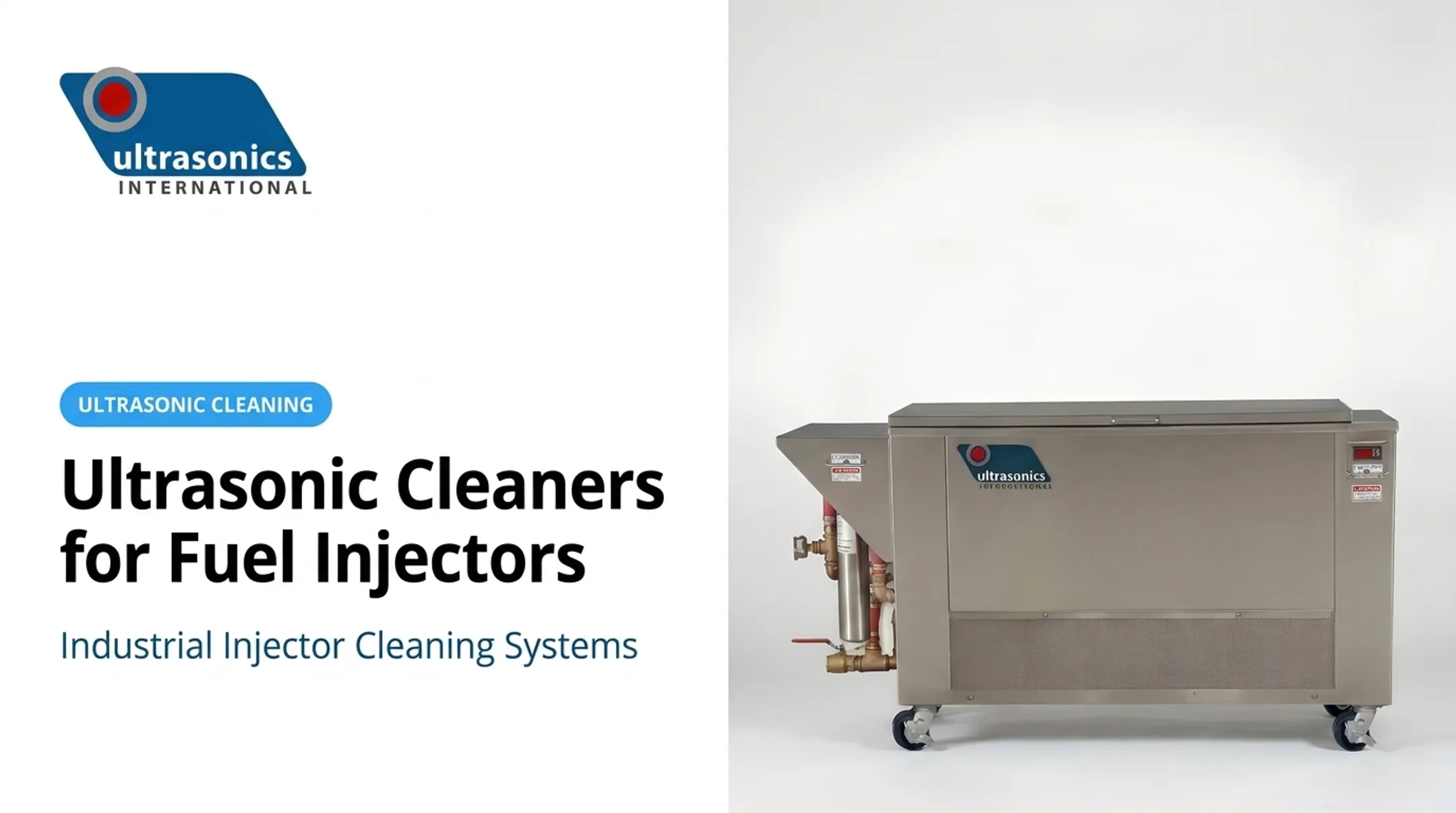
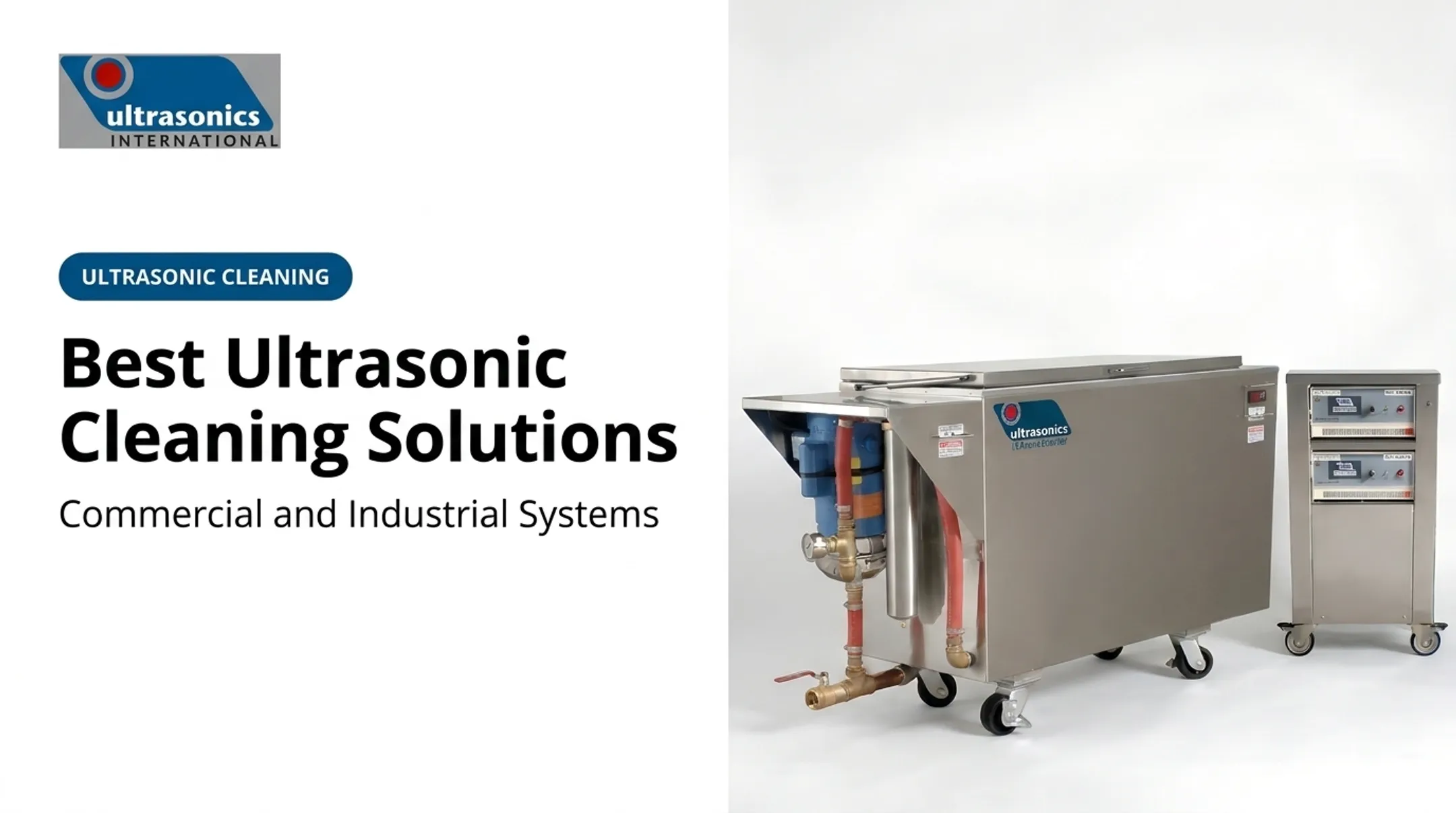
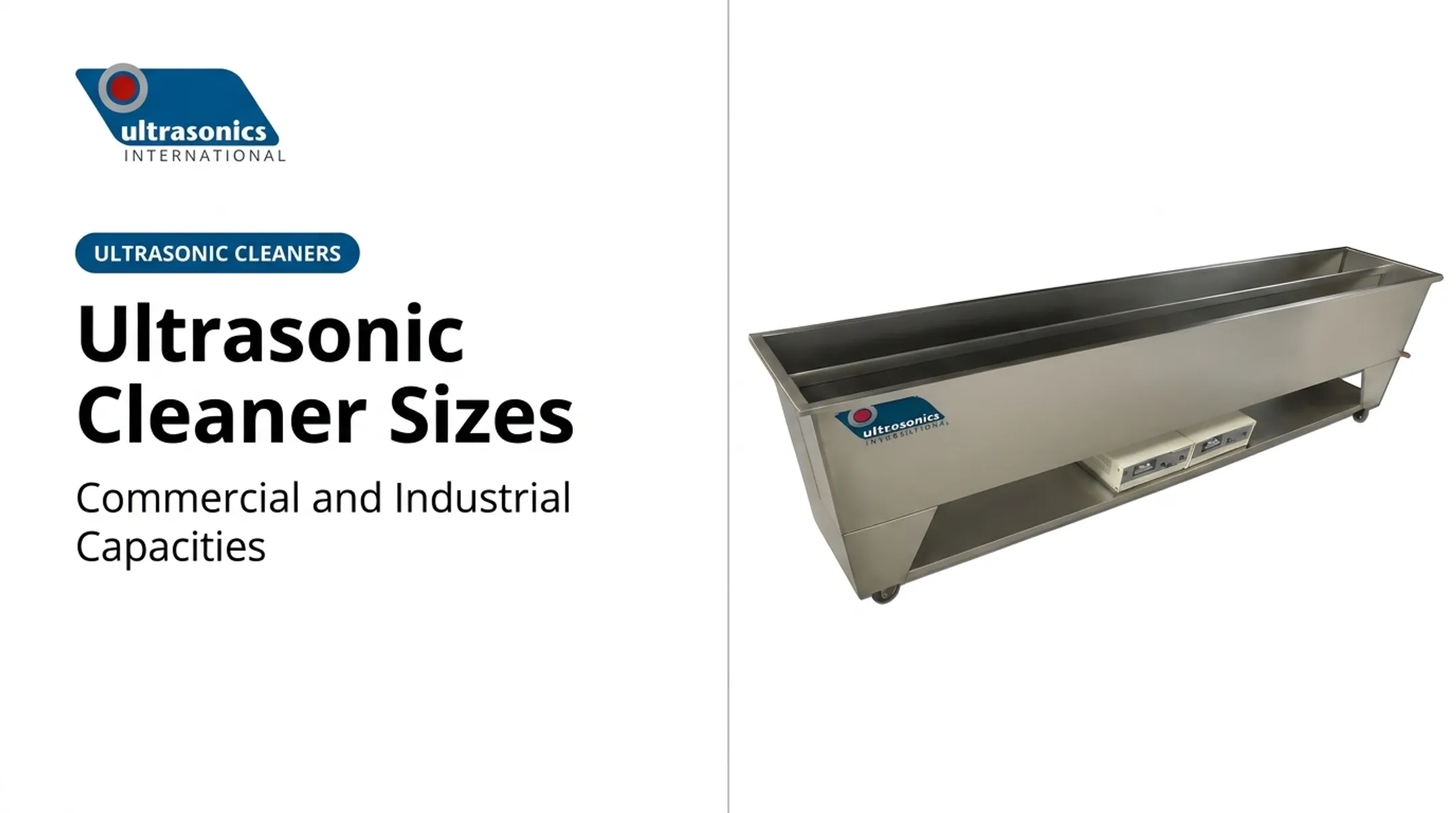
Ultrasonics International Corp. (UIC, sold as Sonic Pro) is a USA-made manufacturer established in 1992. Its equipment is built in Ferndale, Washington, and ranges from benchtop units to heavy-duty industrial systems, plus custom machinery and tank retrofits.
It suits buyers who want durable, application-specific equipment. The company cites:
- 100% stainless-steel construction
- Wave Sweep Technology, which it says eliminates dead zones (a manufacturer claim, not an independent benchmark)
- Custom configurations and technical installation or retrofit help
- QAI oversight with third-party plant inspections twice a year
That QAI oversight is a company statement about its manufacturing, not a certification of any single model. UIC's automotive material lists carburetors among suitable parts, but carburetor-specific capacity is not published for any model; confirm tank sizing with sales.
| Field | BT-1400 benchtop | PC1800 |
|---|---|---|
| Tank (L x W x D, in.) | 18 x 18 x 18 (25 US gal) | 32 x 22 x 20 |
| Frequency | 36-40 kHz | Not published |
| Ultrasonic power | 1,200 W generator | 1,800 W RMS (two 900 W generators) |
| Heater | Digital controller; watts not published | Digital controller; watts not published |
| Drain | 1-inch brass ball valve | Not published |
| Construction | 304 stainless, double-wall, 14-gauge inner tank | 304 stainless |
| Basket | Stainless parts rack; size not published | Stainless parts rack; size not published |
| Warranty / price | Not published; contact sales | Not published; contact sales |
Both are far larger than a single carburetor needs. They make sense for shops cleaning several carbs, heads, and injectors in one batch. Sales: 800-500-2544 or sales@sonicpro.com.
Creworks 22L Ultrasonic Cleaner
The Creworks standard 22L (480W, 40 kHz, 600W heater) is a mid-size option for a garage or small shop that needs more room than a compact unit. The manufacturer storefront listed it at $249.99 but showed it sold out, with no restock date.
| Field | Standard 22L |
|---|---|
| Tank (in.) | 19.7 x 11.8 x 5.9 |
| Basket (in.) | 19.1 x 11.2 x 5.1 |
| Frequency | 40 kHz |
| Ultrasonic / heater | 480 W / 600 W |
| Timer / temperature | 1-30 min / 68-176 F |
| Drain / material | Built-in valve / 304 stainless |
| Warranty | 1 year |
The tank is long but only 5.9 inches deep, so tall carburetor bodies and multi-carb banks need separating. The 480 W figure doesn't state whether it's RMS, average, or peak.
A separate professional dual-mode 22L has different specs (smaller basket, 1,200 W heater, $269.99, also sold out). Don't mix the two. Independent published tests of either unit are hard to find, and the manufacturer does not publish materials guidance for carburetor parts.
Central Machinery 2.5-Liter Ultrasonic Cleaner
The Harbor Freight Central Machinery 2.5-liter (item 63256) lists at $99.99. It's the budget pick for occasional cleaning of small, disassembled parts.
A Rare Car Network review from March 2021 covered this exact item on small-engine carburetors, mostly motorcycle, snowmobile, and two-stroke units. The author got satisfactory results, though tank size sometimes forced rotating parts.
Later, the author suspected overheating, saw a deformed plastic tray, and noticed reduced performance. Those are observations, not a diagnosed failure.
| Field | 63256 |
|---|---|
| Tank | Manual labels 10 x 6 x 3 in.; internal dimensions not published |
| Basket | Included; size not published |
| Frequency | Not published (60 Hz in the manual is AC supply) |
| Power | 160 W electrical input; ultrasonic and heater not separate |
| Timer | Presets of 90, 180, 280, 380, 480 seconds |
| Temperature | 145 F specified |
| Warranty | 90 days |
Expect to split a carburetor into small components and clean in several passes. For a rare rebuild, that beats buying new parts or hours of scrubbing. For weekly work, the limits show quickly.
Crest Ultrasonics Powersonic P500D-45
Crest's Powersonic Benchtop P500D-45 (US 115V) is a professional benchtop tank. Crest's benchtop page lists automotive carbs, injectors, and engines among its applications. The manufacturer lists it at $1,320 and directs questions to a sales representative.
Some figures are family-level, not model-specific, so confirm them before ordering:
- Frequency: 45 kHz for the D-45 (the family also offers 132 kHz)
- Tank: 11.75 x 6 x 6 in. for the P500 family; D-45 drawing not published
- Ultrasonic power: 120 W for the family
- Heater: 400 W on the current family page versus 200 W in an older brochure
- Controls: digital display, 20-80 C, adjustable timer (range not published)
- Warranty: 2 years in the PowerSonic manual; model-specific terms not published
Next to hobby units, it offers digital control and a stainless tank (grade not published). Crest says drains come on 2.5-gallon and larger tanks, so confirm whether this one has a drain. A matching SSMB500 basket exists.
Branson CPX5800H
The Branson CPX5800H (CPX-952-518R) is a tabletop unit that fits repair shops and parts departments. Process Equipment & Supply listed it at $2,111.85, in stock.
| Field | CPX5800H |
|---|---|
| Tank (in.) | 11.5 x 9.5 x 6 (2.5 gal) |
| Frequency | 40 kHz |
| Power | 160 W max sonics; 280 W heater; 490 W max draw |
| Timer / heat | 99-minute digital / up to 69 C (156.2 F) |
| Drain | Drain valve |
| Body | Chemical-resistant plastic; tank alloy not published |
| Warranty | 2 years |
Branson separates sonic, heater, and total draw, which is the clearest rating of the five. Its 160 W sonic figure isn't comparable to the 480 W Creworks number. An optional 11 x 9 x 4.5 inch mesh basket exists. Branson's manual covers rust on steel and tenacious soils; it forbids gasoline, alcohol, and other flammable liquids in the tank.

How We Chose the Best Ultrasonic Carburetor Cleaners
Match the Machine to the Workload
An occasional hobbyist, a motorcycle shop, and a marine service department need different machines. Part size, batch size, and frequency decide it.
Compare Usable Dimensions
Check internal tank and basket size against your largest disassembled part. Keep parts from touching or sitting on the tank bottom, and keep them submerged. Sonic Pro also warns that parts touching transducers can permanently damage them.
Judge Frequency and Power Separately
Elma's guidance says 37-45 kHz suits most cleaning, 25 kHz gives more vigorous bubbles, and 80 kHz suits delicate surfaces. Higher frequencies also help protect polished soft metals such as aluminum. Beyond that, check:
- Ultrasonic output versus heater wattage
- Timer and temperature range
- Degas function, which Branson requires before first use and after changing solution
- Sweep modes

Check Chemistry and Material Safety
There's no universal rule. Check the chemistry sheet before you soak:
- Elma Clean 145 lists aluminum, brass, and plastic as suitable
- Elma A4 lists rubber and plastic; verify aluminum alloy compatibility
- Briggs & Stratton allows metal and plastic carb parts up to 15 minutes; remove nonmetal parts first
Follow the solution maker's dilution and temperature. Rinse, then dry, ideally with compressed air.
Weigh Ownership Evidence
Look at drainage, basket quality, warranty, support, US availability, and total cost. Don't buy on price alone, or rely on combined wattage claims or unverified reviews.
Conclusion
The best ultrasonic carburetor cleaner matches your part size, workload, materials, chemistry, and space. It's rarely the biggest or cheapest tank.
Verify current specs, working dimensions, warranty, and safety guidance before buying. Then disassemble fully, rinse, dry, inspect, and reassemble per the service manual.
If you have unusual part dimensions, recurring shop volume, or a retrofit need, Ultrasonics International Corp. can help you select or configure a USA-made system at 800-500-2544 or sales@sonicpro.com.
Frequently Asked Questions
Do ultrasonic cleaners really work on carburetors?
Yes. Cavitation reaches jets and small passages, and the right solution loosens varnish and carbon. It won't repair worn or damaged parts.
Can you put an entire carburetor in an ultrasonic cleaner?
Generally no. Disassemble per the service manual and remove rubber, foam, and gaskets. Trapped solution needs to be flushed and dried.
What size ultrasonic cleaner do I need for a carburetor?
Compare internal tank and basket dimensions with your largest disassembled part. Leave room for circulation and ignore advertised volume alone.
What frequency is best for cleaning carburetors?
Most cleaning uses 37-45 kHz, per Elma. Lower frequencies are more aggressive and higher ones gentler, so follow your manufacturer and consider the metals involved.
What solution should I use in an ultrasonic cleaner for carburetor parts?
Use a manufacturer-approved, water-based solution compatible with your aluminum, brass, rubber, and plastic parts. Never put gasoline, alcohol, or other flammable liquids directly in the tank.
How do you prepare and dry a carburetor after ultrasonic cleaning?
Pre-clean heavy grime, rinse thoroughly, and flush the passages. Dry with compressed air, protect against corrosion, inspect, and reassemble per the service manual.