
The choice affects cleaning quality, operator exposure, throughput, utilities, maintenance, and what happens next, whether that's inspection, sterilization, or reassembly. A Dental Advisor study from 2016 shows how much cycle settings matter: prescribed ultrasonic cycles left 50 of 50 scalers and 50 of 50 probes visibly clean, while deliberately shortened 1-2 minute cycles left blood traces on at least 2-3 instruments per load. That was one product in one lab, not adoption data, but the lesson holds.
This guide compares the two technologies so you can match equipment to your actual loads.
Key Takeaways
- Ultrasonic cleaners use cavitation to reach crevices, hinges, threads, and cavities.
- Washer-disinfectors combine programmed washing, rinsing, and disinfection for compatible medical and dental loads.
- Neither is automatically a sterilizer; follow each device's instructions for use (IFU).
- Soil, geometry, required microbial reduction, volume, and total cost drive the choice.
Ultrasonic Cleaner vs Washer-Disinfector: Quick Comparison
| Factor | Ultrasonic cleaner | Washer-disinfector |
|---|---|---|
| Mechanism | Cavitation from transducers | Spray, water flow, programmed cycles |
| Endpoint | Cleaning | Cleaning plus thermal or chemical disinfection |
| Strength | Embedded soil in intricate areas | Repeatable, documented batches |
| Handling | Loading, rinsing, solution changes | Less manual handling, documented cycles |
| Site needs | Power, drain, chemistry | Plumbing, drainage, power, ventilation, validation |
Cleaning mechanism and access
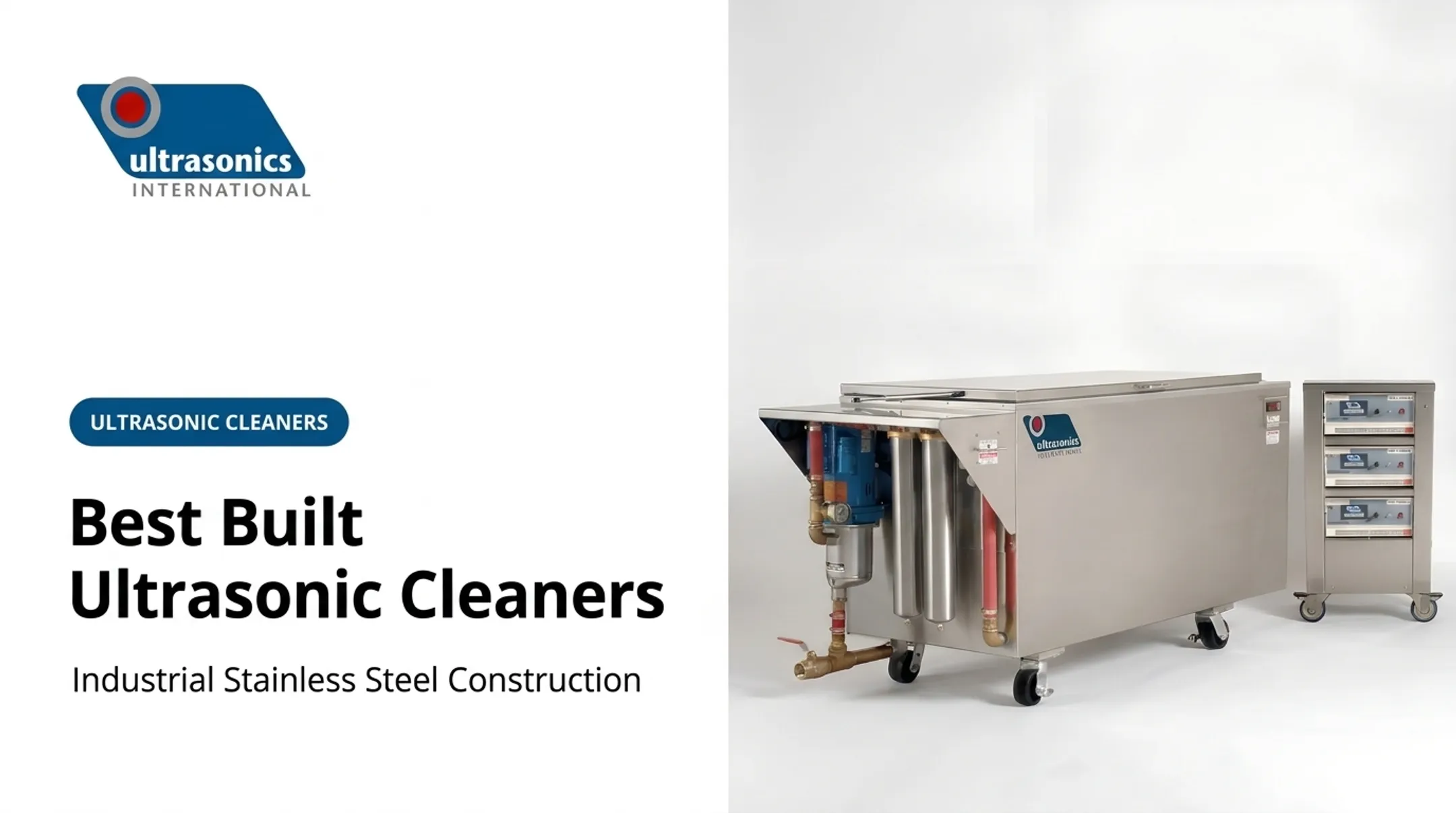
In an ultrasonic cleaner, transducers create cavitation bubbles in the bath. Their collapse dislodges contamination from hinges, threads, and blind holes, without needing line of sight.
Results depend on proper chemistry, loading, degassing or wave sweep, and operating parameters.
A washer-disinfector relies on directed spray and water flow across accessible surfaces. Lumened devices need dedicated connections, such as manifold racks and hoses, so water reaches internal channels.
Cleaning and disinfection capability
The CDC defines cleaning as removing foreign material, and it must come before disinfection or sterilization. An ultrasonic cleaner performs that first step. Depending on the application, disinfection or sterilization still follows.
A washer-disinfector can include a validated thermal or chemical disinfection phase. That is not sterilization. STERIS, for example, specifies intermediate-level disinfection, not sterilization, for its AMSCO 7052HP.
Thermal programs are often described by A0, which references exposure at 80°C. Miele's IFU lists 80°C for 10 minutes (A0 600) and 90°C for 5 minutes (A0 3000). Those are holding times, not total cycle times.

Labor and handling
Ultrasonic cleaning typically needs gross-soil removal, loading, rinsing, inspection, and periodic solution changes. Parts usually don't need disassembly, and one operator can load and unload multiple parts.
Washer-disinfectors reduce direct contact with contaminated items and add drying (on many models), documentation, and monitoring. Some loads still need manual pre-cleaning. One instrument IFU, for example, requires manual pre-cleaning before automated cleaning.
Throughput, equipment, and ownership cost
- Ultrasonic: Flexible batches; strong on small, greasy, carboned, or embedded soil. Costs: tank, chemistry, baskets, maintenance, and testing.
- Washer-disinfector: High-volume, standardized turnover. Costs: installation, plumbing, drainage, ventilation, water quality, service, and validation.
List prices vary widely by configuration. Request quotes for your setup.
What Are Ultrasonic Cleaners and Washer-Disinfectors?
What Is an Ultrasonic Cleaner?
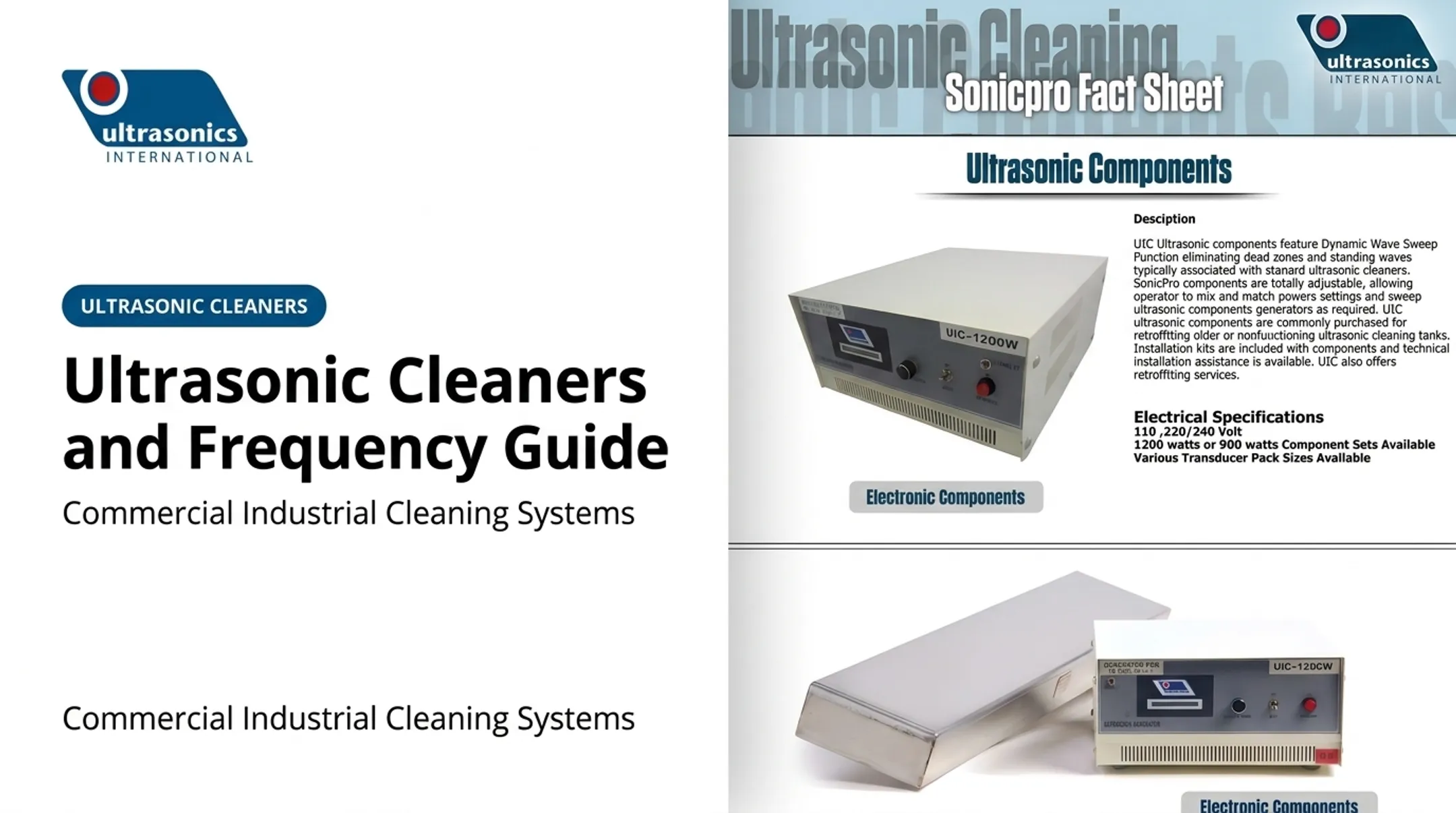
Generators and transducers produce high-frequency vibrations in a liquid bath. Those vibrations create cavitation bubbles that form and collapse, loosening contaminants from surfaces and crevices. Most units run between 28 and 120 kHz, with 38-40 kHz the most common range.
Common uses include industrial parts, automotive and marine components, machine-shop workpieces, restoration contents, and selected medical or dental instruments. The payoff is less hand scrubbing, less labor, and shorter processing time.
Consistent results depend on a few operating controls:
- Remove gross soil first. It can block or absorb sound and reduce cavitation.
- Use low-foaming chemistry designed for ultrasonic cleaners, at the manufacturer's dilution and temperature.
- Space loads and keep parts and baskets off the transducers.
- Check materials. STERIS flags chrome-plated, powered, lensed, and delicate fiberoptic instruments.
- Test performance. Foil tests are commonly run at commissioning and regularly after, at a frequency the user sets.
- Follow the part or instrument manufacturer's IFU.
What Is a Washer-Disinfector?
CDC describes these as computer-controlled units that clean, disinfect, and dry solid and hollow medical equipment. Typical phases are prewash, detergent or enzymatic wash, rinse, thermal or chemical disinfection, and often drying. Drying varies by model; Miele's PG 8581 has no active drying.
Benefits include:
- Repeatable cycles with less handling
- Standardized records and batch processing
- Cleaner handoff to inspection or sterilization when the IFU permits
Limits include:
- Spray must reach every surface and lumen.
- Delicate or incompatible devices may be excluded.
- Pre-treatment may still be needed.
- Validation (ISO 15883-1), routine monitoring, and water-quality control (ANSI/AAMI ST108:2023) add ongoing work.
A medical washer-disinfector is not a general industrial parts washer. The intended use is different.
Ultrasonic Cleaner vs Washer-Disinfector: What Is Better?
The better choice depends on your application. Base the decision on your load and process:
- Item or instrument type
- Soil type, geometry, and lumens
- Required outcome and batch size
- Cycle frequency and labor exposure
- Device IFU and U.S. guidance
When an ultrasonic cleaner fits
Choose ultrasonic when embedded soil sits in crevices, hinges, fine serrations, threads, or small cavities, and the materials and IFU permit it. Auto, marine, machining, 3D printing, and restoration shops fit this profile. So do many instrument pre-cleaning steps.
When a washer-disinfector fits
Choose a washer-disinfector for standardized medical or dental instrument processing. These systems fit compatible loads that need repeatable cycles, programmed disinfection, drying, documentation, and less manual handling.
When to use both
STERIS notes that further automated-washer processing may be needed for thermal disinfection after ultrasonic cleaning. Ultrasonic can tackle intricate or lumened soil first, then the washer-disinfector finishes. The sequence must follow the device IFU, facility procedure, and applicable standards.

Selection checklist
- Confirm validated cleaning performance on your actual loads.
- Estimate labor and exposure per batch.
- Match throughput to daily volume.
- Measure footprint and available utilities.
- Price chemistry, water, and consumables.
- Plan maintenance, testing, and service support.
- Total the cost over the equipment's life, not just the purchase price.
Size the tank to the largest item you clean regularly, and give the manufacturer full measurements.
Real-World Examples and Case Studies
Cavendish Farms' New Annan plant in Prince Edward Island, Canada, offers a documented labor example. It is a food-manufacturing application, not medical disinfection.
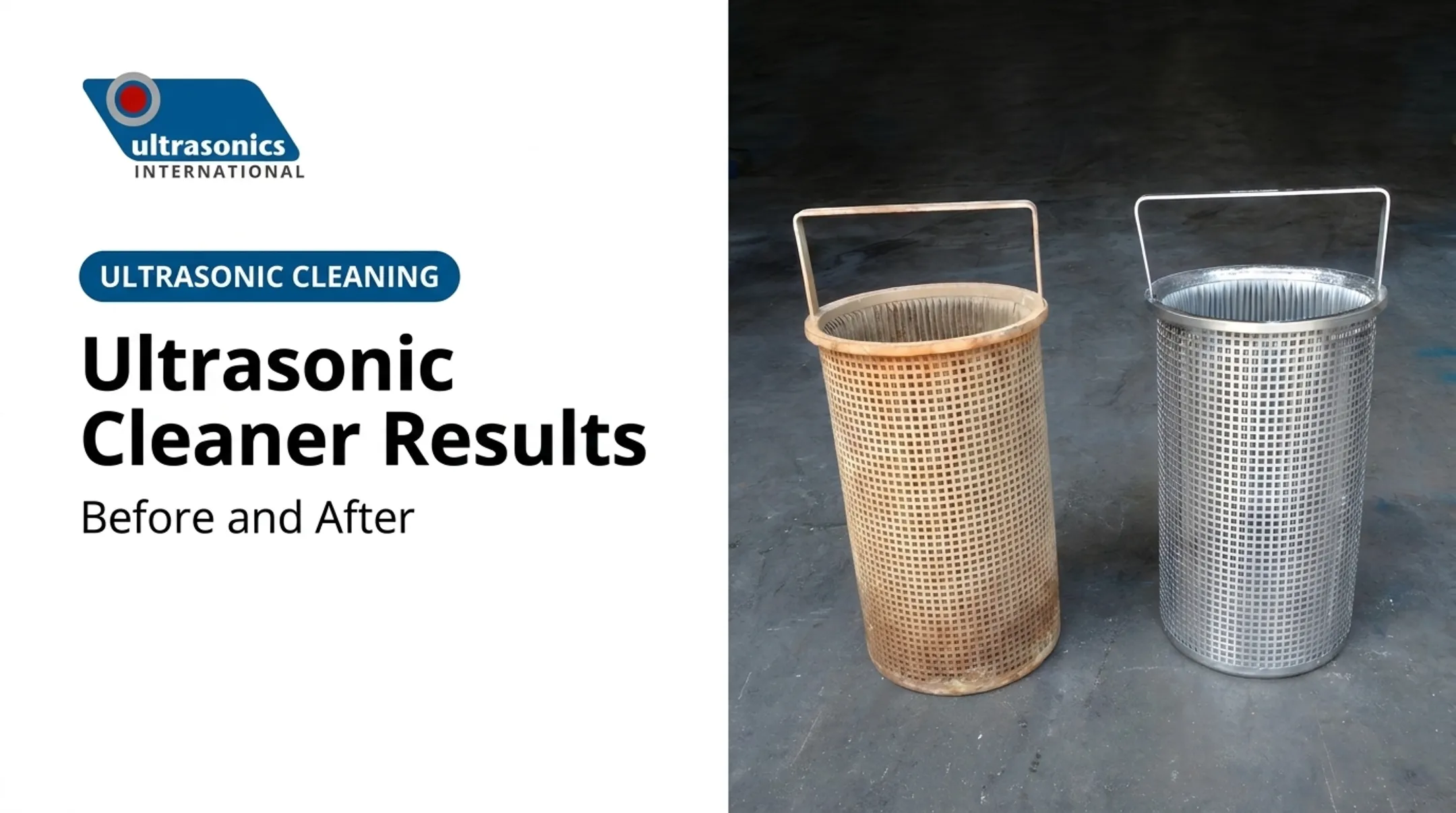
Cleaning an Ishida bucket scale took four hours and a skilled mechanic. The plant installed an Omegasonics 33-gallon industrial ultrasonic cleaner. Afterward, a staff member rather than a mechanic could clean eight scales in four hours, as reported by Food Engineering in January 2016.

This is a supplier-associated, historical account, not a controlled trial or a guaranteed return. Still, the pattern is familiar:
- Intricate parts that trap soil
- Slow manual cleaning cycles
- Skilled labor tied up on scrubbing
If your shop faces similar greasy, carboned, or embedded soil, Ultrasonics International Corp. can help with:
- Equipment sizing for your parts and volume
- Benchtop or heavy-duty systems
- Custom machinery and tank retrofits
Call 800.500.2544 or email sales@sonicpro.com.
Conclusion
An ultrasonic cleaner is the better fit for targeted mechanical cleaning of intricate, embedded, or hard-to-reach contamination. A washer-disinfector is stronger for standardized washing and disinfection of compatible medical or dental loads.
Which option you need depends on the application, and some workflows use both. Before buying, check these points against current U.S. guidance and manufacturer instructions:
- Material compatibility
- Cycle requirements and disinfection claims
- Maintenance and testing needs
- Any required sterilization step after cleaning
Frequently Asked Questions
Do you need an ultrasonic cleaning solution?
Yes. Use compatible, low-foaming chemistry chosen for your material, soil, water quality, and equipment, at the manufacturer's dilution. Don't assume any detergent will work.
Is UV or ultrasonic cleaner better?
They do different jobs. UV-C is light-based and line-of-sight, and organic matter can shield microbes from it. Ultrasonic physically removes soil, so it suits cleaning first.
Is an ultrasonic cleaner the same as a washer-disinfector?
No. Ultrasonic cleaners remove soil through cavitation. Washer-disinfectors automate washing and add a disinfection phase for compatible loads.
Does an ultrasonic cleaner disinfect or sterilize?
Not by itself. It removes contamination, and microorganisms may remain. Any disinfection or sterilization step must follow the application requirements and IFU.
When should you choose a washer-disinfector over an ultrasonic cleaner?
Choose it for standardized medical or dental workflows needing programmed washing, disinfection, drying, less handling, and documentation on compatible devices.
Can you use both an ultrasonic cleaner and a washer-disinfector?
Yes, when ultrasonic cleaning handles intricate or lumened soil before automated washing and disinfection. The IFU and facility procedure must permit that sequence.