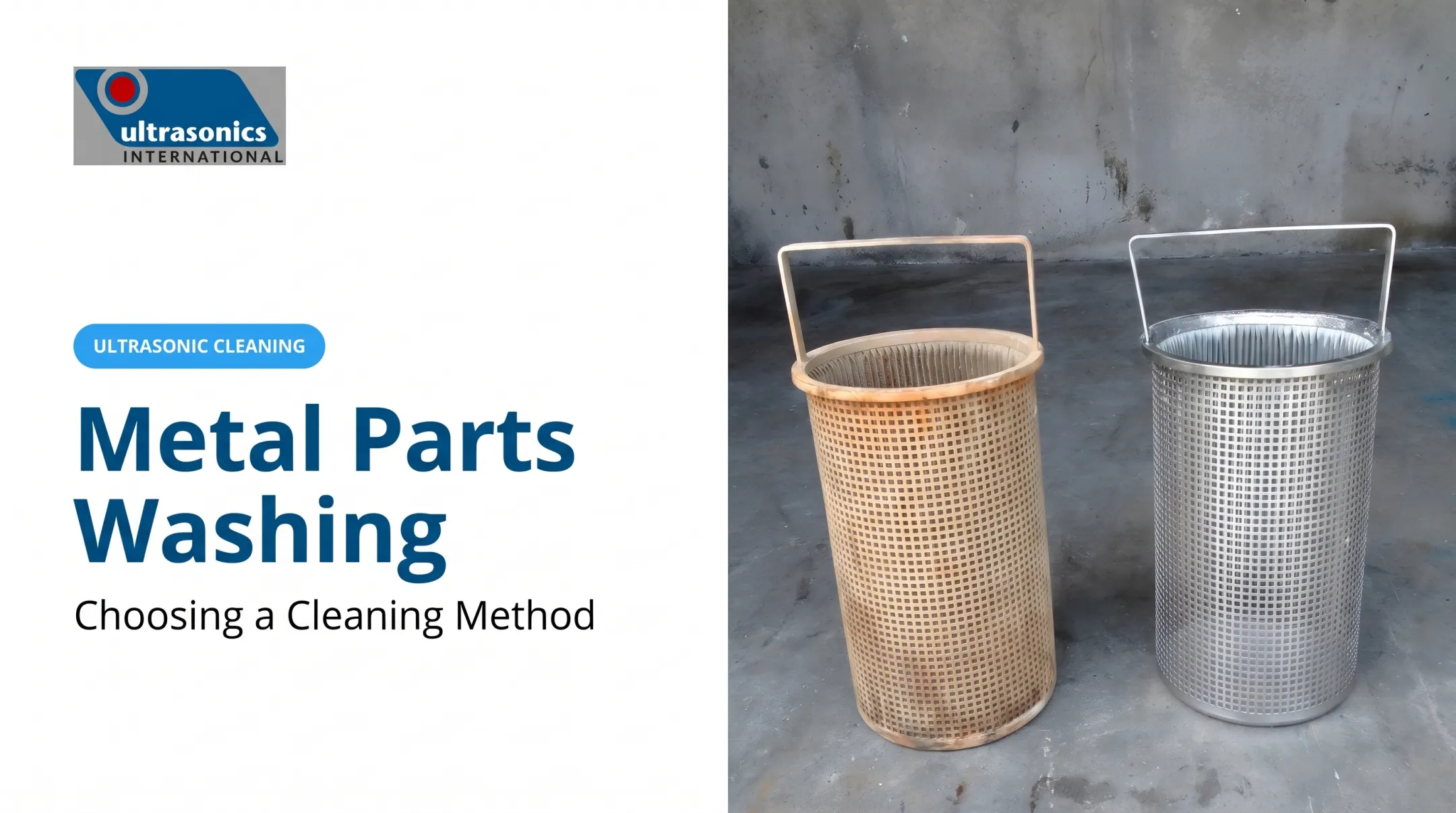

Immersion cleaning systems solve part of that problem by putting the whole part into a controlled bath. Liquid reaches surfaces that line-of-sight spray cannot reach. This guide compares basic immersion, agitated immersion, spray-under-immersion, and ultrasonic systems. It also helps you judge fit by part type, volume, cleanliness target, floor space, and budget.
Key Takeaways
- Full submersion wets recesses that scrubbing and surface spray often miss.
- Agitation, heat, filtration, and ultrasonic energy raise cleaning performance and consistency.
- Part geometry, material, soil, and throughput decide the right system.
- Budget for chemistry, utilities, fixtures, installation, and bath upkeep, not just the tank.
What Are Immersion Cleaning Systems?
An immersion cleaning system places parts fully, or mostly, below the surface of a water-based or compatible solution. Contact time lets the chemistry loosen and lift soil.
"Immersion" describes how the parts meet the bath. Agitation, spray, or ultrasonic energy describes how the system boosts the cleaning action. Ultrasonic cleaning is an enhanced form of immersion, not an alternative to it.
A basic immersion tank may rely mostly on soaking. An immersion parts washer adds more:
- Controlled movement or circulation
- Filtration and oil removal
- Rinse stages and drying
- Automated or programmable handling
How Do Immersion Cleaning Systems Work?
A typical cycle runs like this:
- Load parts into a basket, rack, or fixture
- Immerse and hold for the dwell time
- Rinse
- Dry
- Inspect and unload
The sequence changes by application.
Four Variables That Drive Results
Cleaning depends on chemistry, temperature, time, and mechanical action, often called Sinner's Circle. Lower one and you usually have to raise another.

- Chemistry: a degreaser matched to the oil on machined parts
- Temperature: hotter baths speed work on baked-on carbon, though some parts and solvents limit heat
- Time: longer dwell lets chemistry attack heavy residue
- Mechanical action: agitation, spray, or cavitation lifts what chemistry loosens
The Four System Types
- Basic immersion: soaking and chemical action. Suits lighter or lower-volume work.
- Agitation or turbulation: moves the parts or circulates the bath to increase contact with soiled surfaces.
- Spray-under-immersion: submerged nozzles circulate solution to create turbulence while parts stay below the surface.
- Ultrasonic immersion: transducers create cavitation that helps clear small passages, crevices, and intricate surfaces.
Ultrasonic cavitation has limits. ASTM guidance reports soft-metal damage, including aluminum, at 20-25 kHz, so frequency, exposure time, and material all need review. Nobody can promise that every blind hole comes out fully clean without testing.
Components Worth Understanding
- Heaters: hold bath temperature steady
- Pumps and filtration: circulate solution and capture particulate
- Oil skimmers or separators: remove floating oil that would otherwise redeposit
- Rinse tanks and dryers: finish the part so it's ready for inspection or assembly
- Programmable controls and low-level safeguards: repeat cycles and protect heaters
- Baskets, fixtures, and lids: position parts, drain them properly, and contain heat
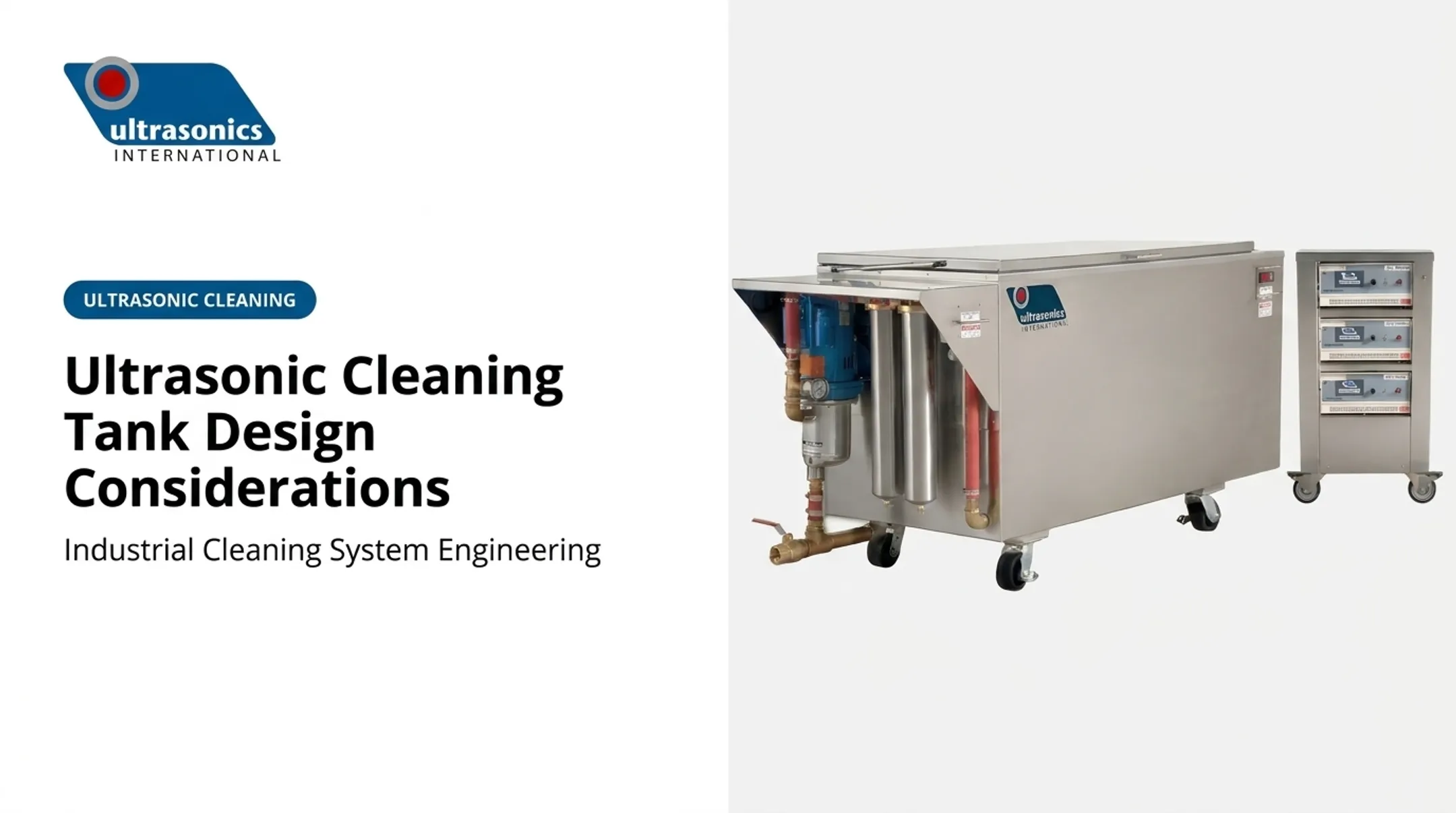
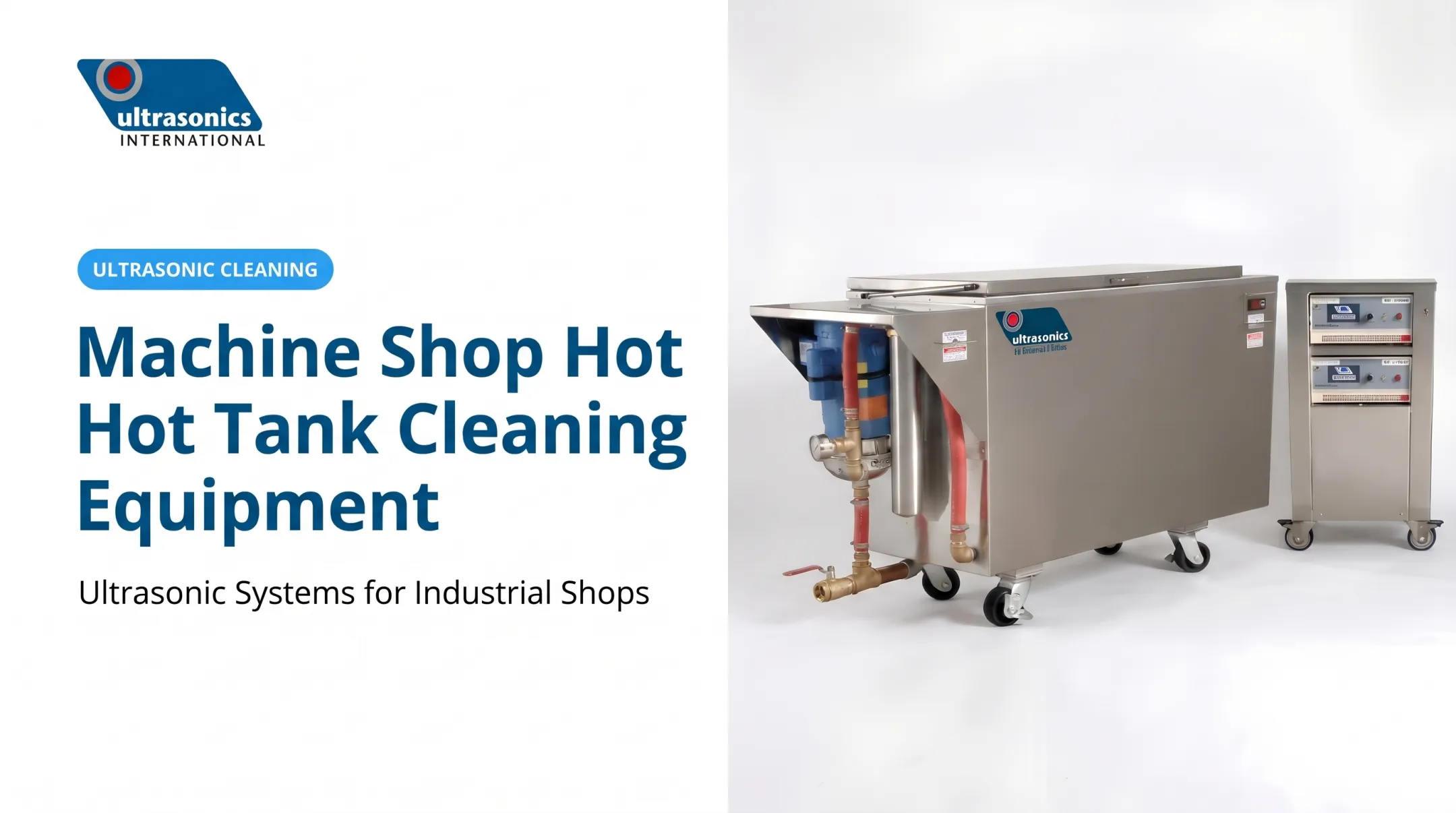
Ultrasonics International Corp. builds configurable immersion systems at its Ferndale, Washington plant. The equipment is USA-made with stainless-steel construction.
The SonicPro 3200-C pairs Dynamic Wave Sweep circuitry with an onboard digital heater, a liquid-level sensor, and an optional filter system. The Fireline C-4 line adds a pre-washer, rinse station, and Vortexx parts dryer for multi-stage workflows.
Benefits and Applications
What Immersion Does Well
- Reaches blind holes, internal passages, and recessed features without hand scrubbing
- Cleans multiple parts per batch, cutting repetitive labor
- Repeats the same cycle, which reduces operator-to-operator variation
- Fits ahead of inspection, assembly, coating, repair, or reprocessing
Quantified savings need care. One marine operator estimates about 50% less time when cleaning several carburetors in one shift, but that is a single vendor-published estimate, not a benchmark you can apply everywhere.

Where It Fits by Industry
- Auto, motorcycle, and small-engine shops: carburetors, injectors, and cylinder heads with grease or carbon
- Machine shops and manufacturers: degreasing and chip or coolant removal between steps
- Oil, gas, marine, and heavy industrial maintenance: larger tanks and fixtures for bulky, heavily soiled components. ExxonMobil's Alaska operations use PC2400 and PC4800 units before inspection and reassembly.
- Restoration contractors: high-volume contents cleaning, after evaluating each item's material and condition
- Medical, dental, lab, and 3D printing: chemistry and material compatibility review first, plus downstream rinsing, drying, or sterilization. Cleaning comes before disinfection or sterilization, not in place of it.
Limits and Poor Fits
- Parts that react to the chemistry
- Components that can't tolerate heat or long exposure
- Setups where you can't staff bath management
- Jobs where a spray or hybrid process flushes surfaces faster
How to Choose the Right Immersion Cleaning System
1. Start With the Parts
Document dimensions, weight, material, finish, internal passages, and fragile features. Confirm parts can be submerged without trapping solution, and decide what baskets or fixtures they need.
2. Define the Soil and the Target
Name the contaminant: oil, grease, carbon, coolant, particulate, resin, soot, or corrosion residue. Then set the goal, whether visual cleanliness, residue removal, pre-assembly prep, or a validated standard.
3. Match Capacity to Operations
Weigh batch size, daily throughput, cycle time, floor space, power, water, ventilation, and ergonomics. Decide whether manual, semi-automatic, or automated handling fits.
Ultrasonics International tank sizes span a wide production range:
- 25-gallon BT-1400
- 65-gallon PC2400
- 100-gallon PC4800
- 135-gallon APC4800

The Fireline C-4 Compact Plus targets continuous-flow production where space is tight.
4. Pick Cleaning Action and Options
- Basic immersion for simple soaking
- Agitation or circulation for more mechanical action
- Ultrasonic energy for intricate parts and hard-to-reach surfaces
- Heating, filtration, oil removal, rinsing, drying, and controls matched to soil and repeatability needs
Treat compliance as its own decision, not a byproduct of the purchase. OSHA's Hazard Communication standard covers labels, safety data sheets, and training. Ventilation, wastewater discharge, and regional solvent rules are separate questions, and owning a system doesn't settle any of them.
5. Understand Cost Drivers
No universal price exists. Costs come from:
- Tank dimensions and ultrasonic power
- Number of stages and automation
- Heating, filtration, oil removal, and drying
- Fixtures and installation
- Chemistry, utilities, and preventive maintenance
- Replacement components
6. Test Before You Buy
Run representative parts to check cleaning performance, material compatibility, cycle time, and drying. Ultrasonics International provides custom machinery, retrofit solutions for existing tanks, installation assistance, and ongoing support. In most cases its components can be self-installed with technical help.
Frequently Asked Questions
How much does an ultrasonic cleaning system cost?
Cost varies with tank size, ultrasonic configuration, automation, heating, filtration, drying, fixtures, and installation. Request a quote based on representative parts and expected throughput rather than a generic price.
What is the difference between immersion cleaning and ultrasonic cleaning?
Immersion means submerging parts in a cleaning solution. Ultrasonic cleaning adds cavitation from transducers, which boosts cleaning action in crevices and intricate features.
What parts are best suited for immersion cleaning systems?
Bulky, heavily soiled, recessed, or complex parts benefit most from full solution contact. Check material compatibility and confirm the part can drain and dry.
Can immersion cleaning remove grease, oil, carbon, and embedded debris?
Yes, when chemistry, temperature, dwell time, and mechanical action match the soil and the part material. Heavy carbon usually needs more heat, time, or agitation.
How do I choose the right immersion cleaning system for my business?
Evaluate part size and geometry, contaminant, cleanliness target, volume, utilities, and automation needs. Then test sample parts, and consider a custom configuration if standard units don't fit.