
Most problems come from the same few decisions: aqueous versus solvent chemistry, flammability, material compatibility, concentration, temperature, cycle settings, and rinsing. Tank size and system configuration matter too. This guide covers each one, so you can pick a degreaser and run it with confidence.
Key Takeaways
- Use a degreaser made or approved for ultrasonic cleaning, not a general-purpose cleaner.
- Match chemistry to both the soil and the material, especially aluminum, plastics, and seals.
- Treat flammable solvents as a specialized-equipment issue; check the manual and SDS first.
- Test a small load, then control temperature, time, loading, rinsing, and waste.
How Ultrasonic Cleaner Degreasers Work
How cavitation supports degreasing
Transducers send high-frequency sound through the cleaning liquid. That creates microscopic bubbles that collapse against part surfaces, dislodging grease, oil, carbon, and coolant residue from crevices that brushes can't reach. Collapsing bubbles can generate pressures up to 500 atm.
Cavitation is mechanical. The degreaser supplies the chemical half. It has to wet, soften, emulsify, or dissolve the soil, or the bubbles just bounce off a greasy film. Detergents also lower surface tension, which helps liquid reach tight spots and makes rinsing easier.
What makes a degreaser ultrasonic-compatible
Look at these properties:
- Solvency and wetting: how well it breaks down and spreads across the soil
- Foam: low-foaming formulas protect cavitation
- pH: alkaline cleaners saponify fats but can attack soft metals
- Rinsability: residue left behind causes problems downstream
Water-based ultrasonic detergents and volatile solvent systems are different worlds. A solvent made for vapor degreasing, where solvent boils and condenses on parts, doesn't belong in a conventional ultrasonic tank. Crest Ultrasonics draws the same line between solvent immersion and vapor degreasing.
Limits of the process
Soil removed from parts stays in the bath. Emulsifiers hold it in suspension, and it can redeposit on later loads, as Tovatech notes. Dissolved solids also hurt cavitation efficiency.
For critical parts, plan on filtration, scheduled changeouts, or multiple stages: wash, rinse, final rinse.

How to Choose the Right Ultrasonic Degreaser
Match the chemistry to the soil
Sort your contaminants by difficulty:
| Soil | Example from manufacturers |
|---|---|
| Light oil | Mildly alkaline concentrates for mineral oil and silicone oil |
| Heavy grease | Aqueous cleaners listing grease and multiple oil types |
| Baked-on carbon | Dedicated carbon-removal chemistry |
| Machining coolant | Cleaners that explicitly list coolant removal |
| Wax and resin | Alkaline cleaners, excluding alkali-sensitive plastics |
| Soot | Smoke-removal chemistry, with loose soot prewashed |
Before a full cycle, put a small amount of cleaner on the soil. If it doesn't wet and break the soil down, the ultrasonic bath won't fix that.
Compare aqueous and solvent-based options
| Factor | Aqueous | Solvent |
|---|---|---|
| Flammability | Typically nonflammable | Often flammable; needs rated equipment |
| Rinsing | Usually required | Varies; no universal rinse-free claim |
| Waste | Spent bath needs characterization | Disposal rules still apply |
| Equipment | Standard stainless tank | Purpose-built, grounded, ventilated |
For most jobs, a gentle water-based detergent is enough. Don't improvise with acetone, alcohol, or other solvents in a standard tank. Elma prohibits flammable liquids directly in its baths because ultrasound increases vaporization and creates a fine mist that can ignite.
Evaluate technical and process requirements
Read the label, SDS, and technical data sheet. Confirm the product covers:
- Dilution and temperature range
- Foam behavior and pH
- Corrosion inhibitors
- Explicit approval for ultrasonic use
The best degreaser is the one that reaches the required cleanliness without damaging the part, leaving problem residue, creating an unsafe workplace, or complicating the next process step.
Validate before production use
Run a representative part or scrap piece. Then inspect for:
- Grease removal
- Staining, pitting, or discoloration
- Residue and odor
- Coating damage or dimensional change
Mirachem's engine-building report shows why validation matters. Baked-on carbon survived the existing process and still needed hand cleaning. One ultrasonic chemistry cleaned better but discolored some aluminum.
A second chemistry, QX-231, ran in the same equipment. After 15 days, operators reported better performance with no aluminum problems.

Safety and Material Compatibility
Chemical and fire safety
Heat, agitation, and vapor make flammable degreasers a serious risk in standard tanks. Check the equipment manual, the SDS, your workplace safety procedures, and applicable US requirements.
OSHA's flammable-liquids standard (29 CFR 1910.106) covers ventilation, ignition precautions, and bonding in covered operations, but it isn't an approval of any particular ultrasonic tank.
Basics to cover:
- Ventilation suited to the chemistry
- Clear labeling and proper chemical storage
- PPE specified on the SDS
- Spill response supplies on hand
- No open flames or unapproved ignition sources
- Grounding where flammables are involved
- Never mix different cleaning chemicals; dangerous gases can result
Protect the parts and substrate
Unsuitable pH and ultrasonic action can damage aluminum, brass, soft metals, plating, coatings, plastics, rubber seals, and adhesives. Published limits are product-specific.
According to an Alconox technical bulletin, one pH 13+ cleaner excludes copper, aluminum, zinc, and magnesium, while a milder one (pH 11 at 1%) warns that aluminum can darken. "Aluminum-safe" isn't a universal label, so check the manufacturer's guidance for your specific alloy, coating, or seal.
Handle sensitive components carefully
Some parts need special review or exclusion: energized electronics, certain sensors, MEMS devices, porous materials, bonded assemblies, and parts with trapped fluids. Murata, for example, prohibits ultrasonic agitation for its MEMS components because it can destroy their structures. A board-compatible detergent doesn't prove component compatibility.
Disassembly, basket loading, orientation, and drying matter as much as the chemistry.
Control operating conditions
Higher temperature, time, power, or chemical strength can improve cleaning, but they also raise the risk of corrosion, coating loss, or seal damage. ASTM G131 warns that 20-25 kHz can damage soft metals such as aluminum. Too much heat also reduces cavitation, since liquid near its boiling point boils in the low-pressure phase of the sound wave.

Start conservatively. Change one variable at a time and write down the results.
Manage waste responsibly
Spent baths pick up oils, solvents, and metals. Under 40 CFR 262.11, applicable generators must determine whether waste is hazardous at the point of generation. Follow the SDS and your US, state, and local rules. Illinois, for example, treats spent parts-washer solutions as special waste.
Label collection containers, filter where you can, and change out on schedule. An ultrasonic bath is not a drain or an unlimited-use reservoir.
Best Practices for Using Degreasers in an Ultrasonic Cleaner
Prepare the tank and parts
- Remove loose debris and disassemble where appropriate
- Choose a basket suited to the job
- Fill to the manufacturer's operating level
- Keep parts and baskets off the tank bottom and transducers; contact can etch or scratch transducer packs
Don't overload. Heavy loads block sound energy, trap soil, and keep solution out of internal passages. One manufacturer manual calls for parts suspended at least half an inch off the bottom, but that clearance is model-specific.
Establish a controlled cleaning cycle
Set up each cycle in order:
- Degas a fresh bath if the manufacturer recommends it (one Omegasonics manual specifies 15 minutes before the first batch)
- Mix to the approved concentration
- Set temperature and time for the chemistry and part
- Start with a small representative load
Frequency, power, heat, chemistry, and time all interact. Common ultrasonic frequencies run from 25 to 100 kHz, and test cleanings often determine the right combination. Skip universal settings; they don't exist.
Rinse and dry thoroughly
Many water-based degreasers need one or more rinses to remove detergent, dissolved soil, and corrosion-promoting residue. Critical work may call for purified final-rinse water. Zenith warns that retained detergent can quickly contaminate a single rinse tank.
Dry with a method the part tolerates: compressed air, heated air, or drainage. Blind holes hold liquid, so check them. Add rust protection right away for ferrous parts.
Maintain solution quality
Watch for signs the bath needs attention:
- Visible soil, foam, or odor
- Concentration or temperature drift
- Slower cleaning
Filter, replenish, or replace the bath when those signs appear. Raise temperature if it runs low; filter or change out if dissolved solids climb.
Clean the tank itself between part families so one application doesn't contaminate the next.
Verify and document results
Record these details for each run:
- Part type and soil
- Chemistry, concentration, and temperature
- Cycle time and load arrangement
- Rinse, drying, and inspection result
Ultrasonics International's troubleshooting guidance says to record the protocol and follow it precisely.
Choose a verification method suited to the application:
- Visual and tactile checks for general work
- Water-break testing (ASTM F22) as a quick, non-quantitative film check
- Residue analysis such as TOC or conductivity for validated cleaning
- Particulate methods such as ISO 16232 for automotive components
Match the Degreaser and Equipment to the Application
Select equipment by part size and throughput
A benchtop unit suits small batches. Machine shops, repair facilities, restoration operations, and production lines may need larger tanks, filtration, rinse stations, dryers, or multi-stage systems.
Size by part geometry, basket capacity, load weight, contamination level, and required throughput, not tank volume alone. For reference, the BT-1400 benchtop holds 25 US gallons, while the PC4800 industrial tank holds 98 US gallons.

Consider application-specific requirements
- Carburetors and engine parts: carbon and varnish; test aluminum compatibility
- Machined parts: coolant and machining oil; verify metal compatibility
- Marine hardware: salt, corrosion, carbon; chemistry suited to marine alloys
- 3D-printed parts: support material, resin, powder; confirm material compatibility
- Restoration contents: prewash loose soot, then wash, rinse, and dry
- Industrial maintenance: rigging, drilling assemblies, and large components
For marine work, Specialty Marine cleans marine carburetors with an Omegasonics unit and reports re-cleaning was virtually eliminated. That's one customer's result, not a benchmark.
Beyond general shop degreasing, medical, laboratory, and electronics work needs tighter controls: validated processes, specialized rinsing, and sometimes limits on ultrasonic exposure. The CDC advises cleaning before disinfection and choosing material-compatible detergents.
Where Ultrasonics International Corp. fits
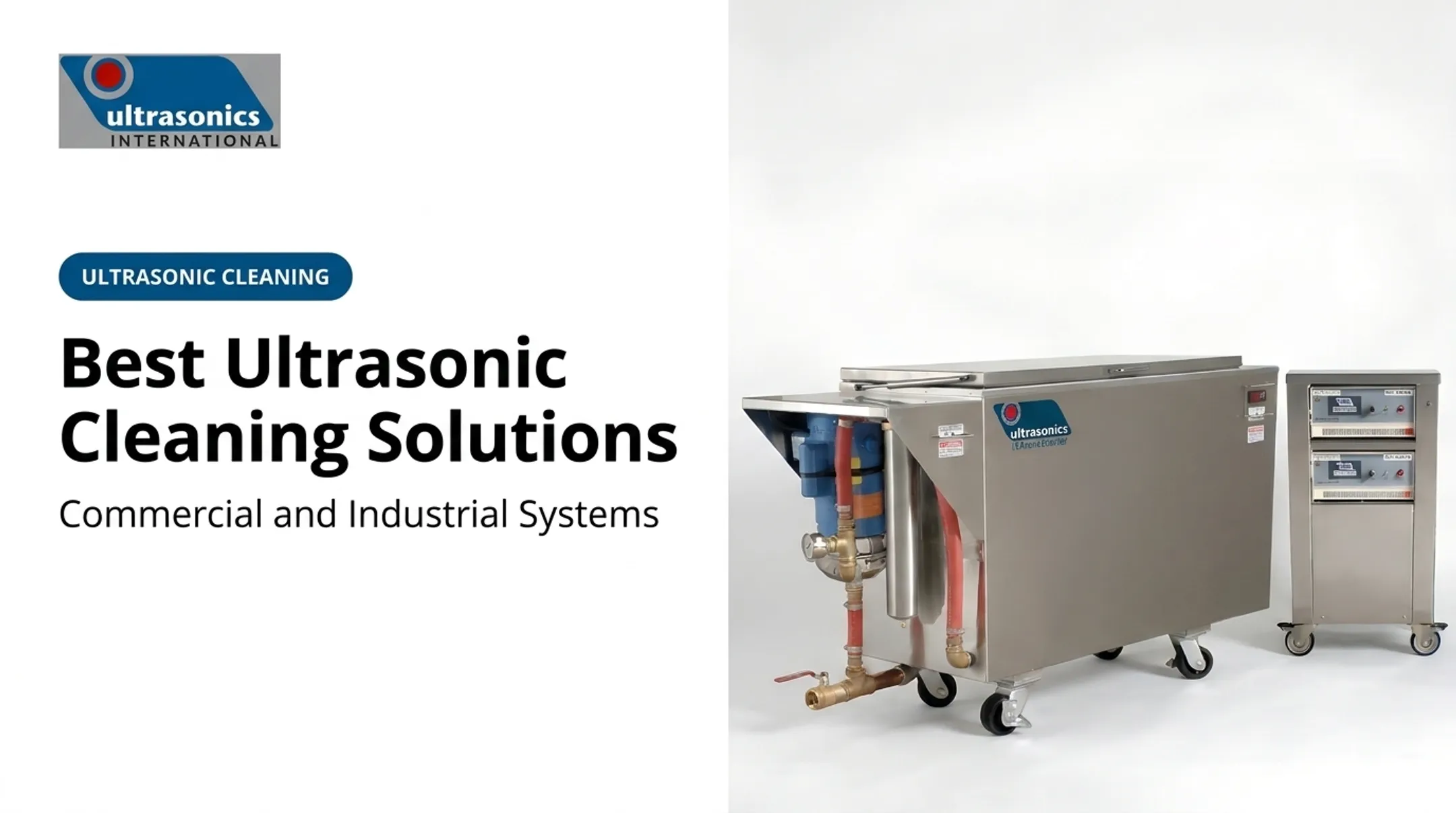
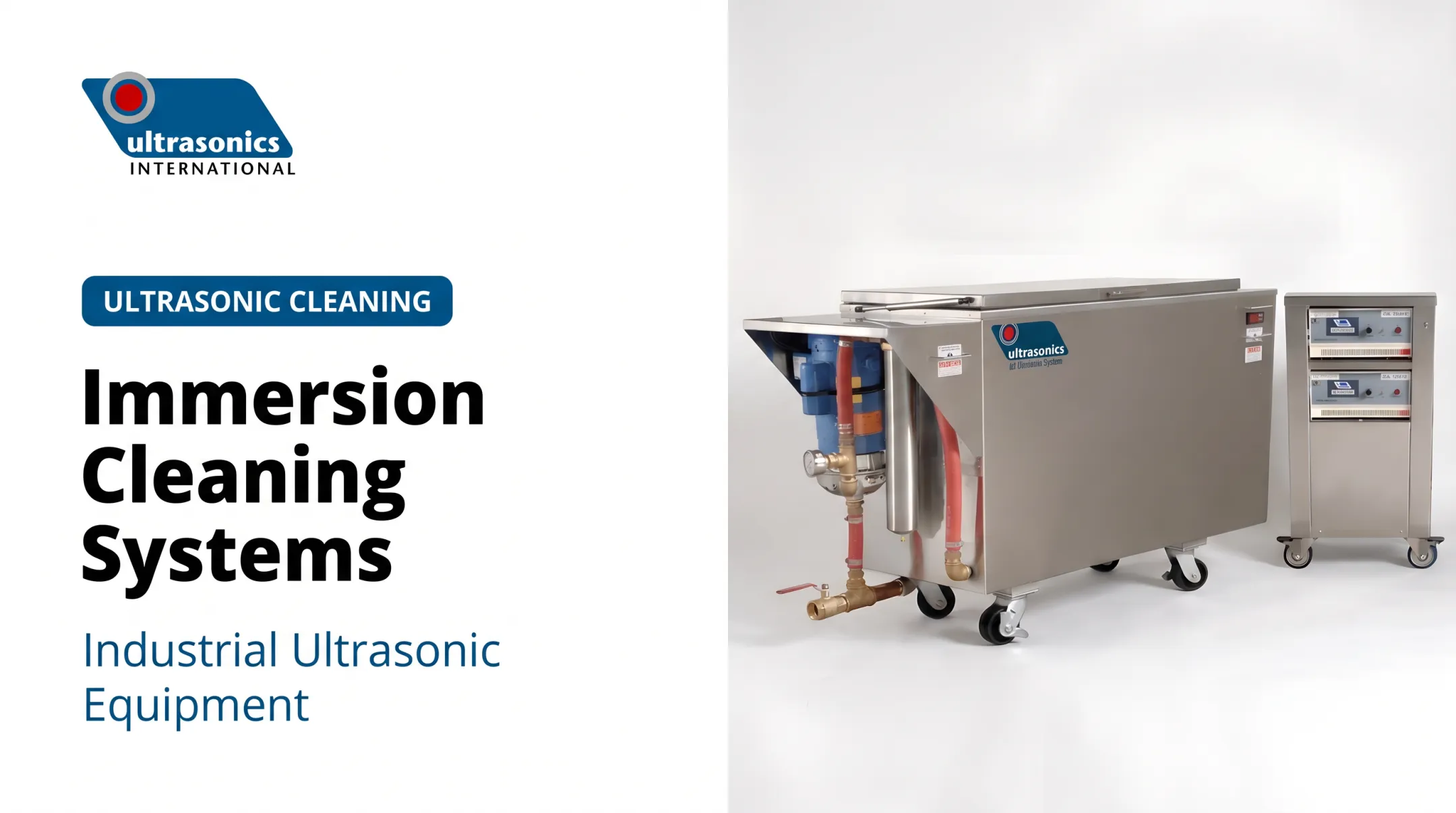
Ultrasonics International Corp. is a USA-made manufacturer of ultrasonic cleaners, pre-washers, and support modules, with equipment built at its Ferndale, Washington plant since 1992. Its range runs from benchtop units to heavy-duty industrial parts-cleaning systems.
Relevant features include:
- 100% stainless-steel construction
- Wave Sweep Technology
- Application-specific customization and retrofit options
- Technical installation assistance
- QAI oversight with third-party plant inspections twice a year
The company builds cleaning equipment, not degreaser chemistry, and no single system suits every application. Describe your parts and soils, and confirm chemistry compatibility with the chemical supplier.
Frequently Asked Questions
Can I use degreaser in an ultrasonic cleaner?
Yes, if it's nonflammable and compatible with your cleaner and parts, ideally one approved for ultrasonic use. Avoid unapproved flammable, volatile, or corrosive products, and check the manual and SDS.
What is the best degreaser for ultrasonic cleaners?
It depends on the soil, substrate, finish, rinsing needs, safety requirements, and equipment. Test candidates on representative parts instead of trusting one universal formula.
Is an ultrasonic cleaner safe?
It can be, with the right setup. Risks include chemical exposure, hot liquid, electrical hazards, vapor, noise, part damage, and waste. Use compatible chemistry, proper loading, ventilation, PPE, and the manufacturer's instructions.
What type of degreaser should I avoid in an ultrasonic cleaner?
Avoid flammable, volatile, highly corrosive, or excessively foaming products unless the equipment is engineered and approved for them. Never mix chemicals.
Can ultrasonic cleaning damage aluminum or other metals?
Yes. Unsuitable pH, heat, exposure time, or ultrasonic intensity can cause darkening, corrosion, or pitting. Run a compatibility test on the specific alloy first.
Do parts need to be rinsed after ultrasonic degreasing?
Usually. Many water-based degreasers require rinsing to remove detergent and dissolved soil. The method depends on the chemistry, material, cleanliness spec, and next process step.