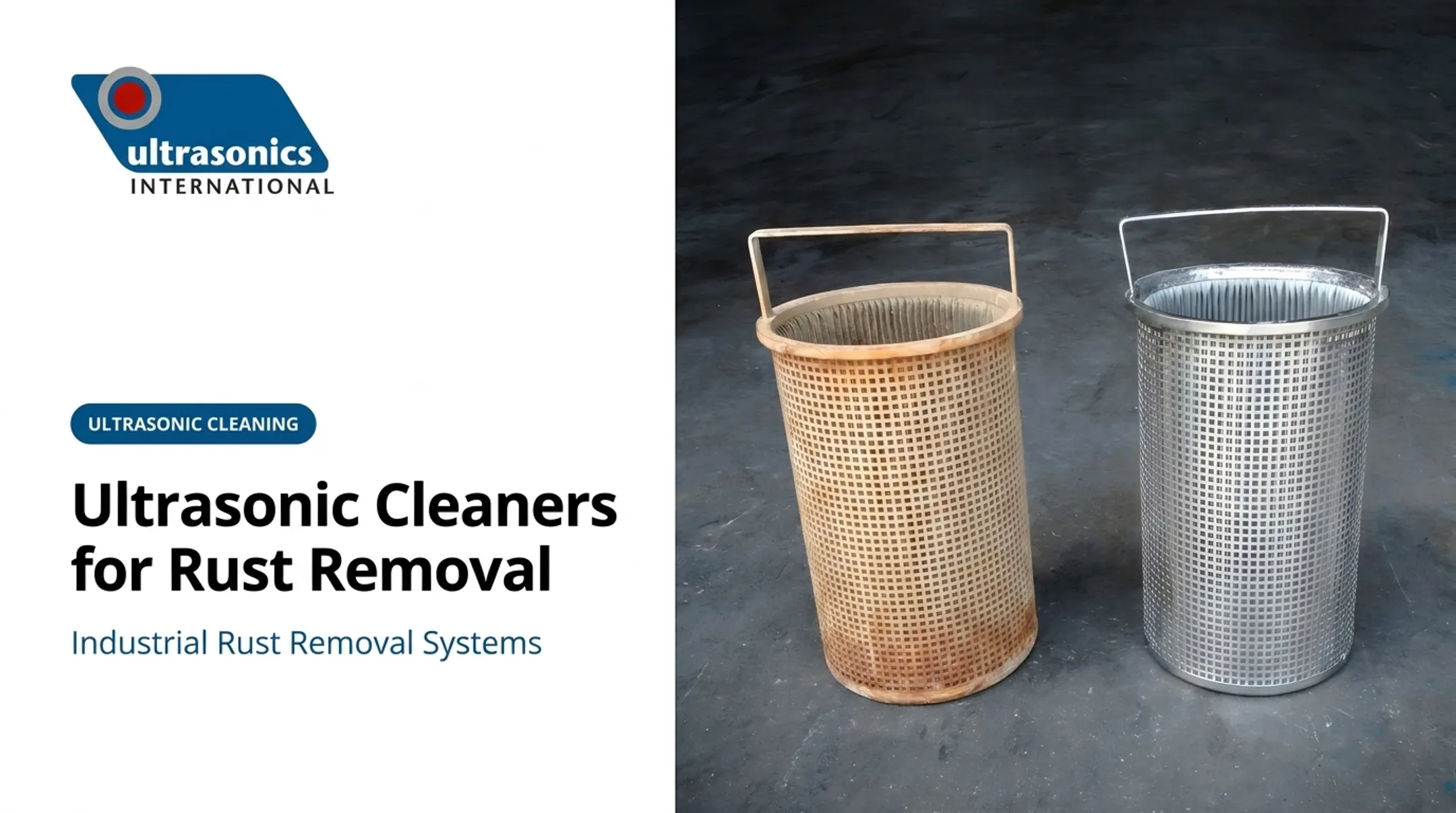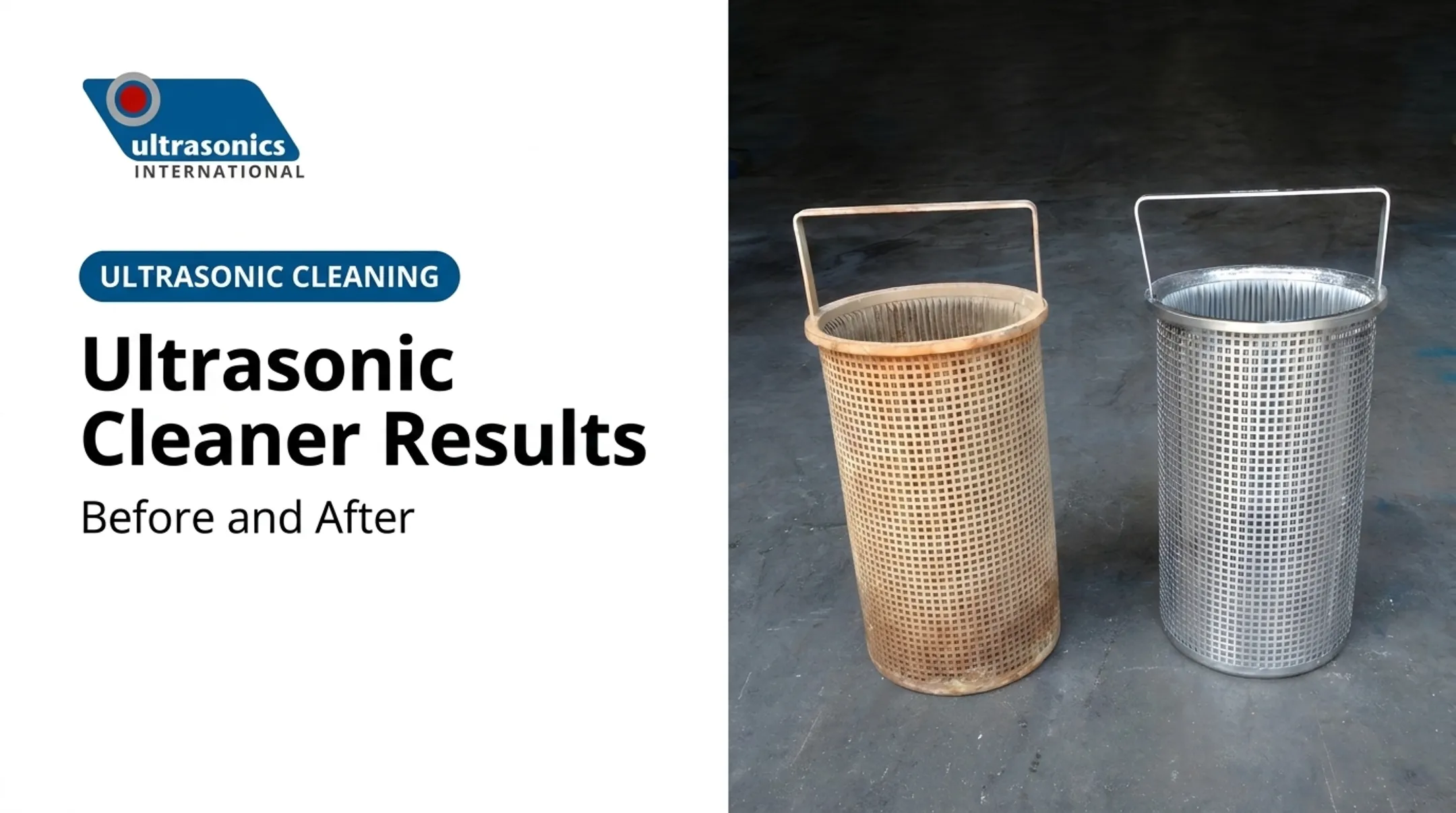

The problem is familiar to any shop that handles coated metal parts. Paint clings to threads, blind holes, seams, and internal passages where scrapers can't reach and hand scrubbing is slow, uneven, and sometimes damaging.
This guide explains how cavitation works, what drives results, how to run a safe paint-removal cycle, how to size a system, and what to do about safety and waste.
Key Takeaways
- Ultrasonic energy supplies the scrubbing action; the chemistry does the softening.
- Paint type, cure, substrate, geometry, frequency, temperature, and time all change the outcome.
- Test on a representative part before treating anything valuable.
- Rinse, dry, inspect, and handle spent solution under US rules.
How Ultrasonic Cleaners Remove Paint
A generator sends high-frequency electricity to transducers. They create alternating pressure waves in the liquid, and microscopic bubbles form, grow, and implode against immersed surfaces.
That cavitation produces what Crest's technical literature calls a localized scrubbing action. Ultrasonics International Corp. describes the same effect as vigorous yet gentle scrubbing of the component.
Cavitation alone rarely strips a cured coating. The solution does the chemical work, and the ultrasound moves fresh solution into grooves, holes, threads, and channels far more consistently than a brush can. If the coating is fully cured and strongly bonded, you still need a compatible stripper or detergent.
How It Compares with Other Methods
| Method | Tradeoffs |
|---|---|
| Manual scraping and scrubbing | Slow, inconsistent, risks part damage, and can't reach dead-end holes or seams |
| Abrasive blasting | OSHA notes blasting pulverizes abrasives and coatings into respirable particles, so exhaust controls are required |
| Prolonged solvent soaking | Doesn't guarantee removal from every surface, and stripping chemicals can affect equipment |
Where It Fits
Ultrasonic stripping suits parts that can be submerged and whose metals, seals, and finishes tolerate the solution and heat. It is not automatically nondestructive. Kaijo warns that roughly 26 kHz can pit soft aluminum, while 50 to 100 kHz is gentler on softer metals.

What Determines Paint-Removal Results
Paint Condition and Chemistry
Water-based, solvent-based, baked-on, powder, aged, layered, and partially cured coatings all behave differently. Manufacturer directions show how widely settings differ:
- Elma tec clean A5 is an aqueous alkaline cleaner for lacquer and paint residue: 3 to 5% by weight, 50 to 80°C, 3 to 10 minutes.
- TierraTech Ultrasonic-51 is used neat at 65 to 85°C, and its maker requires no water in the bath to protect light alloys.
These are manufacturer directions, not independent removal rates. Read the SDS and technical data for the chemistry you select. Aqueous doesn't mean harmless: A5's SDS lists severe skin and eye damage hazards. Never run a different product on another's settings.
Frequency and Power
Lower frequencies make larger, stronger implosions. Higher frequencies are milder. Most units run between 28 and 120 kHz, and 38 to 40 kHz is the most common for commercial work. Ultrasonics International Corp. suggests sizing power for the hardest job, then dialing down for delicate parts.
Loading and Geometry
- Solution and energy must actually reach the painted surfaces.
- Parts shouldn't shield one another or be densely stacked.
- Use a basket. Parts must never rest on or touch the transducer surface, since contact etches it and the damage can't be repaired.
Cycle Time and Documentation
Establish cycle time by inspecting and testing, not by copying a number. For reference, IBC Materials reports 90 to 180 minutes for aircraft-alloy parts in an alloy-specific water-based system. That is one supplier's result for specific coatings, not a benchmark for your parts.
Record paint type, solution, concentration, temperature, frequency, loading, cycle time, rinse, and drying method. Ultrasonics International Corp. recommends following that protocol the same way on every run.
How to Remove Paint with an Ultrasonic Cleaner
Exact temperature, concentration, frequency, and time must come from validated testing on your parts.
- Pre-clean. Identify the substrate and coating. Knock off loose flakes, disassemble where permitted, and remove anything that shouldn't be submerged.
- Prepare the bath. Fill to the tank's fill mark, add the approved solution at the specified concentration, and heat within the chemistry's limits.
- Degas. Fresh liquid holds air that weakens cavitation. One Omegasonics manual calls for 15 minutes before the first batch, but that is model-specific. Wave Sweep units degas faster and need no separate mode.
- Load the basket. Leave room for circulation, keep parts off the tank bottom, and orient complex parts so painted areas face open solution.
- Run conservatively. Start with the equipment and chemistry makers' recommended settings. Pause to inspect, and extend the cycle only while part and coating stay compatible.
- Finish. Remove loosened paint, rinse thoroughly, dry promptly, and inspect recesses and internal passages. Bare steel can flash rust quickly once protective oil is gone.

Temperature rises during cavitation, so monitor the bath through longer cycles.
How to Choose an Ultrasonic Cleaner for Paint Removal
Size by Usable Space
Match the tank and basket to your largest part, required immersion depth, and batch size. Usable basket space matters more than nominal gallons, because fixtures and basket load ratings eat capacity. Ultrasonics International Corp. recommends sizing the tank for the largest item you clean regularly.
Features Worth Comparing
- Adjustable power and heating to match coatings and substrates
- Degassing or sweep technology for more uniform cavitation
- Filtration to keep chemistry effective longer
- Rinse and dry stages for a complete workflow
- Lifting and automation for heavy parts and higher throughput
Feature lists don't prove stripping performance, so compare complete, chemistry-compatible workflows.
Benchtop or Industrial?
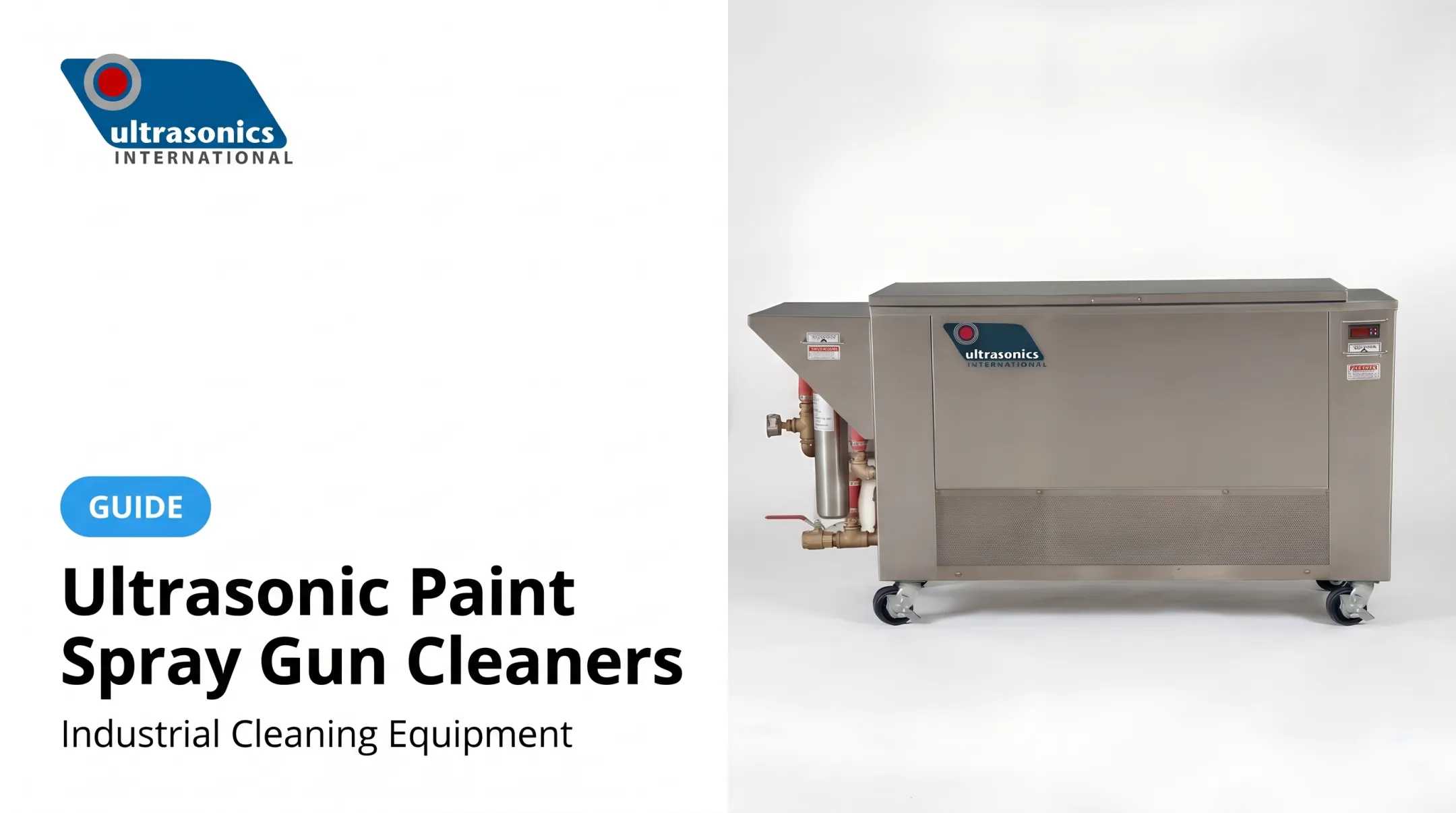
A benchtop unit suits small repair and maintenance work. For example, the BT-1400 holds 25 gallons and runs 36 to 40 kHz. High-volume industrial work calls for larger systems such as the PC4800 (98 gallons, 3,600 watts RMS) or multi-stage lines like the 6000-B and 8000-B.
Working with a Manufacturer
Ultrasonics International Corp. builds USA-made systems in Ferndale, Washington, from benchtop to heavy-duty industrial scale. Equipment uses stainless-steel construction with Wave Sweep Technology, and the company also offers custom machinery, retrofits for existing tanks, and installation support.
Before buying, send parts, coating details, chemistry requirements, throughput targets, and acceptable surface condition to a supplier representative. You can reach Ultrasonics International Corp. at 800.500.2544 or sales@sonicpro.com for application-specific guidance. No one can promise a particular result without testing.
Safety, Material Compatibility, and Waste Handling
Material Compatibility
Test a representative sample first. Key cautions:
- Aluminum: low-frequency cavitation can pit it; watch water contamination with some strippers.
- Brass: verify alloy, solution, frequency, temperature, and time.
- Plastics and rubber: some warp, cloud, or distort with heat and sustained cavitation. A5 excludes alkali-sensitive plastics.
- Plated surfaces and adhesives: cavitation can lift plating or weaken bonds.
- Electronics and seals: liquid intrusion and solder stress are real risks.
Chemical compatibility alone doesn't establish immunity to acoustic damage.
Worker and Fire Safety
- Perform a hazard assessment and provide fitted PPE under OSHA's PPE rule.
- Read the SDS, ventilate, control splashing and hot solution, and never mix chemicals unless the maker allows it.
- Don't put flammable or highly volatile solvents in a standard aqueous tank. Heat and ultrasound increase evaporation and create ignitable mist.
- Use flammable solvents only in equipment rated for them and approved by the manufacturer.
Lead and Legacy Coatings
Old paint may contain lead or other regulated materials. Have it identified professionally, and apply exposure controls and disposal practices that satisfy federal, state, and local requirements.
EPA's RRP rule and OSHA's lead standards (1910.1025 and 1926.62) may apply, depending on the work.

Spent Baths
- Remove paint solids where appropriate.
- Determine waste status before diluting or mixing. The unused cleaner's SDS doesn't classify contaminated waste.
- Don't assume drain disposal is allowed. Local sewer authorities set limits.
- Follow the chemistry supplier's disposal instructions and state rules, which can be stricter than federal ones.
Frequently Asked Questions
Will an ultrasonic cleaner remove paint?
Often, yes, when paired with compatible chemistry and settings. Results vary with coating type, substrate, thickness, and cure state.
What type of paint can an ultrasonic cleaner remove?
It depends on the formulation and condition. Product makers often claim results on lacquer residue, primers, and baked or powder coatings, but test your own coating rather than assuming one solution fits all.
Can ultrasonic cleaning remove paint from aluminum or plastic?
Possibly. The solution, temperature, frequency, and exposure time must suit the material and any attached components. Soft aluminum can pit at low frequencies.
What cleaning solution should I use to strip paint in an ultrasonic cleaner?
Choose one formulated for your coating and substrate and approved for ultrasonic use. Review its SDS and follow the supplier's dilution and temperature guidance.
Is ultrasonic paint removal safe?
It can be, with PPE, ventilation, careful chemical handling, no flammable solvents in standard tanks, and checks for lead-containing coatings. Dispose of contaminated solution according to regulations.