
Introduction
A partially blocked filter forces fluid through fewer flow paths, so pressure has to rise to keep flow steady. In bypass-equipped hydraulic assemblies, Parker's filtration handbook notes that rising differential pressure can open the bypass valve, letting contaminants slip past the element.
Many shops respond by throwing the filter away or taking the line down. Reusable filters offer another route.
Ultrasonic filter cleaning uses sound-induced cavitation in a compatible liquid to loosen contaminants from reusable media and assemblies. This guide covers cleaning the filter itself, including compatibility, cavitation, chemistry, operating steps, verification, safety, and equipment selection. A separate filter may be used to remove loosened debris from the cleaning bath.
Key Takeaways
- Cavitation reaches mesh openings, channels, and crevices that brushes miss, but results depend on construction.
- Check media, seals, adhesives, and coatings before choosing solution, temperature, and cycle time.
- Bath filtration, proper loading, drying, and inspection prevent recontamination.
- Size equipment around filter dimensions, throughput, and support, not price alone.
What Is Ultrasonic Cleaning for Filters?
How cavitation removes contaminants
A generator sends electrical energy to transducers, which convert it into high-frequency mechanical motion. That motion forms microscopic bubbles in the cleaning solution.
Branson's cleaning primer describes the rapid formation and violent collapse of these bubbles as scrubbing both exposed and hidden immersed surfaces. The collapse dislodges oils, particles, carbon, and other deposits.
That reach is why filter geometry benefits. Ultrasonic cleaning needs no line of sight. Liquid and cavitation get into interconnected mesh, narrow passages, and blind areas more consistently than a brush. Compared with alternatives:
- Brushing: slow, and bristles can't enter the pores.
- Pressure washing: removes surface fouling but doesn't penetrate deeply.
- Passive soaking: loosens soils, but without mechanical action.
It isn't right for every filter, as later sections explain.
The variables that control performance
There is no universal setting. Frequency, solution chemistry, temperature, cycle time, orientation, loading density, and bath condition all interact.
- Higher frequencies make more cavities with less energy each; lower frequencies (20-30 kHz) are more aggressive and suit damage-tolerant work.
- Chemistry must suit both the filter material and the soil.
- Temperature affects results, but hotter isn't automatically better.
- Dissolved gas cushions bubble collapse, so degassing matters.
Confirm settings with manufacturer data or application testing.
Cleaning the filter versus filtering the solution
These are different jobs. The filter being cleaned is your reusable element. A recirculating filter on the tank is an auxiliary feature that removes loosened soil from the bath. It reduces redeposition, but you still have to monitor, clean, and eventually replace the solution.

Which Filters and Contaminants Are Suitable?
Filter constructions that may be candidates
| Construction | What the guidance says |
|---|---|
| Sintered metal | Mott calls detergent-assisted ultrasound its most effective method for deeply embedded particles |
| Wire mesh | Parker says surface media can be cleaned and reused, with ultrasound usually best |
| Stacked or leaf discs | Heavy-duty designs permit many cleaning cycles, though that is not the same as ultrasonic approval |
| Metal-depth media | Welded stainless elements, including sintered and random metal fiber, are covered by Norman's cleaning guidance |
Don't generalize about depth media. Parker excludes depth media from reuse in general, but metal-depth elements are an exception. Verify the media, supports, joints, seals, adhesives, coatings, and the manufacturer's cleaning instructions for each design.
Match the process to the contaminant
- Oil and grease: aqueous detergents made for oily residues, such as Alconox's Liquinox.
- Scale and silt: acid-based, ultrasonic-compatible cleaners such as Citranox, provided they don't attack the base metal.
- Carbon and soot: specialty products exist, but check metal compatibility. One carbon remover is not recommended for aluminum.
- Polymers and resins: vendor products list extrusion residues, but compatibility varies by media, so confirm with the vendor.
- Varnish: no standard bath recipe is established, so test on a sample first.
Always confirm compatible chemistry with the filter maker and the SDS.
Application examples
- Machine shops degrease and remove chips and coolant between steps.
- Automotive and small-engine shops clean carboned fuel and oil components.
- Marine yards clean corroded, salted engine parts.
- Oil and gas crews clean large assemblies before inspection.
- Restoration firms clean soot-affected items.
- Medical, dental, and lab teams use ultrasound as pre-cleaning only. The CDC states that ultrasound alone doesn't significantly inactivate bacteria, so it isn't sterilization.
Screen the filter first
Before it goes in the tank, check:
- Filter material and maximum immersion temperature
- Seal and adhesive compatibility
- Electrical or instrumented components
- Dimensional fit in the basket and tank
- Contamination type
- Visible damage
- Whether the design is meant for repeated cleaning
Cleaning or replacement?
Compare replacement cost, labor, downtime, cleaning-cycle cost, expected service life, and verified post-clean performance. One reported case: a UK plastics recycler cleaning laser filter screens estimated annual savings of about £75,000, with discs lasting at least twice as long. It was supplier-reported and specific to that equipment, so run your own numbers.
How to Clean Filters with an Ultrasonic System
1. Inspect and document
Record a baseline: visual condition, flow, pressure drop, weight, or integrity checks. Photograph damage so cleaning isn't mistaken for repair.
2. Select the solution and prepare the bath
Choose chemistry for the filter material and contaminant, and review the SDS. Fill to the manufacturer's level and degas as the equipment instructions require. For most applications, a gentle aqueous detergent is enough.
3. Load without blocking cavitation
- Use a compatible basket, rack, or fixture.
- Keep filters and baskets off the tank bottom and away from transducer surfaces.
- Don't overload or nest parts, since excessive basket mass reduces effectiveness.
- Keep liquid flowing through the media.
- Prevent filter-to-filter contact.
4. Run a controlled cycle
Set and record temperature, frequency, power, time, and agitation based on testing. Norman cites 10-60 minutes for inert, insoluble solids; reverse flow through the element is ideal. That's one OEM example, not a rule.
Check progress at intervals. The longest cycle isn't always best, and soft metals face more damage risk with longer exposure.
5. Rinse, dry, and verify
Rinse away loosened soil and detergent with clean water. Dry completely before storage or reinstallation, because trapped moisture can harm certain media and downstream processes.
Then repeat your baseline checks. Mott uses bubble point followed by uniform bubbling to find uncleaned areas. But ISO 2942 says bubble point can't establish filtration efficiency. Treat integrity, permeability, and particle removal as separate questions.
6. Manage the bath and keep records
Skim floating oils, remove solids, filter where needed, and replace exhausted solution. No universal change interval exists. Log settings, chemistry, inspection findings, and each filter's disposition. Records make results repeatable and support preventive maintenance.

How to Choose an Ultrasonic Filter Cleaning System
Start with the filter and workflow
Define your requirements before you shop:
- Largest filter, basket, or fixture size and weight
- Contamination load, throughput, and acceptable cycle time
- Individual parts versus batch cleaning
Give the manufacturer full measurements. The tank must exceed the largest item.
Evaluate tank design and ultrasonic performance
- Transducer placement should deliver even cavitation.
- Sweep circuitry reduces standing waves and hot spots.
- Heaters and power controls matter for oily soils.
- Baskets must keep parts off the transducers.
- Heavy-duty tanks should use thicker stainless, such as 11 to 12 gauge with stiffeners.
For complex geometry, ask for trials on representative filters.
Plan solution handling and integration
Factor in skimming, recirculation, rinse stages, drying, wastewater, ventilation, and automation. At higher volumes, a multi-stage wash-rinse-dry system or a tank retrofit may outperform a standalone tank.
Ventilation must carry away bath vapors, and wastewater may need separate treatment.
Match construction and support
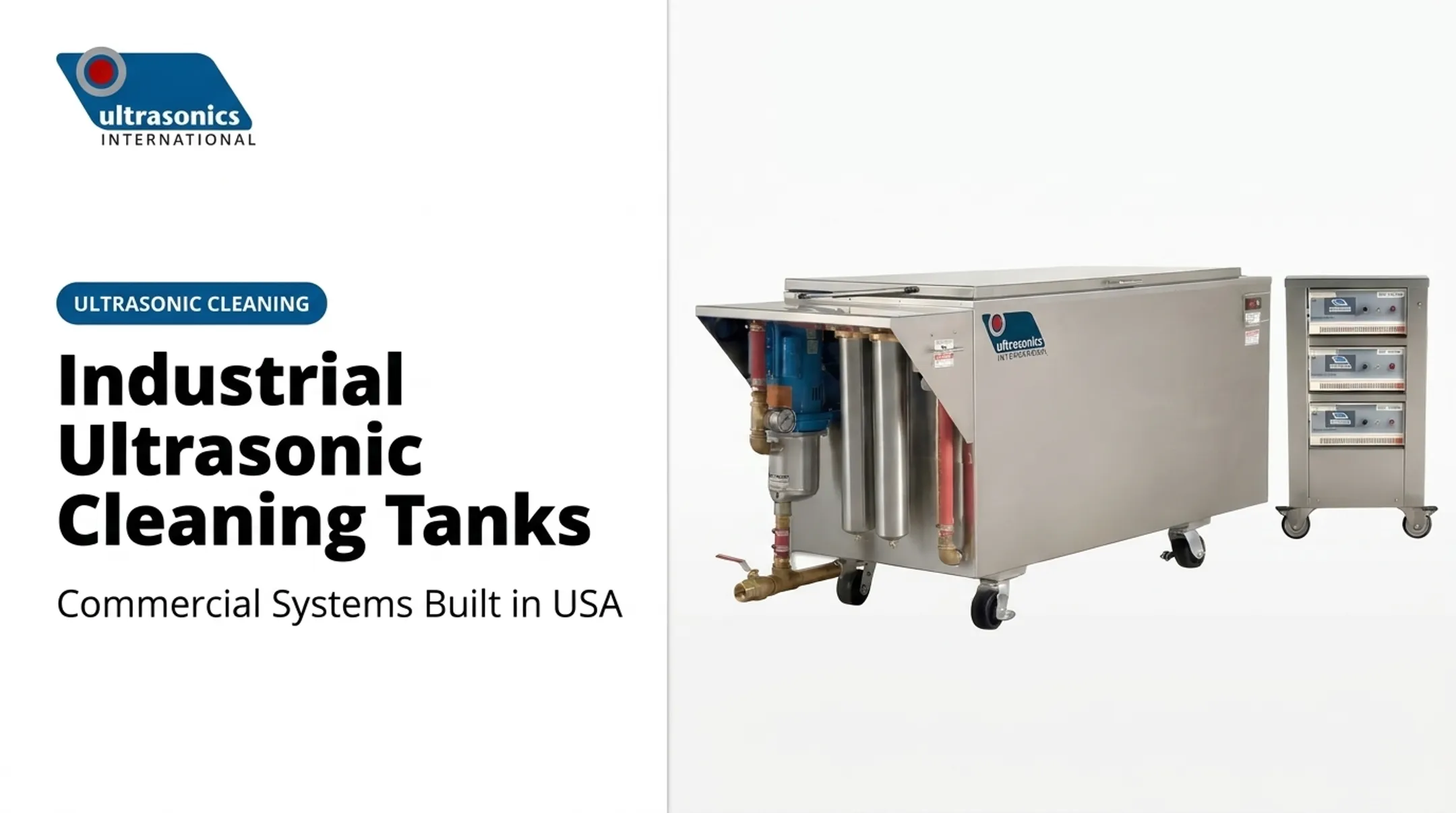
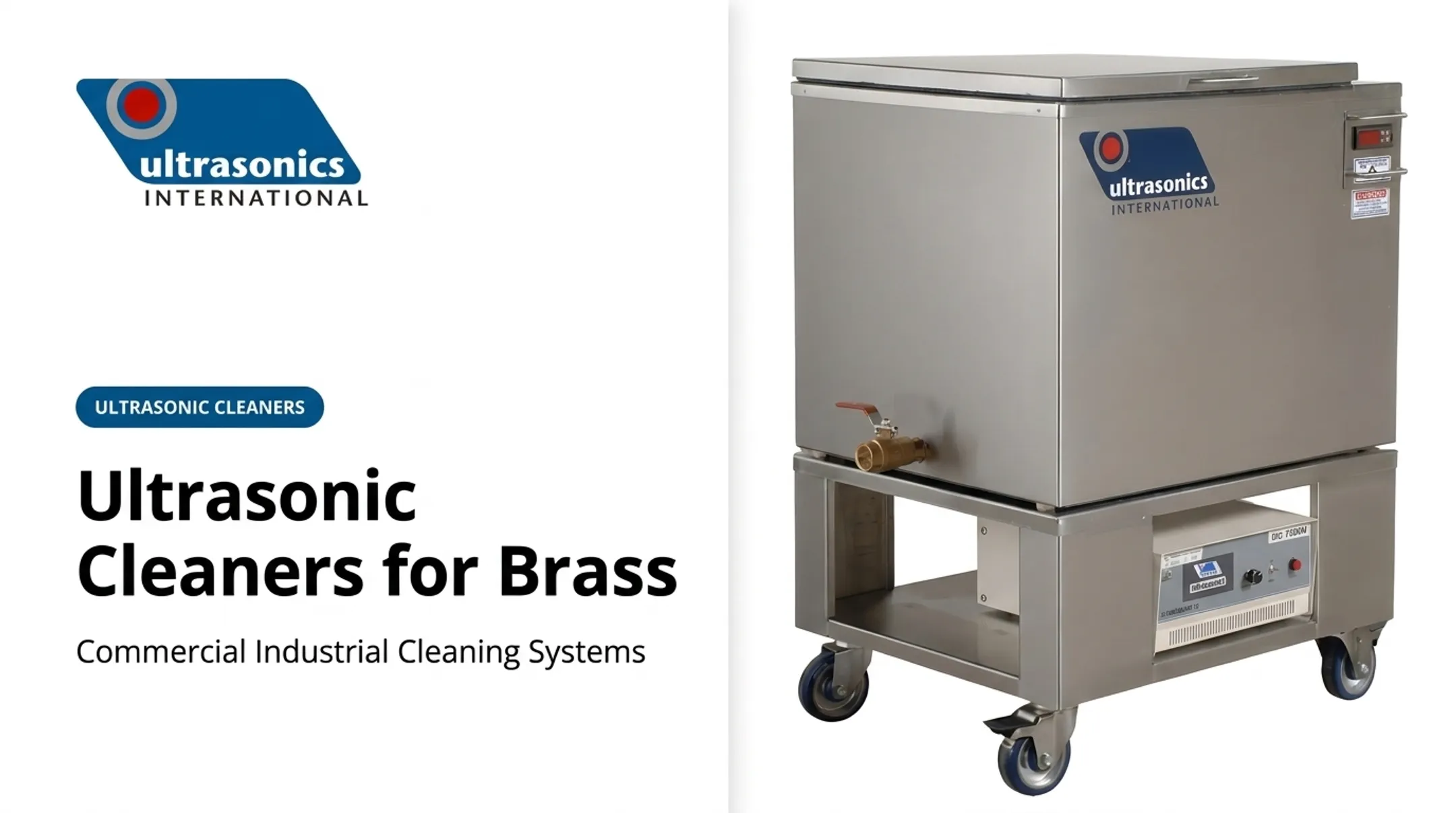
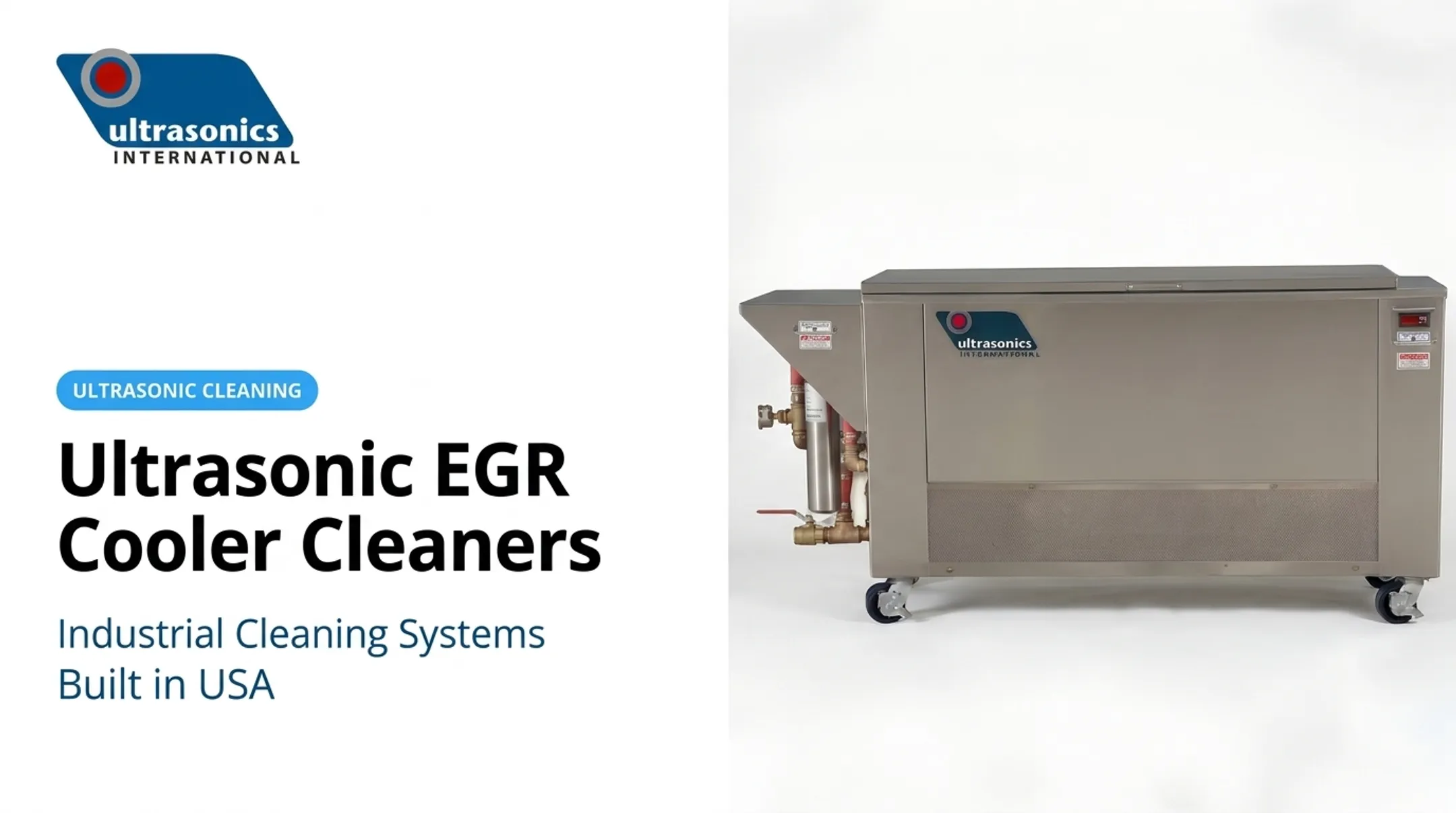
Ultrasonics International Corp. builds USA-made systems in Ferndale, Washington, with stainless-steel construction and Wave Sweep Technology. The company also provides custom machinery, tank retrofits, technical installation assistance, and ongoing support.
Its APC and PC series offer Dynamic Wave Sweep and power-intensity control. The APC4800 holds 135 gallons and offers optional Flow master filter systems. Confirm any model's fit for your specific filter before buying.

Limitations, Safety, and Maintenance
Materials requiring caution
These components may need testing or may be unsuitable:
- Porous, brittle, coated, or bonded parts
- Plated or elastomeric materials
- Electronic components and assemblies
Some items fall under "do not clean." Others can be processed only under validated conditions and manufacturer guidance.
Attached electronics add resonance and solution-entrapment risks, so approval for a bare-metal filter does not cover the assembly.
Chemical and equipment safety
- Review the SDS for handling, exposure limits, PPE, and reactivity.
- Ventilate the work area.
- Treat hot solution as a burn hazard.
- Never put flammable solvents in a standard tank; heat and ultrasound can create ignitable vapor.
- Compatibility with filter metal doesn't make a solvent safe in the tank.
- Check EPA and local wastewater rules, since spent cleaners and sludge can be regulated waste.
For hazardous locations, OSHA 1910.307 requires area classification and suitable equipment. Consult qualified safety staff.
Maintain and verify over time
- Drain and clean the tank regularly.
- Inspect baskets and transducer surfaces, which are wear parts.
- Check heaters, controls, and cables.
- Service bath filters.
- Run periodic performance checks; an aluminum foil test shows cavitation patterns.
Trend records reveal declining cleaning efficiency before poor filter results become routine.
Frequently Asked Questions
What not to clean with ultrasonic cleaner?
Suitability depends on material, construction, coatings, seals, adhesives, electronics, and manufacturer guidance. Soft substrates can suffer cavitation damage, and sensitive or solvent-incompatible items need testing or another process.
Is there a difference between cheap and expensive ultrasonic cleaners?
Yes. Tank construction, transducer placement, energy uniformity, controls, filtration, durability, and service all vary. Judge total cost and verified results, not price alone.
How does ultrasonic cleaning remove contaminants from filters?
Cavitation bubbles form and collapse, releasing soil from surfaces and pores. Compatible chemistry and proper filter orientation help carry the loosened contaminants away.
What types of filters can be cleaned ultrasonically?
Reusable mesh, sintered metal, and some metal-depth or disc constructions may qualify. Always check material, seals, adhesives, and manufacturer instructions first.
What cleaning solution should be used for ultrasonic filter cleaning?
Match it to both the contaminant and the filter materials. Use approved detergents, review SDS information, and test before committing to a formula.
How do you know whether a filter is clean enough to reuse?
Compare appearance, flow, pressure drop, integrity, and particle loading against your pre-cleaning baseline. Use process-specific acceptance criteria, and don't rely on bubble point alone.